
Aug 22, 2026
5 Major Projects Where Road Rollers Are Essential
Behind every smooth highway, level runway, and steady railway line lies a machine that rarely gets the spotlight it deserves: the road roller. Compaction is the…
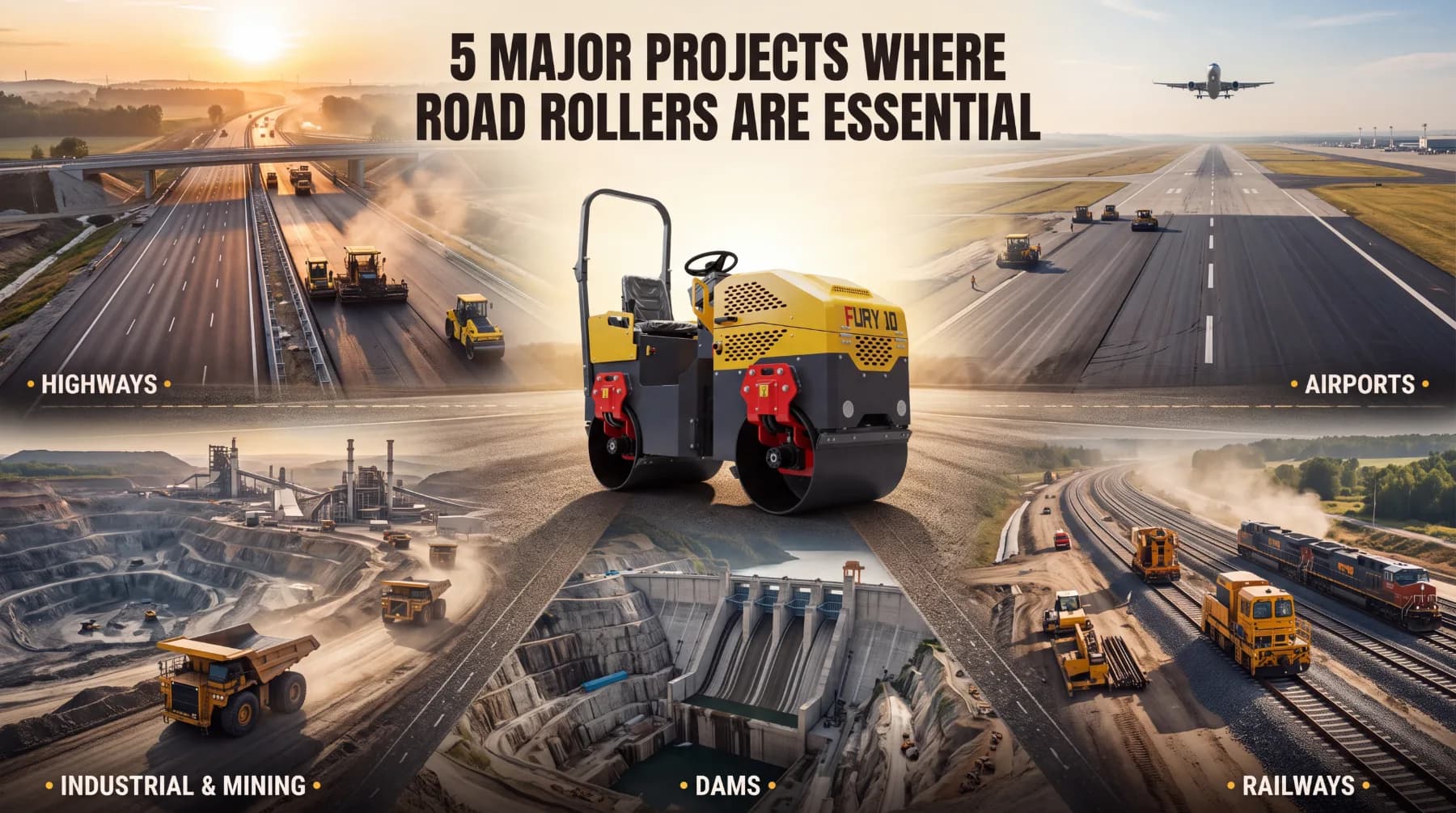
Behind every smooth highway, level runway, and steady railway line lies a machine that rarely gets the spotlight it deserves: the road roller. Compaction is the quiet foundation of durable construction, and the road roller is the tool that delivers it. By pressing soil, gravel, pavement, and other materials into a dense, stable mass, rollers remove the air pockets and weaknesses that would otherwise cause a structure to settle, crack, or fail. Without proper compaction, even the best-designed project sits on unstable ground. This post looks at five major types of projects where road rollers are truly essential: highway and expressway construction, airport runway construction, railway construction, dam construction, and industrial and mining sites. Each one depends on the roller to build something strong enough to last.
Highway & Expressway Construction
Highways and expressways carry enormous volumes of traffic, day after day, year after year, and the strength of every mile depends on how well the underlying materials are compacted. Road rollers are central to this work because they compact each layer of the road structure into a firm, stable base capable of bearing heavy loads. From the ground up, a highway is built in layers, and every one of those layers must be compressed properly before the next goes down. The roller is what turns loose material into a solid, load-bearing surface.
The work begins with the soil and moves through several distinct stages, and rollers play a role at each step:
- Soil compaction, which firms up the subgrade and creates a stable foundation for everything above it.
- Gravel and sub-base compaction, which builds the strong intermediate layers that distribute traffic loads.
- Asphalt compaction, which presses the final surface into a dense, smooth, durable finish.
Each of these stages demands proper compaction to prevent the settling, rutting, and cracking that shorten a road's life. When the soil is compacted well, the sub-base has a firm platform to rest on; when the sub-base is dense and even, the asphalt bonds into a lasting surface. Rollers are matched to each stage, with heavier machines handling deeper layers and specialized rollers finishing the asphalt to a tight, smooth surface. The result is a highway that stands up to constant traffic and harsh weather, delivering the reliability drivers depend on. Without the road roller's steady, thorough compaction, none of that durability would be possible.
Airport Runway Construction
Airport runways face demands that few other surfaces ever encounter. They must support aircraft weighing many tons, absorb the tremendous forces of landing, and remain perfectly smooth and level across vast expanses of pavement. Road rollers make this possible by compacting the wide areas of soil and pavement that form a runway into a smooth, durable surface strong enough to handle the punishment of daily aviation traffic. The scale of the work is immense, and the tolerances are exacting, which makes thorough compaction absolutely critical.
Large rollers are built for exactly this kind of wide-area work. A runway covers a far greater surface than a typical road, and every square foot must be compacted to the same high standard to ensure uniform strength and an even surface. Any weak spot or unevenness could compromise the safety of aircraft operating at high speeds, so consistency across the entire runway is essential. Heavy rollers move methodically across these broad areas, pressing soil and pavement into a dense, uniform mass that meets the strict requirements of aviation construction.
The importance of getting this right extends well beyond the runway's initial construction. A properly compacted runway resists settling and rutting over time, maintaining the smooth, level surface that safe takeoffs and landings require. Because runways carry concentrated loads from heavy aircraft, the foundation beneath them must be exceptionally strong and stable, and that strength comes directly from careful, thorough compaction during construction. Road rollers
deliver the dense, reliable surface that airports depend on, ensuring that runways perform safely and hold up under the relentless demands of aircraft operations for years to come. It's precise, high-stakes work, and the roller sits at the heart of it.
Railway Construction
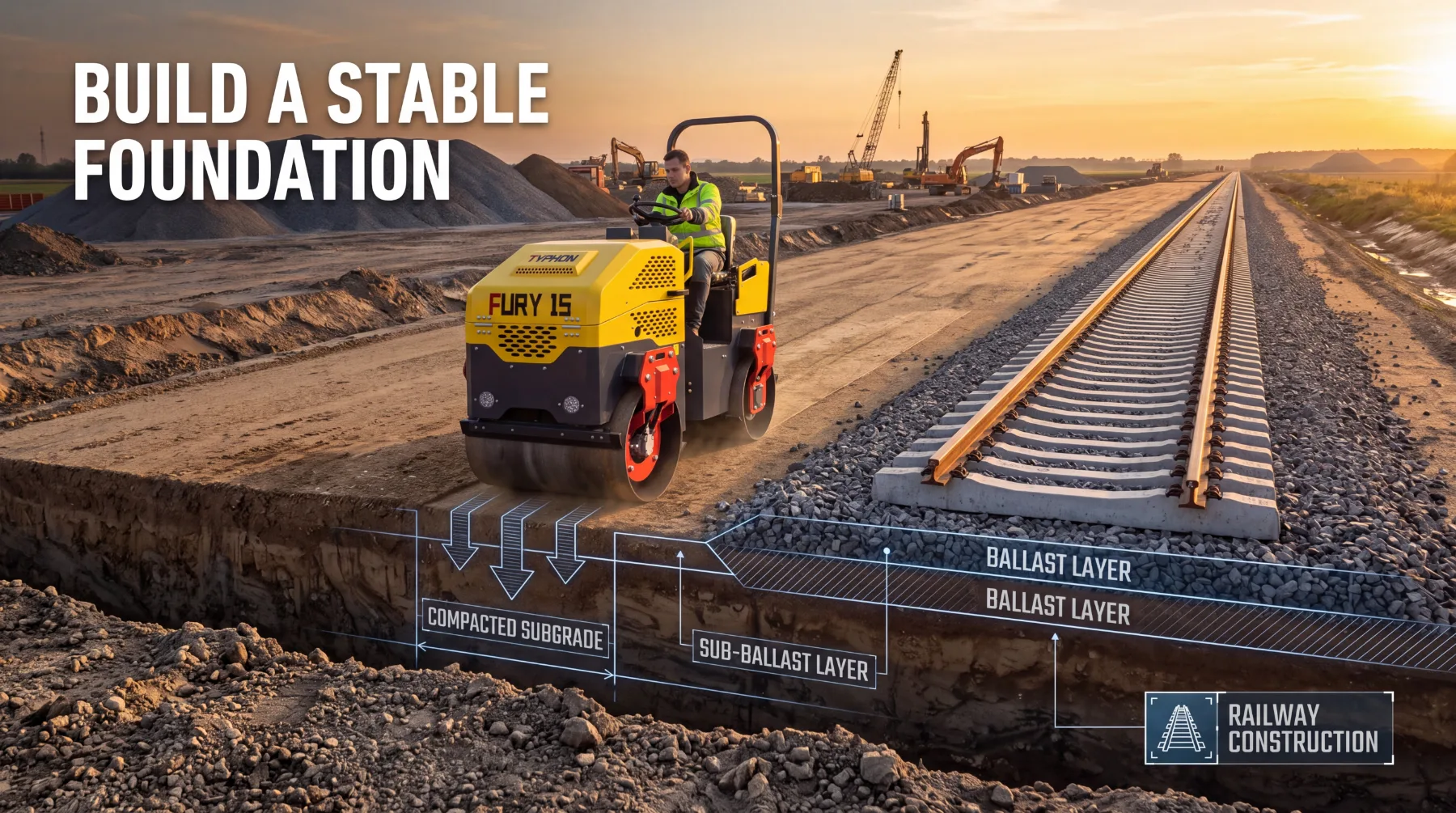
A railway line is only as reliable as the foundation beneath its tracks, and building that foundation depends heavily on road rollers. Rail lines must support the immense weight of trains and keep the track properly aligned over long distances, which requires a stable, well-compacted base at every level. Road rollers compact the track foundations, embankments, and other layers that support the rails, creating the firm, dependable platform a railway needs to operate safely and smoothly.
The foundation of a railway is built in layers, much like a road, and each one must be compacted thoroughly. The subgrade and the ballast layers beneath the track all need to be dense and stable so they can bear the concentrated loads that trains impose. Embankments, which raise and level the track across uneven terrain, are especially important, because loose or poorly compacted fill could settle unevenly and throw the track out of alignment. Rollers compress these embankments and foundation layers into a solid mass that holds its shape under load.
Proper compaction directly affects how safely and smoothly a railway performs over its lifetime. When the foundation is dense and stable, the track stays properly aligned, and trains run smoothly without the risks that come from uneven settling. A well-compacted base also resists the gradual shifting that would otherwise demand constant maintenance and repair. Because railways stretch across long distances and varied ground conditions, consistent compaction along the entire route is essential to maintaining a uniform, dependable track. Road rollers provide that consistency, working through the foundation and embankment layers to build the stable base that keeps trains running safely and reliably. Their contribution to railway construction is fundamental, forming the groundwork on which the entire line depends.
Dam Construction
Dam construction is among the most demanding of all civil engineering projects, and road rollers play a vital role in building structures strong enough to hold back enormous volumes of water. A dam must be dense, stable, and resistant to the constant pressure and moisture it faces, which makes thorough compaction essential at every stage. Heavy rollers compact the earth fills that form many dams, pressing the material into a solid, watertight mass capable of withstanding the tremendous forces at work.
Earth-fill dams rely on careful, layer-by-layer compaction to achieve their strength. Material is placed in successive layers, and each one must be compacted thoroughly before the next is added, building up a dense structure with no weak points. Proper compaction is what gives the dam its stability and its resistance to water seeping through, both of which are critical to the structure's safety. Heavy rollers provide the compactive force needed to press these fills into the dense, uniform mass that a dam requires, ensuring the finished structure can perform its demanding job reliably.
Some dam projects call for an additional technique known as roller-compacted concrete, and rollers are essential here as well:
- Earth-fill compaction, which builds dense, stable, water-resistant fills layer by layer.
- Roller-compacted concrete (RCC), which is spread and then compacted by rollers to form strong, dense concrete sections in certain dam designs.
Whether the project relies on compacted earth fills, roller-compacted concrete, or a combination of methods, the roller is central to achieving the density and strength a dam demands. The stakes in dam construction are exceptionally high, and the thorough compaction that rollers provide is what allows these structures to safely hold back water for decades. It's heavy, precise work, and the road roller is indispensable to getting it right.
Industrial & Mining Sites
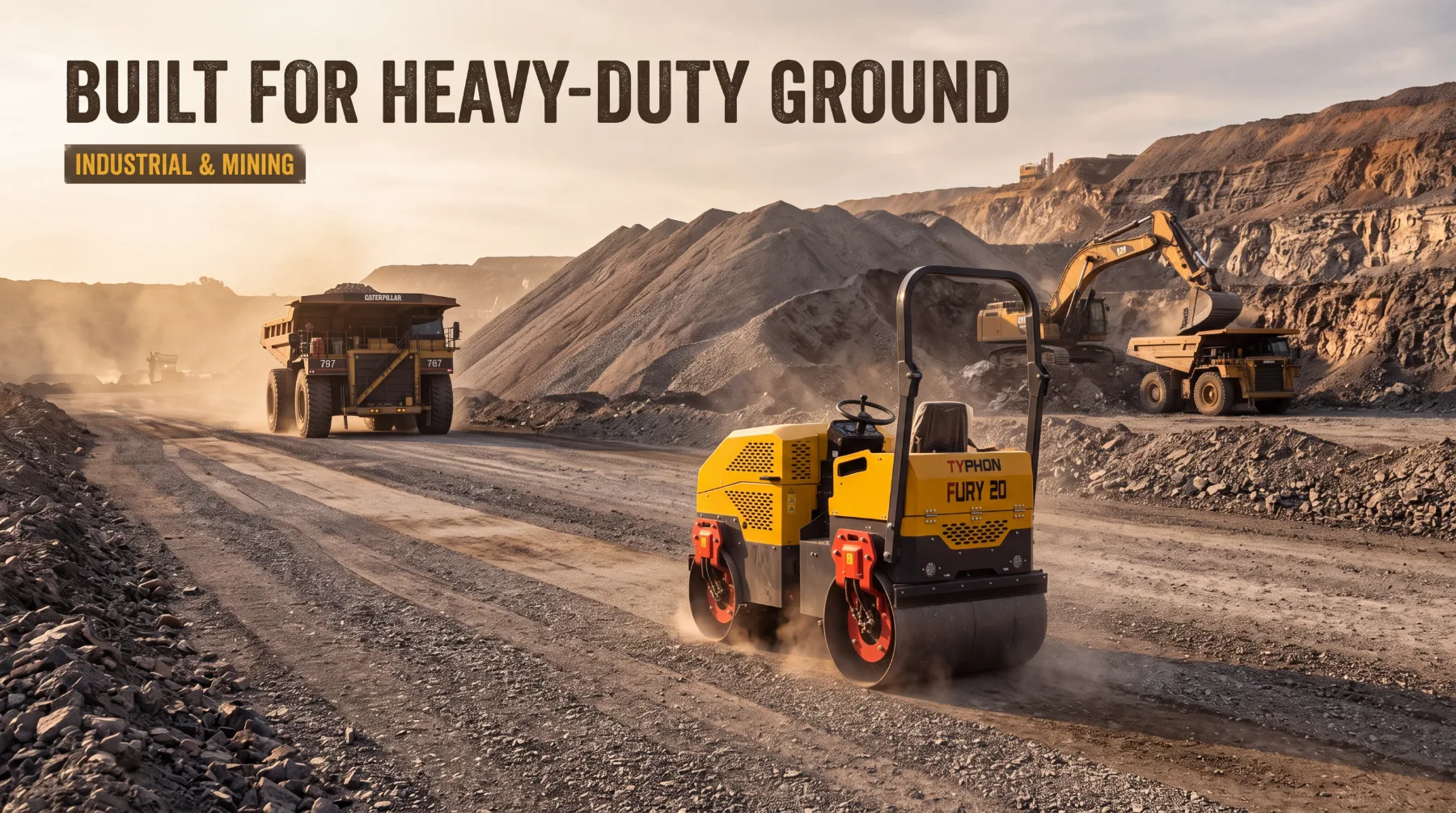
Industrial and mining operations depend on rugged, dependable ground, and road rollers are essential to preparing it. These sites handle heavy equipment, constant traffic, and demanding earthwork, all of which require firm, stable surfaces built to withstand punishing conditions. Road rollers compact the haul roads, work yards, foundations, and large earthwork areas that keep these operations running, turning loose, unstable ground into surfaces tough enough for the relentless demands of industrial and mining work.
Haul roads are a prime example of where compaction proves its worth. These roads carry heavy trucks and equipment loaded with materials, often around the clock, and they must remain stable under that continuous, punishing traffic. Rollers compact haul roads into firm, durable surfaces that resist rutting and hold up under enormous loads. Work yards face similar demands, needing solid, level ground where heavy equipment can operate and materials can be stored and moved safely. In both cases, thorough compaction is what makes the surface dependable enough for daily heavy use.
Beyond roads and yards, rollers handle the foundations and large earthwork areas that these projects require. Industrial facilities need stable, well-compacted ground beneath their structures, while mining sites often involve extensive earthmoving that demands compaction across broad areas. Rollers press these surfaces into dense, stable bases capable of supporting heavy loads and demanding activity. Because industrial and mining sites operate under such tough conditions, the strength and durability that proper compaction provides are essential to keeping the work safe and efficient. Road rollers deliver that strength, preparing the rugged, reliable ground these operations count on to perform. Across every part of a demanding site, the roller's compaction is what makes dependable, heavy-duty operation possible.
Conclusion
Road rollers are far more than simple compaction machines; they are essential to building the strong, stable foundations that major projects depend on. In highway and expressway construction, they compact soil, gravel, sub-base, and asphalt into durable roads that carry heavy traffic for years. On airport runways, they press wide areas of soil and pavement into the smooth, strong surfaces that aircraft demand. In railway construction, they build the compacted foundations and embankments that keep tracks aligned and trains running safely, while in dam construction they compact earth fills and roller-compacted concrete into structures strong enough to hold back water. Across industrial and mining sites, they prepare the rugged haul roads, work yards, foundations, and earthwork areas that heavy operations require. In every one of these projects, thorough compaction is the difference between a structure that lasts and one that fails, and the road roller is the machine that delivers it. When durability and reliability matter most, the road roller proves itself an indispensable part of getting the job done right.