
Aug 27, 2026
Crawler vs. Wheeled Scissor Lifts: Key Differences and Benefits
Choosing the right scissor lift can shape how smoothly a project runs, and one of the biggest decisions comes down to how the machine moves. Crawler and wheeled scissor lifts share the same core purpose: raising workers and materials safely to height. But the way each one travels across a jobsite
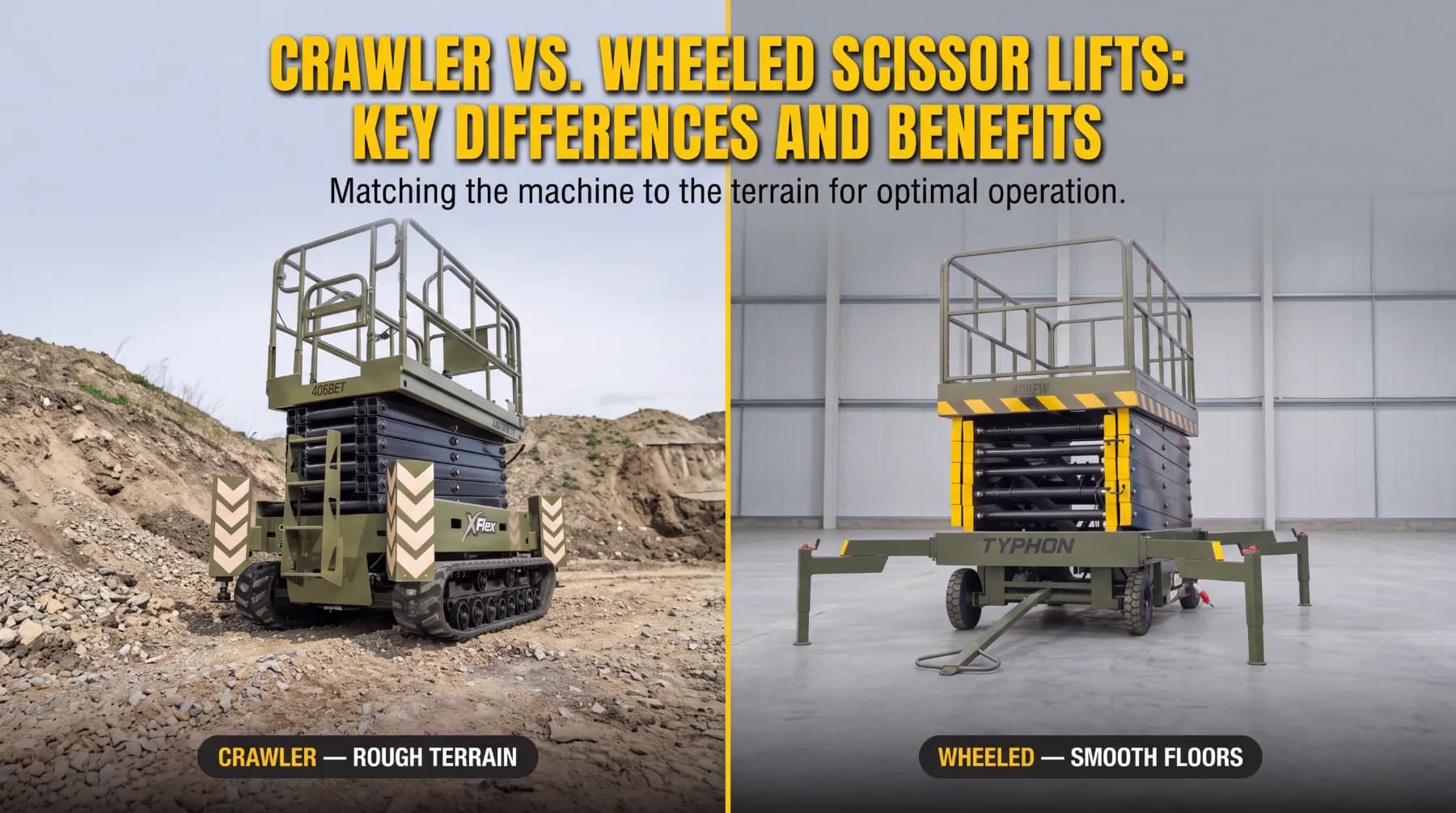
Choosing the right scissor lift can shape how smoothly a project runs, and one of the biggest decisions comes down to how the machine moves. Crawler and wheeled scissor lifts share the same core purpose: raising workers and materials safely to height. But the way each one travels across a jobsite creates real differences in performance, access, and productivity. A tracked crawler thrives where the ground is soft or uneven, while a wheeled model excels on smooth, solid floors. Understanding these strengths helps you match the machine to the work, avoid costly delays, and keep your crew productive. This guide breaks down what sets these two lift types apart, where each performs best, and how to choose the right one for your surface, worksite, and mobility needs.
What Are Crawler and Wheeled Scissor Lifts?
The most fundamental difference between these two machines lies in their undercarriage. Crawler scissor lifts move on tracked undercarriages, similar to those found on excavators and bulldozers. Wheeled scissor lifts, by contrast, roll on conventional wheels much like a standard aerial work platform. This single design choice ripples out to affect where each lift can travel, how it handles the ground beneath it, and how easily an operator can reposition it during a shift.
Tracks spread the machine's weight across a wide, continuous surface. That larger footprint lets a crawler grip loose or slippery ground and keep moving where wheels might dig in or spin. Wheels, on the other hand, are built for speed and simplicity. On a firm, level surface, they let the lift glide from one spot to the next with minimal effort, making quick work of repositioning tasks throughout the day.
The practical result is that each lift type suits a different environment. Consider how the undercarriage shapes daily use:
- Terrain access: tracks handle soft, muddy, or rough ground; wheels favor hard, flat surfaces
- Repositioning speed: wheeled models move faster on smooth floors; crawlers move steadily over obstacles
- Weight distribution: tracks reduce ground pressure, while wheels concentrate it on smaller contact points
Neither design is universally better. A crawler brings confidence to unpredictable outdoor ground, and a wheeled lift brings efficiency to clean, established floors. Knowing what separates them at the undercarriage level is the first step toward selecting the machine that fits your work. From there, the choice becomes a matter of matching each lift's strengths to the conditions you face most often.
Crawler Scissor Lifts: Stability on Uneven Terrain
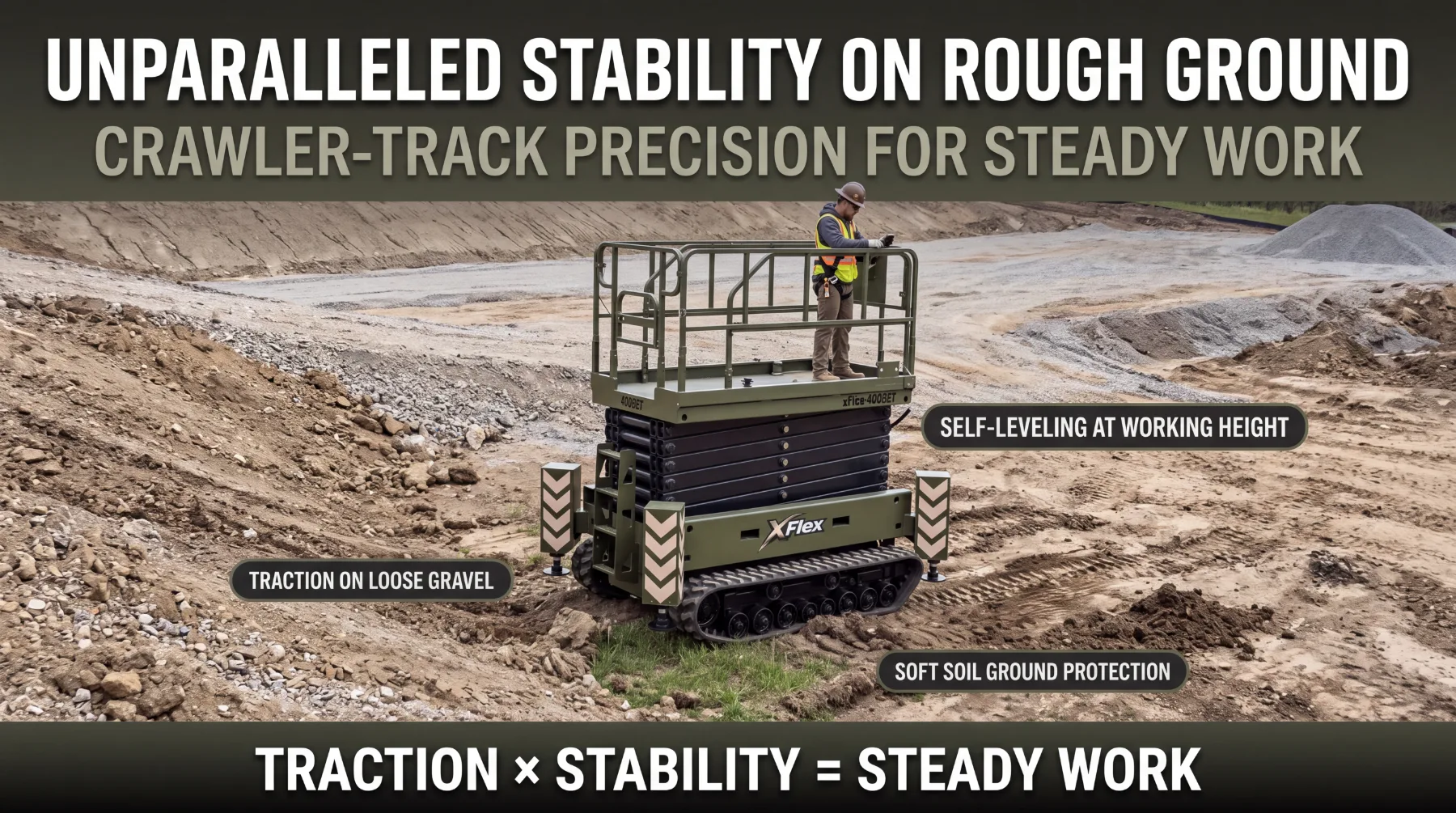
Crawler scissor lifts are engineered for the ground that gives other machines trouble. Their tracked undercarriages provide better traction and stability on soft, uneven, or rough surfaces, which makes them a dependable choice when the terrain is anything but ideal. Where a wheeled lift might sink, slip, or lose its footing, a crawler keeps a firm hold and stays steady. This reliability comes largely from the way tracks interact with the surface below them.
The secret is the ground contact area. Tracks distribute the machine's weight over a much larger surface than wheels, which lowers ground pressure and reduces the risk of sinking into soft soil, sand, gravel, or mud. That broad, stable base also helps the lift resist tipping and stay level when working on slopes or irregular ground. For operators, this translates into greater confidence at height, since a stable platform is essential for safe and precise work.
These qualities make crawler lifts especially valuable in demanding outdoor settings. They tend to shine in environments such as:
- Outdoor construction: graded lots, backfilled areas, and sites with loose or disturbed soil
- Landscaping and grounds work: lawns, gardens, and terrain where wheels could cause ruts or damage
- Challenging work areas: rough, sloped, or debris-strewn ground that would stall a wheeled model
Beyond raw capability, crawlers help protect the surfaces they cross. Because tracks spread weight so evenly, they leave a lighter mark on delicate ground like turf, reducing the ruts and scarring that heavy wheeled equipment can cause. For projects where both stability and surface care matter, a crawler scissor lift delivers a strong combination of traction, safety, and steady performance across terrain that few other lifts can handle with the same assurance.
Wheeled Scissor Lifts: Fast and Easy Mobility
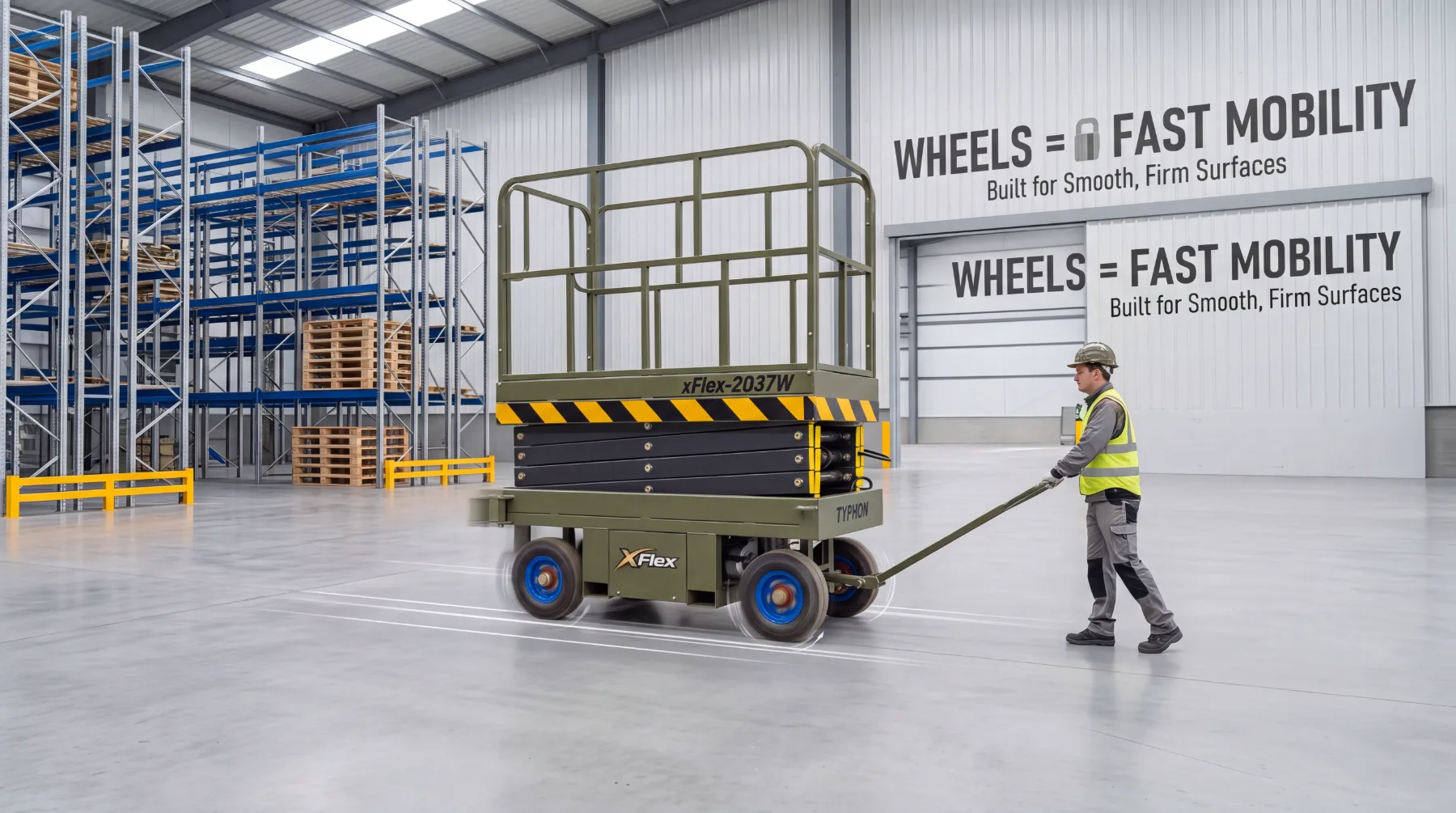
Wheeled scissor lifts are all about efficiency on solid ground. They are best suited to smooth, firm surfaces such as concrete floors and paved work areas, where their conventional wheels can move freely and reliably. On this kind of terrain, a wheeled lift offers a level of speed and convenience that tracked machines simply cannot match. For crews who spend their days on established, level floors, that speed adds up to real time savings.
The standout advantage is quick repositioning. Because wheels roll with little resistance on hard surfaces, operators can move and reposition the lift rapidly between tasks, stations, or work zones. This matters most in fast-paced settings where a machine needs to shift frequently throughout the day. Rather than laboring across the floor, a wheeled lift glides to its next position, keeping the workflow smooth and the crew focused on the job rather than on moving equipment.
These traits make wheeled models a natural fit for indoor and paved environments, including:
- Warehouses: picking, stocking, and maintenance work across long, flat aisles
- Facilities and maintenance: repairs, installations, and inspections in buildings with finished floors
- Indoor construction: interior fit-outs, electrical, and overhead work on completed slabs
Wheeled lifts also tend to be simpler to operate and maneuver in tight, organized spaces. Their compact movement and responsive handling suit the controlled conditions of an indoor site, where obstacles are predictable and the ground is dependable. For any project built around firm, level surfaces, a wheeled scissor lift brings the mobility and ease that keep operators moving efficiently. When the floor is smooth and the pace is quick, few options can match the practical, everyday convenience that a wheeled model provides on the job.
Comparing Terrain and Worksite Performance
When you place these two lift types side by side, the comparison comes down to the ground they run on. Crawler models generally hold the advantage on rough or soft terrain, where their tracks provide the traction and stability that keep work safe and steady. Wheeled models, meanwhile, prove more efficient on level, hard surfaces, where their speed and easy handling reduce the effort of moving between tasks. Each machine is optimized for a different world, and recognizing that distinction is key to a smart choice.
Terrain is the deciding factor, but access conditions and worksite type matter just as much. An outdoor construction site with graded soil, slopes, or muddy patches plays directly to a crawler's strengths, while a finished warehouse or paved facility rewards the quick mobility of a wheeled lift. Trying to force the wrong machine into a job usually leads to lost time, added risk, or damage to either the equipment or the surface.
A direct look at how they compare helps clarify the decision:
- Rough or soft ground: crawlers excel with superior traction and lower ground pressure
- Level, hard surfaces: wheeled lifts win on speed and effortless repositioning
- Mixed or unpredictable sites: crawlers offer versatility where conditions vary
- Controlled indoor spaces: wheeled models deliver efficiency and simple handling
Productivity ultimately depends on the fit between machine and environment. A crawler working a smooth warehouse floor wastes its terrain advantages and moves slower than needed, while a wheeled lift on soft outdoor ground may struggle to stay stable or even become stuck. Matching the lift to the surface and access conditions ensures the machine performs at its best. When you weigh terrain, worksite type, and how the lift will actually be used, the right choice becomes far clearer and far more valuable.
How to Choose the Right Scissor Lift
Selecting the right scissor lift starts with an honest look at where and how the machine will work. The surface is the first consideration, since it largely decides whether a tracked or wheeled model makes sense. From there, several other factors come into play, and weighing them together helps you land on a lift that supports both safety and efficiency. Rushing this decision often leads to a machine that fights the conditions rather than working with them.
Working height is a core part of the equation, as different jobs demand different reach, and the lift must safely deliver the elevation your tasks require. Mobility needs matter too: if the work involves constant repositioning across a smooth floor, a wheeled model's speed becomes a major asset, while steady movement over rough ground favors a crawler. Whether the job is indoors or outdoors often points clearly toward one type, and the frequency of repositioning shapes how much that mobility advantage will pay off day to day.
Bringing these considerations together makes the choice more straightforward. Before deciding, evaluate:
- Surface type: firm and paved suits wheels; soft or uneven suits tracks
- Required working height: confirm the lift reaches your tasks safely
- Mobility needs: match repositioning speed to how often the lift moves
- Indoor or outdoor use: align the machine with its primary environment
- Repositioning frequency: frequent moves reward easy, fast mobility
The right mobility type does more than solve an access problem. It improves operator efficiency by reducing wasted effort and keeps the workflow moving smoothly, which lifts overall jobsite productivity. A machine matched to its conditions lets your crew focus on the work itself rather than wrestling with equipment. By carefully weighing surface, height, mobility, environment, and movement needs, you set the project up for safer, faster, and more dependable results from the very first shift.
Conclusion
Crawler and wheeled scissor lifts serve the same goal but earn their value in very different conditions. Crawler models use tracked undercarriages to deliver traction, stability, and low ground pressure on soft, uneven, or rough terrain, making them a strong choice for outdoor construction, landscaping, and challenging sites. Wheeled models roll on conventional wheels built for smooth, firm surfaces, offering fast, effortless repositioning that suits warehouses, facilities, and indoor construction. The right decision rests on your surface, required working height, mobility needs, indoor or outdoor use, and how often the lift must move. Match the machine to those conditions, and you gain safer operation, greater operator efficiency, and stronger productivity across the entire jobsite.
Frequently Asked Questions
- What is the main difference between crawler and wheeled scissor lifts?
The core difference is the undercarriage. Crawler scissor lifts move on tracks, similar to an excavator, while wheeled models roll on conventional wheels. This affects where each machine can travel and how it performs. Tracks spread weight over a larger area, giving crawlers better grip and stability on soft or uneven ground. Wheels concentrate weight on smaller contact points but move faster on firm, level surfaces. In short, crawlers are built for rough outdoor terrain, and wheeled lifts are built for smooth, hard floors and quick repositioning. - When should I choose a crawler scissor lift?
Choose a crawler scissor lift when the ground is soft, uneven, sloped, or rough. Their tracked undercarriages provide superior traction and stability, and their larger ground contact area lowers the risk of sinking into mud, sand, or loose soil. This makes them ideal for outdoor construction, landscaping, and other challenging work areas. Crawlers also tread more gently on delicate surfaces like turf, reducing ruts and damage. If your project involves unpredictable or difficult terrain where a stable, safe platform is essential, a crawler is usually the better fit. - What are wheeled scissor lifts best used for?
Wheeled scissor lifts perform best on smooth, firm surfaces such as concrete floors and paved work areas. Their conventional wheels allow fast, easy movement and quick repositioning between tasks, which is valuable on busy sites. They are well suited to warehouses, facilities, and indoor construction projects where the ground is level and dependable. Because they are simple to maneuver in organized, controlled spaces, wheeled lifts help crews save time and keep the workflow moving. When your work centers on established, hard floors, a wheeled model offers excellent everyday efficiency. - Can a wheeled scissor lift work outdoors?
A wheeled scissor lift can work outdoors, but only when the surface is firm, level, and stable, such as paved lots or finished concrete. On soft, muddy, sloped, or uneven ground, wheeled models can lose traction, sink, or become unstable, which creates safety risks and delays. For those conditions, a crawler is the safer and more capable choice. Before using a wheeled lift outdoors, assess the surface carefully to confirm it can support the machine reliably. Matching the lift to the actual ground conditions is essential for safe, productive operation. - How do I decide which scissor lift is right for my project?
Start with the surface, since firm floors favor wheeled lifts and soft or rough ground favors crawlers. Then consider your required working height to ensure the machine reaches your tasks safely. Factor in mobility needs and how often the lift will be repositioned, as frequent moves on smooth floors reward a wheeled model's speed. Decide whether the work is primarily indoors or outdoors, which often points clearly to one type. Weighing these factors together helps you choose a lift that improves operator efficiency and boosts overall jobsite productivity.