
Oct 16, 2026
Daily Inspection Checklist for Scissor Lift Safety and Performance
Scissor lifts allow workers to reach elevated areas for electrical installation, building maintenance, and construction tasks. Because operators depend on the platform, guardrails, controls, and lifting system for protection, even minor defects can create serious hazards.
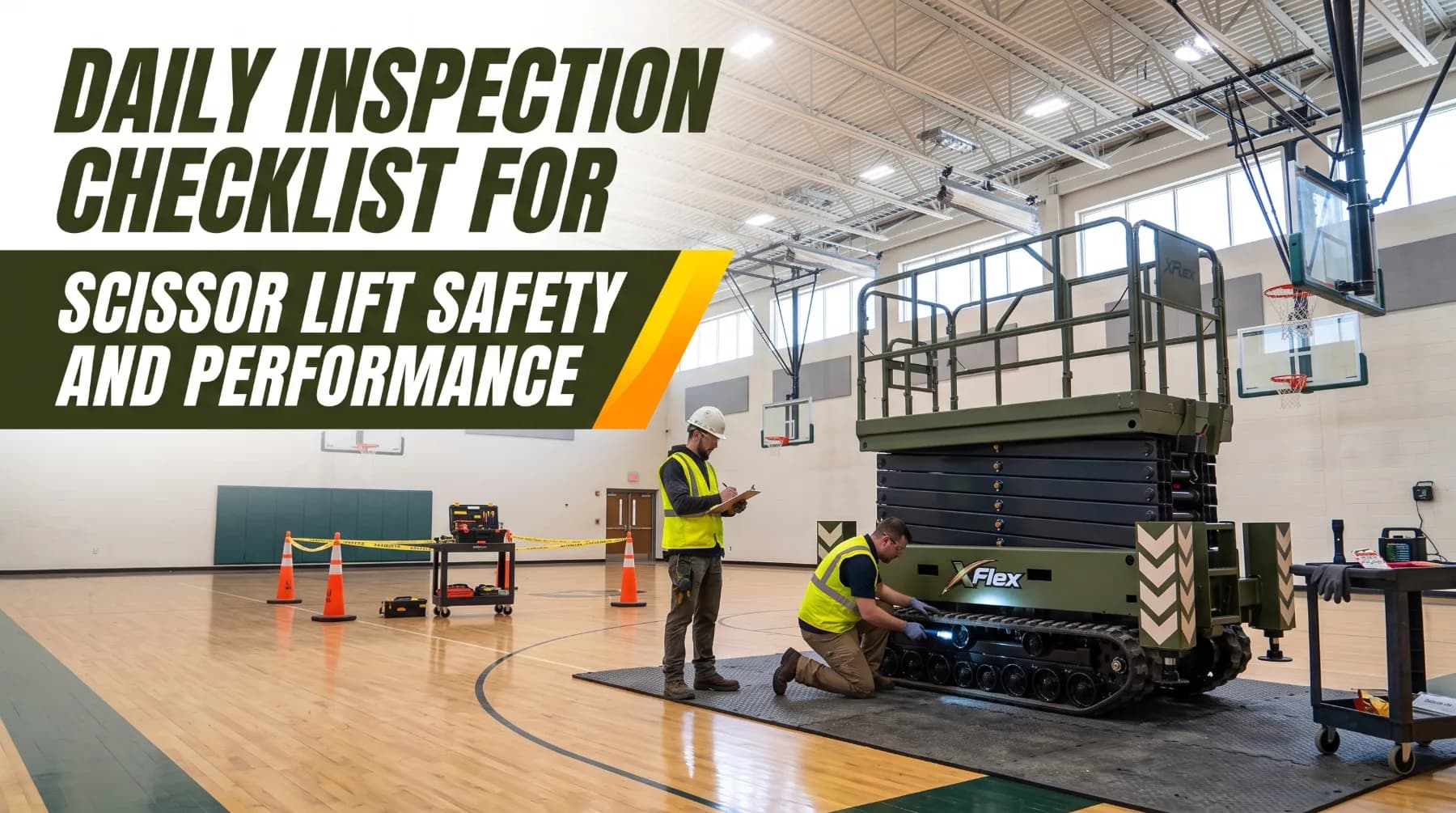
Scissor lifts allow workers to reach elevated areas for electrical installation, building maintenance, and construction tasks. Because operators depend on the platform, guardrails, controls, and lifting system for protection, even minor defects can create serious hazards. A daily inspection checklist helps identify damaged components, fluid leaks, low battery charge, and other issues before the machine enters service.
Platform condition, hydraulic performance, lifting components, and ground-contact parts all affect safe operation. Operators should examine guardrails, retaining pins, entry gates, hoses, fittings, tires or wheels, and pothole protection devices for damage or obstruction. Testing travel and lift controls, alarms, emergency stops, and manual lowering systems also confirms that essential functions are available if normal operation fails.
Consistent pre-start checks help crews detect faults early, prevent avoidable downtime, and keep elevated work on schedule. Any defect that could affect safe operation should be reported, and the lift should remain out of service until qualified personnel complete the necessary repairs. Reviewing the work surface, overhead obstructions, power supply, and emergency access further helps ensure the equipment is ready for the planned task.
Platform and Guardrail Inspection
The platform and its guardrail system provide the operator's primary protection when working at height. On most scissor lifts, guardrails help keep workers inside the platform as it rises, travels, and operates near ceilings, walls, or other structures. Missing pins, cracked welds, or a gate that fails to close can compromise this protection.
Begin every inspection with the platform fully lowered, the machine parked on firm, level ground, the key switched off, and the key removed. If any inspection requires access beneath a raised platform, engage the manufacturer's maintenance safety arm or support according to the operator's manual. Never place any part of your body inside the scissor stack or beneath a platform supported only by hydraulic pressure.
Inspect the platform deck for cracks, holes, bends, and loose or missing fasteners. Keep the surface free of oil, mud, ice, debris, and loose tools that could cause slips or trips. Excess materials, such as wire spools, fittings, and offcuts, can also increase the platform load and obstruct safe footing during an emergency.
Check the top rails, mid-rails, and posts for bends, cracks, and loose connections, particularly around welds and mounting points. Confirm that all retaining pins, bolts, and clips are present and secured. If the lift has folding guardrails for transport or low-clearance travel, make sure each rail is raised, locked, and pinned as specified before elevating the platform.
Inspect the entry gate by moving it through its full range and confirming that it closes and latches as designed. Check hinges, springs, and latches for wear or damage. If the machine uses a chain or sliding bar instead of a gate, confirm that it is intact and secures the entry point properly.
Check fitted toe boards for damage and loose connections, as they help prevent tools and materials from falling onto workers below. If the platform has an extension deck, extend and retract it fully to verify smooth movement and secure locking in each position. Inspect its guardrails and confirm they remain intact and firmly attached.
Inspect designated lanyard anchor points for damage and confirm they match the manufacturer's specifications. Check that the capacity decal, operating instructions, and safety labels are present and legible. The operator's manual should also be available in the machine's weather-resistant holder.
Guardrails are typically the primary fall protection on a scissor lift, so workers must remain inside them while elevated. Never stand, sit, or climb on the rails, or use ladders, buckets, or boxes to gain extra height. When required by the manufacturer, employer, or site rules, attach a fall-restraint lanyard only to designated anchor points.
Key takeaway: Inspect the platform floor, guardrails, entry gate, toe boards, and extension deck for damage or looseness. Confirm that all pins are secured, the entry gate closes correctly, and the platform is free of debris before raising it.
Hydraulic System and Lifting Mechanism
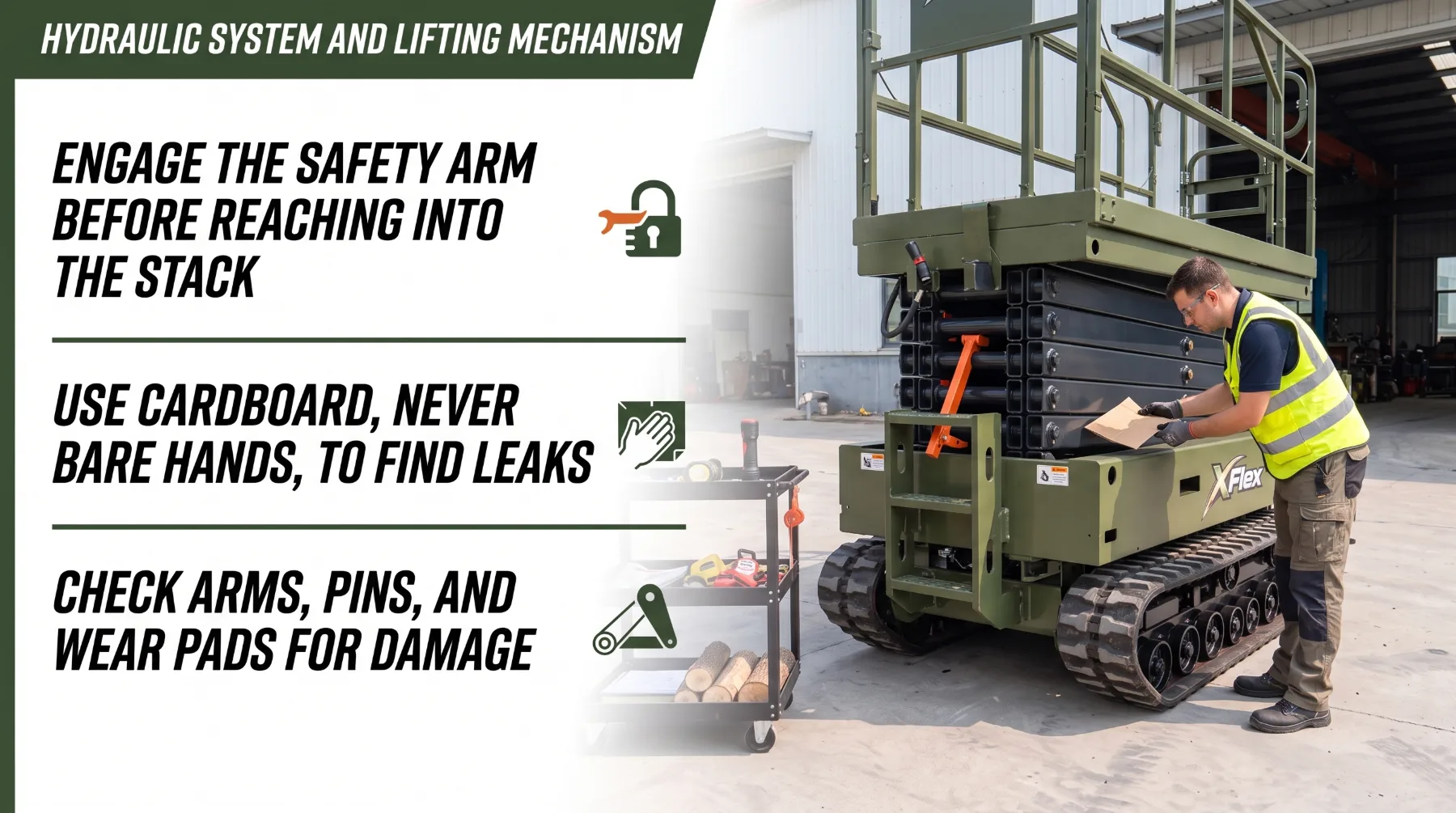
The hydraulic system and scissor stack raise and lower workers and materials. Hydraulic cylinders extend to move the scissor arms upward, allowing the platform to rise through its full working range. A leaking hose, worn pin, or bent arm can affect lifting performance and platform stability without warning.
Check the hydraulic fluid level with the platform fully lowered, following the manufacturer's procedure. Inspect the fluid through the sight glass or dipstick and look for signs of contamination. Milky or foamy fluid may indicate water or air in the system, while dark fluid with a burnt odor may suggest overheating. Use only the hydraulic fluid specified by the manufacturer.
Inspect accessible hoses, fittings, and cylinders for leaks, cracks, abrasion, bulges, and kinks. Pay close attention to areas where hoses flex as the scissor stack rises or pass close to moving arms. Examine the lift cylinder rod for scoring, nicks, pitting, or bends, and look for fresh oil or dust buildup around the cylinder gland. Check beneath the machine for fluid drips, which can create slip hazards and indicate a developing fault.
Never use your bare hands to locate hydraulic leaks. Pressurized fluid can penetrate the skin and cause serious injuries requiring immediate medical attention. Use cardboard or wood to help identify a leak from a safe position, and wear appropriate gloves and eye protection. Relieve system pressure according to the manufacturer's procedure before loosening any fitting.
Inspect the full length of the scissor arms for bends, twists, cracks, and damaged welds. Look for scraped paint, dents, or other signs that the arms have struck a beam, doorway, or nearby equipment. A bent arm can change how the platform rises and how loads travel through the lifting structure.
Check visible pivot points for missing pins, loose retaining bolts, clips, and snap rings. Fresh metal shavings around joints may indicate worn bushings. Inspect slide blocks and wear pads where the arms move along the chassis and platform channels, ensuring they are present and not excessively worn. Lubricate pivot points according to the manufacturer's schedule.
Confirm that the maintenance safety arm or support is present, undamaged, and moves freely into position. This device protects anyone who must access the scissor stack during inspection or service, so it must function correctly whenever needed.
During the function test, raise the platform a short distance and lower it again. Movement should remain smooth and steady without jerking, hesitation, or unexpected drift. If the platform creeps downward after the controls are released, internal hydraulic leakage may be present and requires attention before the machine is used.
Key takeaway: Check hydraulic fluid, hoses, cylinders, scissor arms, pivot pins, and wear pads for leaks, damage, and unusual wear. Follow the manufacturer's procedures and use cardboard, never bare hands, to locate suspected hydraulic leaks.
Tires, Wheels, and Ground Contact
Every load carried by the platform passes through the chassis, tires or wheels, and supporting ground. These components affect how the scissor lift travels, steers, and maintains stability, particularly when the platform is raised. A damaged tire, worn brake, or malfunctioning pothole guard can increase the risk of instability.
Inspect each tire for cuts, missing chunks, embedded debris, flat spots, and uneven wear. Most electric slab scissor lifts use solid, non-marking tires, while rough-terrain models may have foam-filled or pneumatic tires. Check pneumatic tire pressure against the manufacturer's specifications because uneven pressure can affect platform stability. Confirm that wheel nuts are present and secure, and inspect rims for cracks or bends.
Test the brakes during the function check. Scissor lifts commonly use automatic parking brakes that engage when the drive controls return to neutral. Confirm that the machine stops smoothly and holds its position. If the manufacturer provides a brake release for towing or winching, ensure it is returned to the normal operating position before use.
Inspect steering cylinders, tie rods, and linkages for damage, leaks, and loose hardware. During the function test, confirm that the machine steers smoothly in both directions and travels straight when commanded.
Many scissor lifts use pothole protection bars or guards that lower beneath the chassis as the platform rises. These devices help reduce the risk of tipping if a wheel drops into a hole or off an edge. Check that the guards are clean, undamaged, and deploy fully during the function test. If the lift prevents elevation or driving because the guards fail to deploy, treat this as a safety-related fault rather than attempting to bypass the system.
On rough-terrain models, inspect axles, oscillating axle components, drive motors, and the undercarriage for damage, leaks, and accumulated mud or debris. If the machine has outriggers or leveling jacks, extend and retract each one and check the pads, cylinders, and interlocks for correct operation.
Ground-contact components can only perform as designed on suitable surfaces. Before driving into the work area, confirm that the surface is firm, level, and within the machine's rated slope and side-slope limits. Rough-terrain capability varies by model, so verify that the intended surface is suitable for the specific machine.
Key takeaway: Inspect tires or wheels, brakes, steering components, and pothole protection. Check the undercarriage on rough-terrain models and confirm that the working surface meets the machine's operating limits.
Controls and Emergency Systems
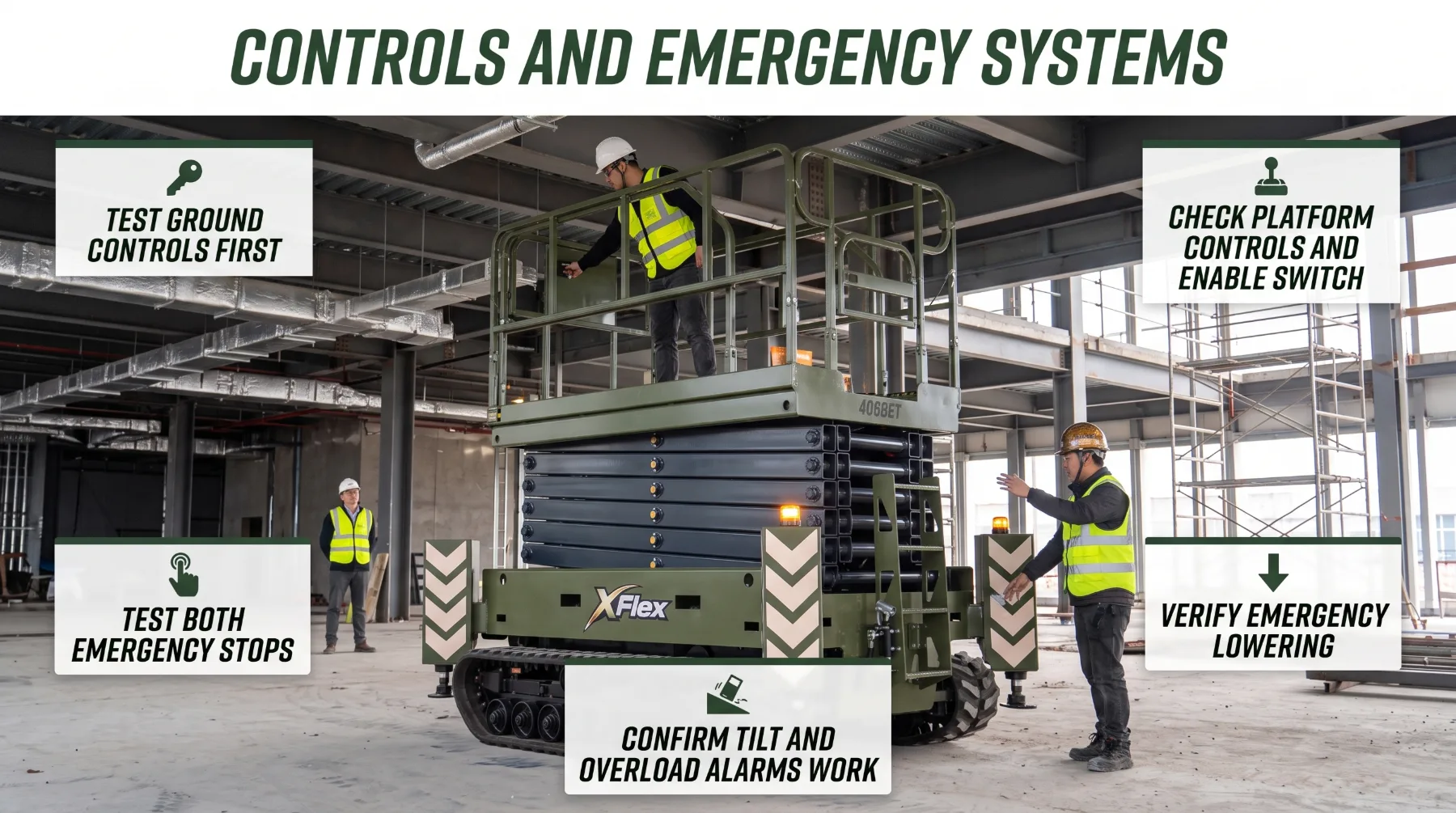
A scissor lift's controls and emergency systems allow operators to move the platform safely and lower it when an emergency occurs. Testing these features before use helps identify faults that could cause unexpected movement or leave workers stranded at height.
-
Ground Controls: Test ground-level lift controls and confirm authorized personnel can access them to lower the platform during an emergency.
-
Platform Controls: Inspect the control box, cables, and enable switches. Check that lifting, driving, and steering functions respond smoothly and return to neutral when released.
-
Emergency Stop Buttons: Test emergency stops at both the ground station and platform to confirm they disable the intended functions.
-
Emergency Lowering System: Locate and check the manual lowering system according to the manufacturer's procedure. Ensure crew members know how to use it.
-
Alarms and Safety Interlocks: Check tilt alarms, overload sensors, descent alarms, and function cutouts as specified by the manufacturer. Never bypass safety devices, and remove faulty equipment from service until repaired.
Key takeaway: Test the ground and platform controls, emergency stops, emergency lowering system, alarms, and installed safety devices according to the manual. Do not operate the lift if any control or emergency system fails.
Work Area and Operating Conditions
Even a well-maintained scissor lift can tip, collide with structures, or contact electrical hazards if the work area is unsuitable. Inspecting workplace conditions is as important as checking the machine itself. Conditions can change throughout the day, so assess the area before each use and whenever the work location changes.
Walk the travel route and working area to identify holes, drop-offs, floor openings, trench edges, curbs, ramps, and debris. Confirm that slopes and side slopes remain within the manufacturer's limits for both travel and elevated operation. Outdoors, watch for soft ground, recently placed backfill, and wet or icy surfaces.
Confirm that the ground or floor can support the lift's weight, the platform load, and the concentrated forces beneath each wheel. Suspended slabs, mezzanines, elevated decks, and floors above basements or vaults may have load limits that require assessment by a qualified person. Covered floor openings and drain grates may also fail under concentrated wheel loads.
Inspect overhead clearance along the entire travel route and above the intended working position. Identify beams, ductwork, sprinkler pipes, light fixtures, door headers, and building edges. Crushing between the platform and an overhead structure is a serious hazard. Plan the machine's position to maintain adequate clearance at working height, and raise the platform slowly when approaching overhead obstructions.
Identify overhead power lines, energized equipment, and bus ducts within reach of the platform, workers, or materials they handle. Most scissor lifts are not insulated. Maintain the minimum electrical clearance required by applicable regulations. In the United States, this is generally at least 10 feet for lines up to 50 kV, with greater distances required for higher voltages.
Protect the work area from moving forklifts, vehicles, other equipment, and pedestrians. Use barriers where needed and arrange a spotter when visibility is limited or traffic is heavy. Never position the lift in an active travel aisle without suitable traffic control.
Confirm that the planned load remains within the platform's rated capacity, including every worker, tool, and material. Check the maximum occupant limit on the capacity decal, and remember that extension decks may have separate, lower capacity ratings. Distribute materials evenly and never hang loads from guardrails unless the manufacturer specifically permits it.
Weather conditions also affect safe operation. Many slab scissor lifts are rated for indoor use only and must not be operated outdoors. Models approved for outdoor use have a maximum permitted wind speed, which may be around 28 mph on some machines. Large sheet materials can catch the wind and increase the risk of instability. Stop work during conditions that exceed the manufacturer's limits, including high winds, lightning, heavy rain, or ice.
If the work area is unsuitable, reposition the lift, prepare the surface, or select another work method. Never exceed the machine's permitted operating limits to keep a project on schedule.
Key takeaway: Inspect the work area for holes, slopes, overhead obstructions, electrical hazards, and traffic, confirm the ground can support the lift, and keep the planned work within platform load limits, wind restrictions, and other manufacturer requirements.
Conclusion
Daily scissor lift inspections are one of the most effective ways to protect the people who work at height and the crews working below them, because they catch defects in the platform, lifting mechanism, controls, power source, and work area before anyone leaves the ground: a secure platform with intact guardrails and a self-closing gate keeps workers inside their protected space, a sound hydraulic system and scissor stack raise and lower that platform smoothly, and healthy tires, brakes, and pothole protection keep the chassis stable. Working ground and platform controls, emergency stops, and a tested emergency lowering system ensure the crew can stop motion and bring a worker down safely, while a charged battery or properly serviced engine and functioning alarms keep the machine ready and visible. A careful assessment of the ground, overhead hazards, power lines, traffic, load limits, and weather confirms the lift is suited to the task. When you follow the manufacturer's checklist every shift, refuse to bypass safety devices, and remove defective equipment from service until it's repaired, you deliver safer, more reliable elevated work on every project, so before your next shift, lower the platform, walk around the machine, test every control and emergency system, and inspect the work area before the first lift.
Frequently Asked Questions
What should be checked before using a scissor lift?
Before operation, inspect the platform, guardrails, entry gate, lifting mechanism, hydraulic components, wheels or tires, controls, emergency systems, and power source. Check the surrounding work area for uneven surfaces, overhead obstructions, openings, and other hazards that could affect safe operation. Follow the manufacturer's inspection checklist for the specific model, and confirm that all required safety devices function correctly before raising the platform.
Should emergency lowering systems be checked?
Yes. Emergency lowering systems should be checked according to the manufacturer's procedure before the lift is used. These systems allow the platform to be lowered when normal controls or power are unavailable, helping occupants return to ground level during an emergency. Every crew member involved in the work should know where the emergency lowering control is located and understand how to use it. Never operate the lift if a required emergency function fails its check.
Can a scissor lift operate on uneven ground?
A scissor lift should operate on uneven ground only if the specific model is designed and rated for those conditions and remains within its permitted slope and side-slope limits. Many slab models are intended for firm, level surfaces and are not suitable for rough terrain. Soft soil, potholes, slopes, and unstable surfaces can affect stability, especially when the platform is raised. Always check the operator's manual and confirm that the ground conditions meet the machine's requirements before use.
What should happen if a safety defect is found?
Do not use the scissor lift if a safety defect is found. Remove it from service, apply the site's lockout or tagging procedure, control access to the machine, and report the problem to the responsible supervisor or maintenance team. The defect must be evaluated and corrected by an appropriately qualified person before the lift returns to service. Do not bypass safety devices or attempt unauthorized repairs, as these actions can increase the risk of equipment failure or injury.