
Sep 3, 2026
Forklift Battery Specifications Explained: Capacity, Power, and Working Performance
Choosing the right forklift battery involves far more than picking the biggest number on a spec sheet. The battery shapes how long your machine runs, how strongly it lifts, and how quickly it returns to work after charging. Get the specifications right, and your forklift keeps pace with your operation without unexpected downtime.
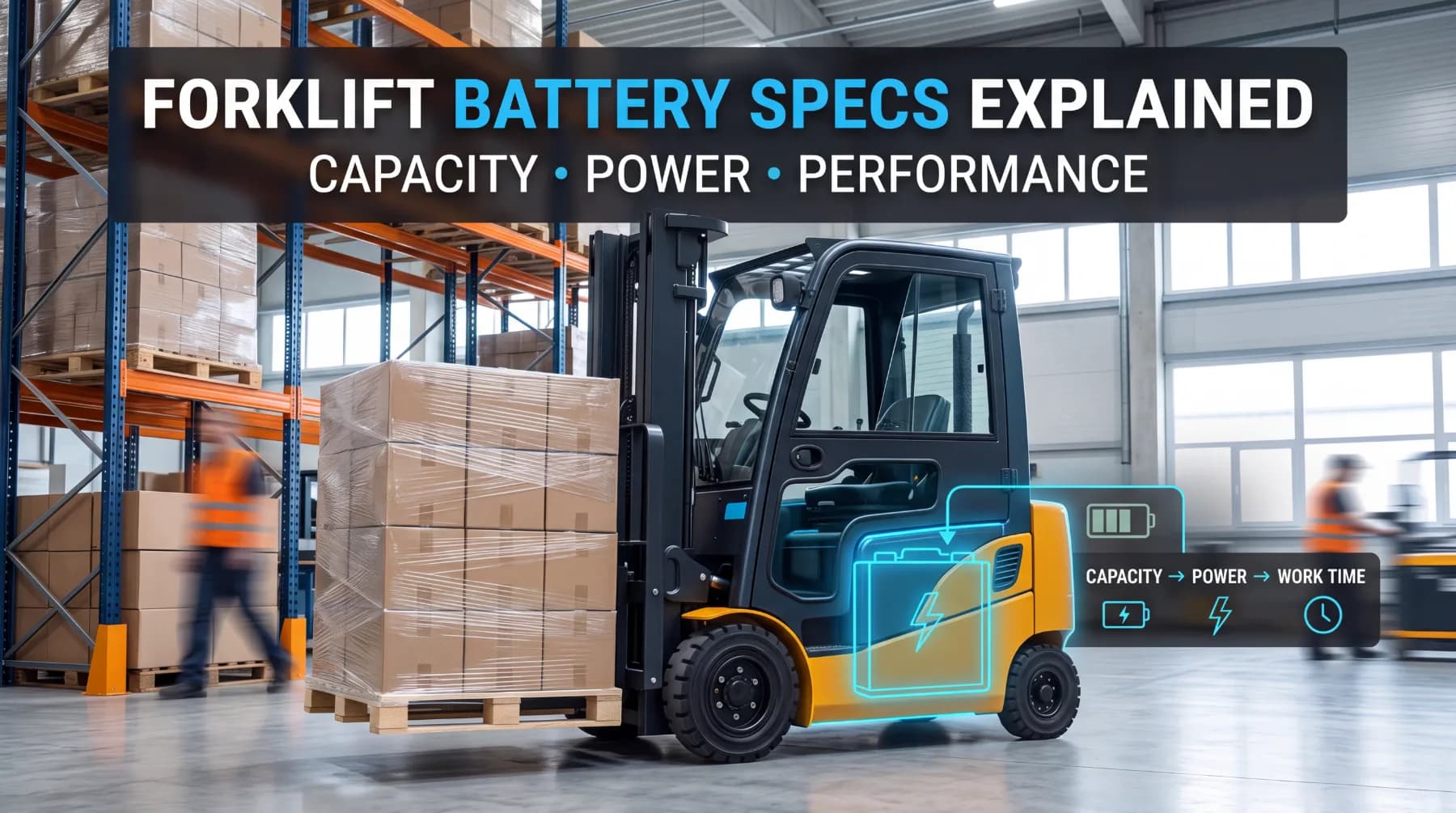
Choosing the right forklift battery involves far more than picking the biggest number on a spec sheet. The battery shapes how long your machine runs, how strongly it lifts, and how quickly it returns to work after charging. Get the specifications right, and your forklift keeps pace with your operation without unexpected downtime. Get them wrong, and you face slow shifts, frequent charging stops, and frustrated operators. This guide breaks down capacity, voltage, output, charging time, and real working conditions so you can match a battery to your actual needs and count on dependable performance shift after shift.
Battery Capacity Determines Operating Time
Battery capacity is the starting point for understanding how long a forklift can work before it needs a charge. Capacity measures how much energy the battery can store, and it is usually expressed in ampere-hours (Ah) or kilowatt-hours (kWh). A higher-capacity battery holds more energy, which generally translates into longer operation between charges. For operations running full shifts, that extra runtime can mean the difference between finishing the day on a single charge and stopping midway to swap or recharge.
It helps to think of capacity the way you would think of a fuel tank. A larger tank lets a vehicle travel farther before refueling, and a larger battery lets a forklift work longer before recharging. Ampere-hours describe how much current the battery can deliver over time, while kilowatt-hours account for both current and voltage, giving a fuller picture of the total energy available.
Capacity alone does not tell the whole story, though. How quickly a forklift draws down that stored energy depends on the work it performs. A machine lifting heavy loads all day will deplete a battery faster than one moving light pallets on flat ground. This is why matching capacity to your typical workload matters more than simply choosing the highest number available. When you size the battery around the runtime your shifts actually require, with a sensible margin for demanding days, you get reliable operation without paying for capacity you rarely use. A well-matched capacity keeps the forklift productive from the first pallet to the last.
Voltage Affects Power Delivery
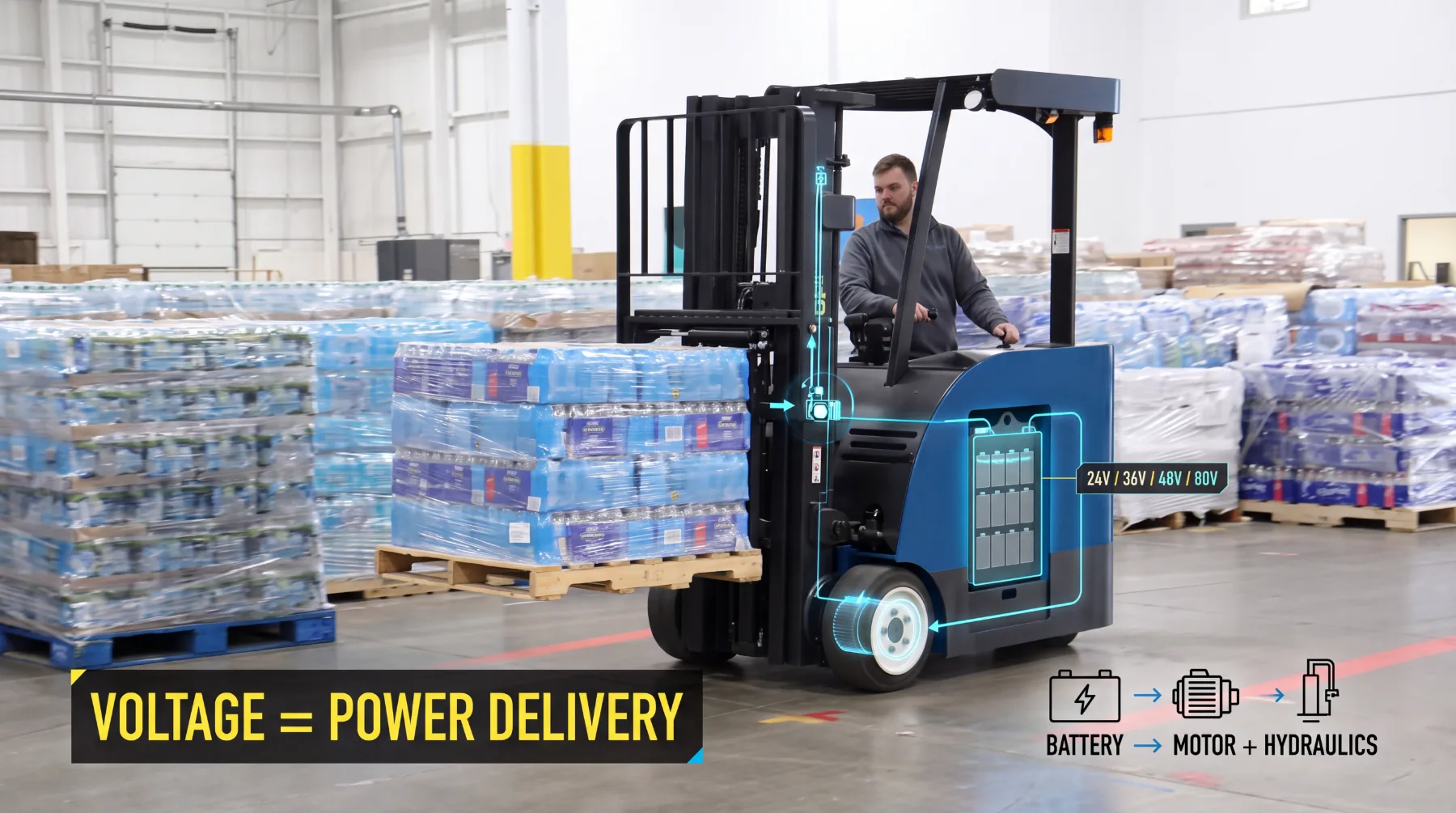
While capacity governs how long a forklift runs, voltage plays a central role in how power reaches the machine's systems. Battery voltage influences how electrical energy is delivered to the drive motor and the hydraulic system, shaping both movement and lifting. Common forklift voltages include 24V, 36V, 48V, and 80V, with higher voltages typically found on larger machines that handle heavier work. The voltage a battery supplies must match the forklift's electrical system for the machine to operate correctly and safely.
Matching voltage is not optional. A battery with the wrong voltage can prevent the forklift from working at all, or it can cause damage to the electrical components. Each forklift is engineered around a specific voltage, and the battery must supply exactly that. This makes voltage one of the first specifications to confirm when selecting or replacing a battery, well before you weigh capacity or other factors.
Voltage also relates to power delivery in a broader sense. Higher-voltage systems can deliver power more efficiently to demanding drive and hydraulic functions, which is why heavier-duty forklifts tend to use them. Consider a few practical points when thinking about voltage:
- System compatibility: the battery voltage must match the forklift's rated electrical system.
- Machine class: larger, heavier forklifts generally use higher voltages to meet greater power demands.
- Efficient delivery: higher-voltage systems can supply power to drive and hydraulic functions with less loss.
When voltage is correctly matched, the forklift receives power the way its designers intended, delivering smooth movement and dependable lifting. Confirming this specification first sets the foundation for everything else the battery must do.
Battery Output Supports Heavy Loads
Capacity and voltage matter, but they do not by themselves determine how well a forklift handles demanding work. That job falls to the battery's output, meaning its ability to deliver sufficient current and power on demand. Accelerating a loaded machine, raising a heavy pallet, and running continuously through a busy shift all require the battery to supply strong, steady power. A battery that stores plenty of energy but cannot deliver it quickly enough will leave the forklift feeling weak under load.
Think of the difference between having energy available and being able to use it forcefully. A battery might hold a large reserve of energy, yet if it cannot push out enough current when the operator lifts a heavy load or accelerates up a ramp, performance suffers. The forklift may feel sluggish, lift slowly, or struggle to maintain pace during repetitive heavy tasks. Strong output is what lets the machine respond confidently when the work gets demanding.
This is why output deserves close attention for operations that handle heavy loads or run continuously. A battery built to deliver robust current supports quick acceleration, powerful lifting, and sustained effort without fading as the shift wears on. It keeps the drive and hydraulic systems supplied even when both are working hard at the same time. When you evaluate a battery for demanding work, look beyond how much energy it stores and consider how forcefully it can deliver that energy. A battery matched to your load requirements keeps the forklift strong and responsive, handling heavy pallets and continuous cycles with the reliability your operation depends on throughout the entire working day.
Charging Time Affects Daily Productivity
A forklift is only productive when it is working, so how quickly a battery returns to service has a direct effect on your daily output. Charging time depends on several factors working together, including the battery's capacity, the charger's output, and the charging method you use. A large-capacity battery paired with a modest charger will take longer to refill than the same battery paired with a high-output charger. Understanding this relationship helps you minimize downtime during busy shifts.
The charging method you choose shapes your operation in meaningful ways. Some facilities rely on conventional overnight charging, letting batteries refill fully between shifts. Others use opportunity charging, topping up during breaks and idle moments to extend runtime across a long day. Fast charging can return a battery to work quickly but requires suitable equipment and battery chemistry to protect long-term health. Each approach suits different schedules and workloads.
Consider how these elements affect the time a forklift spends off the floor:
- Battery capacity: larger batteries store more energy and generally take longer to charge fully.
- Charger output: a higher-output charger refills the battery faster, reducing waiting time.
- Charging method: conventional, opportunity, and fast charging each balance speed against battery longevity differently.
For operations running multiple shifts or long, continuous days, matching the battery and charger to your schedule is essential. A battery with charging characteristics suited to your rhythm keeps forklifts available when you need them and cuts the idle hours that quietly drain productivity. When you plan charging around your real working pattern, you keep machines moving and material flowing without unnecessary interruptions.
Battery Performance Depends on Working Conditions
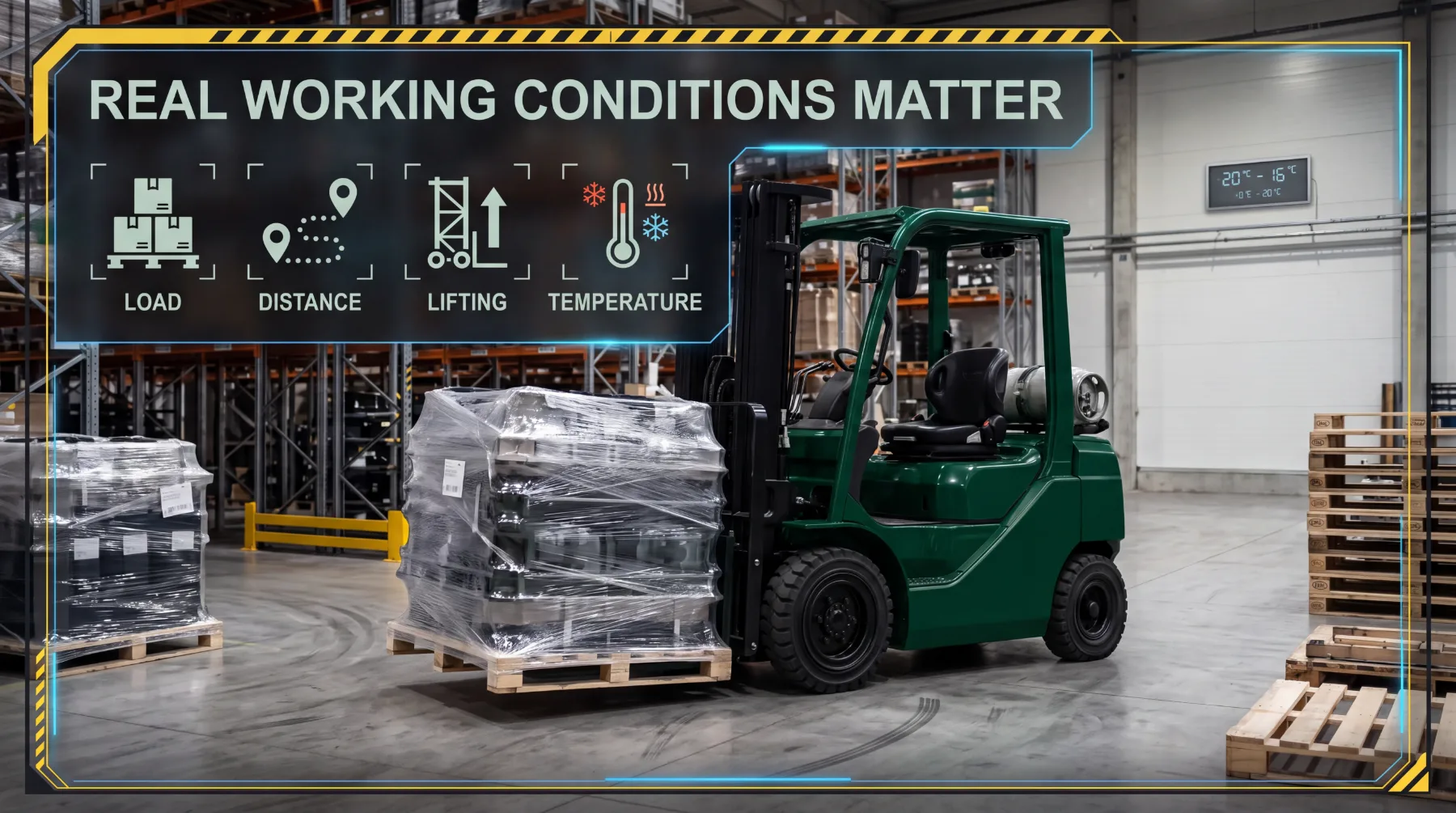
Published battery specifications describe performance under specific test conditions, but the real world rarely matches those ideals. Actual runtime and performance depend heavily on how and where the forklift works. Load weight, travel distance, lifting frequency, temperature, and operator habits all influence how quickly a battery depletes. A machine working hard in demanding conditions will draw down its battery faster than the same machine handling light, occasional tasks.
Heavier loads and frequent lifting place greater demand on the battery, shortening the time between charges. Long travel distances between loading and dumping points add to the draw, since the drive motor works longer on every cycle. Temperature matters too. Cold environments can reduce a battery's effective capacity, while excessive heat can affect both performance and long-term health. Even operating habits play a part, as smooth, efficient operation conserves energy while aggressive acceleration and constant heavy use consume it faster.
Because of these variables, the safest way to judge a battery is against your genuine working conditions rather than a best-case figure. Ask how the battery will perform under your typical loads, your travel distances, your lifting frequency, and your facility's temperature. A battery that looks capable on paper may fall short if the specifications were measured under conditions far lighter than your daily reality. When you choose specifications based on the work your forklift actually does, you gain a far more accurate picture of expected performance. That realistic approach helps you select a battery that holds up through your toughest shifts, keeping the forklift productive and dependable in the conditions your operation genuinely faces every day.
Conclusion
Understanding forklift battery specifications puts you in control of your operation's productivity. Capacity sets how long the machine runs, voltage determines how power reaches its systems, and output decides how strongly it handles heavy loads. Charging time shapes how quickly the forklift returns to work, while real working conditions reveal what performance you can truly expect. No single specification tells the whole story. The dependable choice is a battery matched to your loads, your schedule, and your working environment. Review your typical shifts and conditions, then select specifications that fit them, and your forklift will deliver reliable performance you can count on day after day.
Frequently Asked Questions
- What does battery capacity mean for a forklift, and why does it matter?
Battery capacity measures how much energy the battery can store, usually shown in ampere-hours (Ah) or kilowatt-hours (kWh). It works much like a fuel tank, since a higher-capacity battery generally supports longer operation before recharging. This matters most for operations running full shifts, where sufficient capacity means finishing the day without a mid-shift charge. However, how fast you deplete that capacity depends on your workload. Heavy lifting drains a battery faster than light handling, so match capacity to your real runtime needs rather than simply choosing the highest figure. - Why does battery voltage need to match the forklift?
Voltage determines how electrical power is delivered to the forklift's drive motor and hydraulic system, and each forklift is engineered around a specific voltage. If the battery voltage does not match the machine's electrical system, the forklift may not operate at all, or the mismatch could damage components. This makes voltage one of the first specifications to confirm before considering capacity or other factors. Larger, heavier forklifts typically use higher voltages such as 48V or 80V, since higher-voltage systems deliver power more efficiently to demanding drive and hydraulic functions. - Does a high-capacity battery guarantee strong lifting performance?
No. Capacity describes how much energy the battery stores, but it does not determine how forcefully that energy is delivered. Handling heavy loads depends on the battery's output, meaning its ability to supply sufficient current and power for acceleration, lifting, and continuous operation. A battery can hold plenty of energy yet still feel weak under load if it cannot push out enough current on demand. For demanding work, look beyond stored energy and confirm the battery delivers strong, steady output that keeps the machine responsive throughout the shift. - How can I reduce forklift downtime related to charging?
Charging time depends on battery capacity, charger output, and charging method working together. A higher-output charger refills a battery faster, while the method you choose shapes your schedule. Conventional charging refills batteries overnight, opportunity charging tops up during breaks to extend runtime, and fast charging returns machines to work quickly with suitable equipment. Match the battery and charger to your working pattern, especially for multi-shift operations. When charging fits your real rhythm, forklifts stay available when you need them, cutting the idle hours that quietly reduce productivity. - Why does my battery's actual runtime differ from its rated specifications?
Rated specifications reflect specific test conditions, which rarely match daily reality. Actual runtime depends on load weight, travel distance, lifting frequency, temperature, and operating habits. Heavier loads and frequent lifting drain the battery faster, long travel distances increase the draw, and cold or hot temperatures affect capacity and performance. Even aggressive operation consumes more energy than smooth, efficient handling. To gauge realistic performance, evaluate a battery against your genuine working conditions rather than a best-case figure. Choosing specifications based on your actual work gives a far more accurate picture of expected runtime.