
Nov 19, 2026
Honda GX390 Engine Performance in Compact Mini Excavators
An irrigation contractor spends a hot, dry week installing sprinkler mains across a large suburban property. Her crew relies on a compact mini excavator powered by a gasoline engine to cut narrow trenches between flower beds, along fence lines, and under a long row of hedges.

An irrigation contractor spends a hot, dry week installing sprinkler mains across a large suburban property. Her crew relies on a compact mini excavator powered by a gasoline engine to cut narrow trenches between flower beds, along fence lines, and under a long row of hedges. The first two days go smoothly. By the third afternoon, the engine starts to surge whenever the operator curls the bucket into the hard, sun-baked soil. The boom feels slow, and the engine note rises and falls as if it can't settle on a steady speed. Soon the machine stalls twice during the same trench run.
Compact mini excavators powered by gasoline engines serve landscapers, irrigation installers, property maintenance crews, rental fleets, and property owners who need a manageable machine for light excavation. Its real performance on the jobsite depends on more than its rating. Fuel quality, combustion, cooling airflow, ignition health, hydraulic demand, and consistent maintenance all decide how much of the engine's power becomes productive digging.
Engine Configuration and Output Characteristics
The Honda GX390 uses a simple, proven layout. It's a four-stroke engine with a single cylinder, an overhead valve design, and air cooling. The overhead valve arrangement supports efficient combustion and dependable starting. Air cooling removes the need for a radiator, coolant, and water pump, which keeps the engine compact and reduces the number of systems that need attention. For a small excavator with a tightly packaged engine compartment, that combination makes practical sense.
A single-cylinder engine delivers power through one piston and crankshaft throw. That design is straightforward to service and easy to understand, but it produces more vibration than engines with multiple cylinders. Engine mounts, frame design, and the machine's overall build help manage that vibration, which affects both operator comfort and component life. Owners should keep mounting hardware tight and report any increase in vibration.
The engine's governor plays an important role in excavator work. It holds engine speed steady as the load changes, opening the throttle when hydraulic demand rises and closing it as demand falls. A correctly adjusted governor gives the hydraulic pump consistent drive speed, which helps every function respond predictably. A governor or throttle linkage that's out of adjustment can cause hunting, slow response, or power loss under load. Adjustments should be left to qualified technicians following the manufacturer's procedure.
Published output ratings describe what the engine produces under defined test conditions. Actual available power changes with engine speed, air temperature, altitude, fuel quality, and engine condition. Hot weather and higher elevations reduce output because thinner air limits combustion. GX390 engines are also built in several versions with different starting systems, shaft types, and features. Confirm the exact engine version and rating from the engine identification and the excavator manufacturer's specification for your machine, and match service parts and procedures to that version.
Key takeaway: The GX390 is a compact single-cylinder, air-cooled, four-stroke OHV gasoline engine, so confirm the exact version and rating for your machine and remember that real output varies with conditions, adjustment, and engine condition.
Fuel Delivery and Combustion Quality
Reliable engine performance starts with clean fuel and the right balance of fuel and air. The GX390 typically uses a carburetor to mix gasoline with incoming air before it reaches the cylinder. When the fuel is fresh, the fuel system is clean, and the air filter flows freely, combustion is complete and power stays steady. When any part of that chain is compromised, the engine may start poorly, run rough, surge, or lose power just as the excavator needs it most.
Gasoline doesn't last indefinitely. During storage, especially when it contains ethanol, it can break down and leave varnish and gum that clog carburetor jets and passages. Ethanol-blended fuel can also absorb moisture, which may lead to corrosion and water in the fuel system. Use the fuel grade the engine manufacturer specifies, buy it from a reliable source, and store it in clean, sealed, approved containers that are clearly labeled. Add fuel stabilizer when the machine will sit unused, and follow the owner's manual for longer storage, which may include draining the carburetor.
The rest of the fuel system needs regular attention too. A restricted fuel filter can starve the engine under heavy demand. Cracked, hardened, or loose fuel lines can leak or draw air into the system. Inspect lines and connections during routine checks, replace filters on schedule, and keep the fuel cap seal in good condition so dust and water stay out of the tank.
Refueling requires care because gasoline vapor ignites easily. Shut down the engine and let it cool before refueling. Refuel outdoors on level ground, away from sparks, open flames, and smoking. Avoid overfilling, wipe up spills immediately, and secure the fuel cap before restarting. Never run a gasoline engine indoors, inside a garage or shed, in a trench, or in any enclosed or poorly ventilated space. Exhaust contains carbon monoxide, a colorless, odorless gas that can build up quickly and cause serious harm or death without warning.
Key takeaway: Use fresh fuel of the specified grade, stabilize fuel before storage, keep filters and lines in good condition, refuel only with the engine off and cool, and never run the engine where exhaust can accumulate.
Hydraulic Pump Demand and Engine Load
On a mini excavator, the engine's main job is driving the hydraulic pump. The pump converts engine power into oil flow and pressure, and control valves direct that oil to the boom, arm, bucket, swing, travel motors, and blade according to the machine's design. Every joystick movement the operator makes adds load to the engine through the pump.
Demand changes constantly during a digging cycle. Swinging an empty bucket places a light load on the engine. Curling a full bucket of compacted clay while raising the boom can push it close to its limit. Running several heavy functions together, such as lifting, curling, and swinging at full speed, creates the greatest combined demand. A single-cylinder engine has a finite amount of power to share, so heavy simultaneous demand can pull engine speed down and slow every function at once.
Digging performance therefore depends on the whole machine, not on the engine alone. Pump size, valve design, cylinder dimensions, and linkage geometry decide how much digging force and speed the excavator delivers. A well-matched system uses the engine's power efficiently. A poorly matched one may stall the engine during heavy work or leave power unused during light work.
Operator technique has a direct effect on engine load, as the irrigation crew discovered. Smooth, progressive joystick movements let the governor respond gradually. Holding a function against its stop forces oil across the relief valve, which turns engine power into heat and raises fuel use without moving any material. Taking controlled, shallower passes in hard ground helps prevent lugging, where the engine strains at low speed under heavy load. Keep bucket teeth sharp, choose a bucket suited to the soil, and report repeated stalling or major speed loss for inspection rather than accepting it as normal.
Key takeaway: Hydraulic demand drives engine load, so use smooth control inputs, avoid stacking heavy functions or holding controls at relief, take controlled passes in hard ground, and report repeated stalling.
Cooling Airflow in Dusty Work Areas

Air-cooled engines depend on a steady flow of air across the cylinder and head. On the GX390, a fan built into the flywheel draws air through an intake screen and directs it over the cooling fins. When that airflow moves freely, the engine stays within its intended operating temperature. When it's restricted, temperatures rise, engine oil thins, and internal parts work under added stress.
Excavation sites challenge that cooling system every day. Soil dust, dried mud, grass clippings, leaves, and seed heads collect on the intake screen and pack between the fins. Any oil or fuel residue on the engine acts like glue, trapping debris and building a thick layer quickly. Compact excavator engine compartments are often tightly packed, which can hide buildup until performance starts to suffer.
Overheating damage builds gradually and then shows up suddenly. Early signs include reduced power, rough running, surging, and a strong smell of hot oil. Repeated overheating can lead to scored cylinder walls, damaged valves, warped components, and a shorter engine life. Because engine heat and hydraulic heat often share the same compartment, hydraulic oil temperature may climb at the same time, which slows functions and wears seals faster.
Regular cleaning keeps cooling effective. Inspect the intake screen at the start of every shift and check it again during the day in dusty or grassy conditions. Clean cooling fins and shrouds at the intervals the owner's manual specifies, and more often on dry, dusty sites. Use a soft brush or low-pressure air as the manual allows. Always shut down the engine, remove the key, and let the engine cool before cleaning. Never remove cooling shrouds or guards during operation, and keep tools, rags, and stored materials out of the engine compartment.
Key takeaway: Air-cooled engines need unobstructed airflow, so inspect the intake screen every shift, clean fins and shrouds regularly in dusty conditions, and always shut down and cool the engine before cleaning.
Starting Reliability and Ignition Components
Dependable starting saves time at the beginning of every job and after every break. Depending on the version, a GX390 may use recoil starting, electric starting, or both. Electric start systems rely on a healthy battery, clean and tight connections, and a working starter. Every version depends on the ignition system, which produces the spark that ignites the fuel and air mixture, along with fresh fuel and a clean air supply.
The spark plug has a strong influence on both starting and running quality. A fouled, worn, or incorrectly gapped plug produces a weak spark, which can cause hard starting, misfiring, and power loss under load. Inspect the plug at the intervals the manual specifies, clean or replace it as directed, and use only the plug type the manufacturer recommends. The plug's appearance can also point to other problems, such as heavy carbon from a rich mixture or oil deposits that suggest internal wear.
Following the correct starting procedure protects the engine. Set the fuel valve, choke, and throttle exactly as the manual describes. Many GX390 versions include an oil alert system that prevents starting or shuts the engine down when the oil level drops too low. A no-start condition may simply mean the oil needs topping up, so check the oil level with the machine on level ground before starting.
Repeated starting problems deserve investigation rather than more cranking. Repeated attempts drain batteries, overheat starters, and flood the cylinder with fuel. Check fuel freshness, the fuel valve, the spark plug, the air filter, oil level, and battery connections. If the cause isn't clear, have a qualified technician diagnose the ignition and fuel systems. Never use starting fluid unless the engine manufacturer specifically approves it.
Key takeaway: Reliable starting depends on a healthy spark plug, fresh fuel, clean air, correct oil level, and sound battery connections, so follow the manual's starting procedure and investigate repeated starting problems early.
Service Intervals and Engine Longevity
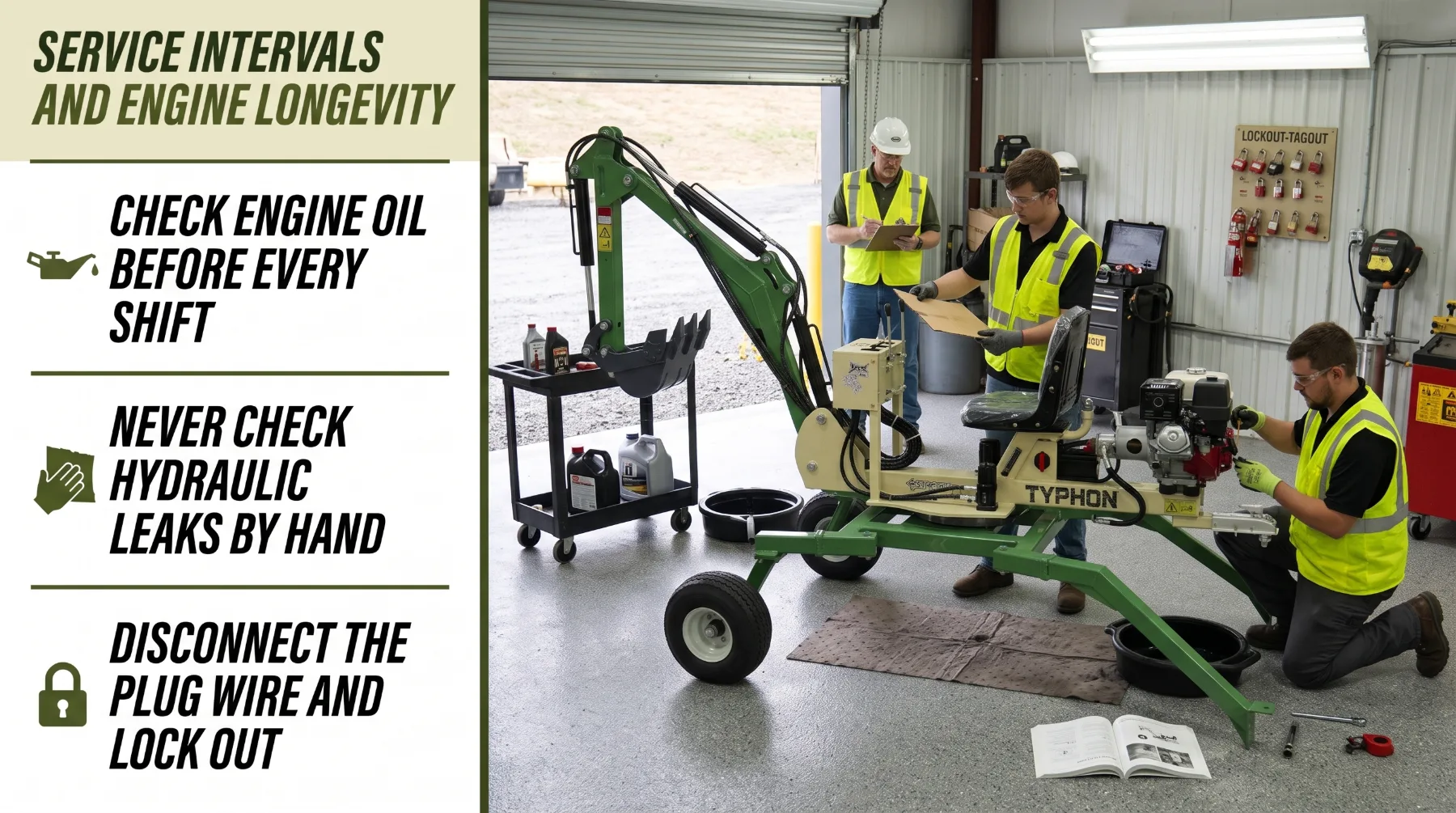
Consistent maintenance is the most effective way to protect a GX390 and extend its working life. Core tasks include checking and changing engine oil, cleaning or replacing the air filter, inspecting the spark plug, maintaining the fuel system, and cleaning cooling areas. Follow the Honda owner's manual for the exact engine version, and shorten intervals for dusty, hot, or heavy-load work. Keep a simple service log so every task is recorded and nothing gets missed.
Oil care comes first. Check the oil level before every shift with the machine on level ground, and use the oil type and viscosity the manual specifies. Change the oil at the recommended intervals, and more often in severe conditions. Small engines that don't use an oil filter depend heavily on regular oil changes to carry away contaminants. Low or degraded oil allows metal-to-metal contact that can damage an engine quickly.
Air filtration is just as important on excavation equipment. A clogged filter reduces power and increases fuel use. A damaged or poorly sealed filter lets abrasive dust into the cylinder, where it wears the piston, rings, and cylinder wall. Inspect filter elements often in dusty work, clean or replace them as the manual directs, and confirm that the housing seals correctly after every service. While the engine is serviced, check the rest of the machine too, including hydraulic oil level, hoses, cylinders, tracks, and grease points.
Hydraulic leak checks must be done safely. Never use your hand to search for a hydraulic leak. Fluid escaping through a pinhole under pressure can penetrate the skin and cause an injection injury. The wound may look like a minor puncture at first, but it's a medical emergency that requires immediate surgical treatment. Hold a piece of cardboard or wood near the suspected hose, fitting, or cylinder, wear gloves and eye protection, and keep your face and body out of line with the leak point. If anyone is struck by escaping fluid, get emergency medical care at once and tell medical staff it's a hydraulic injection injury.
Service work begins with full control of stored energy, a critical part of long-term ownership, maintenance costs, and excavator service life. Before any inspection beyond the daily walk-around, park on firm, level ground away from excavation edges, lower the bucket and blade flat to the ground, and raise the pilot control lockout. Shut down the engine, remove the key, relieve hydraulic pressure as the manual directs, and apply your personal lock and tag according to your site's lockout procedure. Disconnect the spark plug wire before working near the flywheel or other moving engine parts, and allow the engine and muffler to cool before touching them. Never work beneath a raised boom or attachment held only by hydraulics. Leave carburetor rebuilding, governor adjustment, and internal engine repairs to qualified technicians using genuine parts. Only trained, authorized operators should run the excavator, and they should wear the seat belt whenever the machine is in use. Following proper service procedures helps prevent avoidable damage, protects critical components from premature wear, and supports reliable performance throughout the SPIDER excavator's working life.
Key takeaway: Follow Honda's service schedule for your exact engine version, check oil before every shift, keep the air filter clean and sealed, check leaks with cardboard rather than your hands, and lock out the machine and disconnect the plug wire before service.
Conclusion
The Honda GX390 gives compact mini excavators a dependable gasoline power source built around a simple single-cylinder, air-cooled, four-stroke OHV design. Its compact size and straightforward layout suit small machines that work in backyards, along fence lines, and on landscaping and irrigation projects. Its real-world performance depends on fresh fuel and clean air, unobstructed cooling, a healthy ignition system, and a hydraulic system matched to the work. Operator technique matters just as much, since smooth inputs and controlled digging keep engine load within comfortable limits.
Owners and operators get the best results by looking at the complete machine rather than the engine rating alone. Confirm the exact engine version and excavator specifications, then build daily habits around checking oil, clearing the intake screen, and inspecting the air filter. Store and handle fuel properly, refuel only with the engine off and cool, and never run the engine where exhaust can collect. Pair those habits with cardboard leak checks and full lockout before service. That disciplined approach keeps the GX390 starting easily and working steadily, job after job.
Frequently Asked Questions
What type of engine is the Honda GX390?
It's a four-stroke, single-cylinder, air-cooled gasoline engine with an overhead valve design. Equipment manufacturers use it in compact machines, including some mini excavators, because of its compact size, dependable starting, and broad service support. Several versions exist with different starting systems and features, so confirm the exact version on your machine.
Does the GX390 determine a mini excavator's digging force?
No. Digging force depends on hydraulic pressure, pump design, cylinder size, linkage geometry, and the overall machine design. The engine supplies power to the hydraulic pump, but the excavator's design decides how that power becomes digging force and speed.
Why does a GX390-powered excavator lose power during work?
Common causes include a clogged air filter, a blocked intake screen or dirty cooling fins, stale or contaminated fuel, a restricted fuel filter, a worn or fouled spark plug, overheating, and heavy hydraulic demand, such as holding functions against relief. Check these items first, and report persistent power loss to a qualified technician.
What safety steps apply when refueling and servicing the engine?
Refuel outdoors with the engine off and cool, away from sparks and flames, and never run the engine indoors or in enclosed spaces because of carbon monoxide. Before service, lower the bucket and blade, shut down the engine, remove the key, relieve hydraulic pressure, and apply a lock and tag. Check hydraulic leaks with cardboard, never your hands.