
Sep 12, 2026
How Forklift Hydraulic Control Valves Direct Lifting Functions
Every time a forklift raises a pallet or sets one down gently, a hydraulic control valve is quietly doing the work behind the scenes. These valves decide where the hydraulic oil goes, how much of it flows, and how fast the mast responds to the operator's touch.
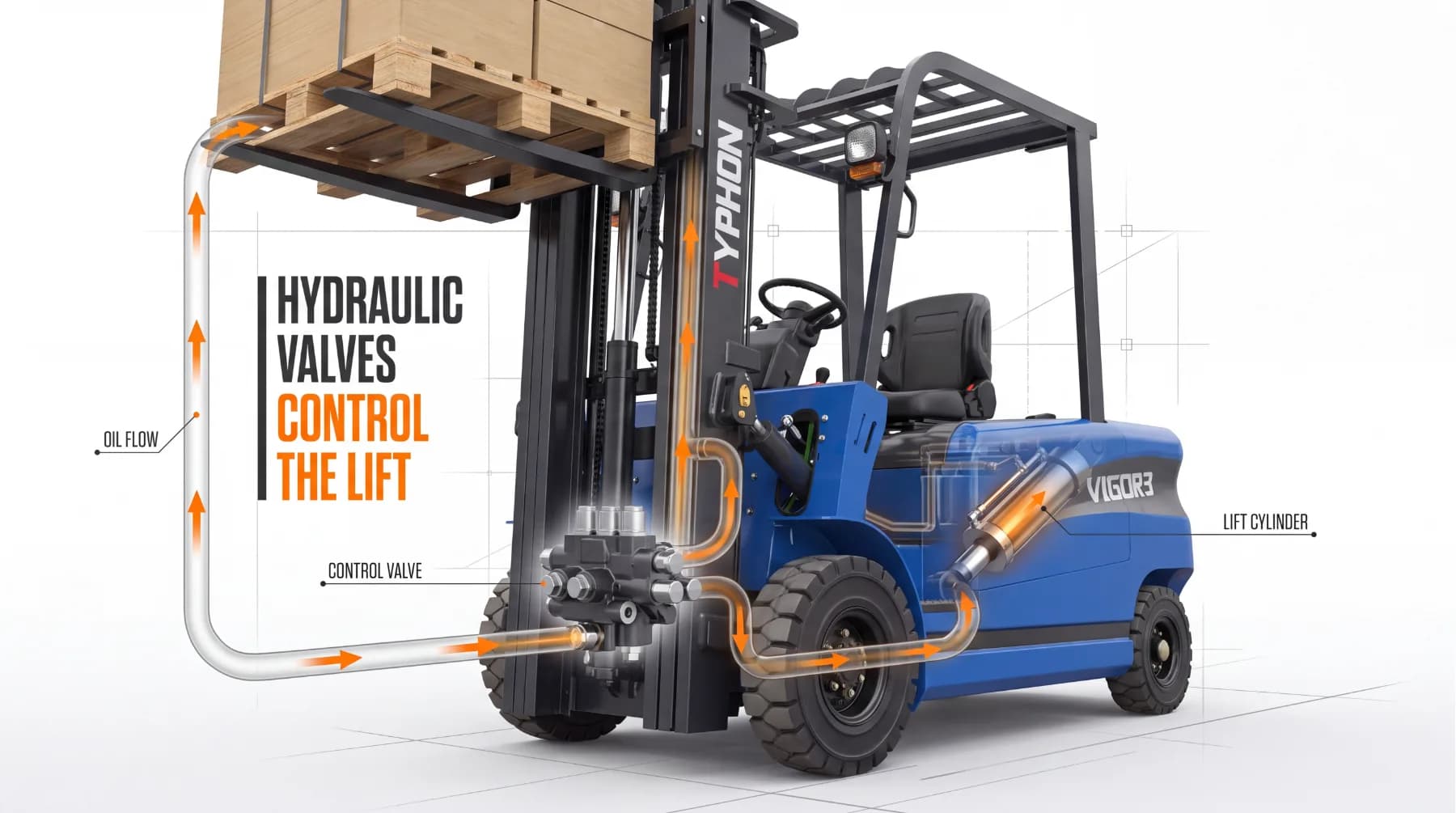
Every time a forklift raises a pallet or sets one down gently, a hydraulic control valve is quietly doing the work behind the scenes. These valves decide where the hydraulic oil goes, how much of it flows, and how fast the mast responds to the operator's touch. When they work well, lifting feels smooth, predictable, and safe. When they fail, the machine turns sluggish, jerky, and unreliable. Understanding how these valves direct lifting functions helps you appreciate what keeps a forklift performing dependably shift after shift. This guide walks through how the valves regulate oil flow, send it to the lift cylinder, control lifting and lowering speed, and why their proper operation is essential to smooth, safe lifting on every load.
How Hydraulic Control Valves Regulate Oil Flow
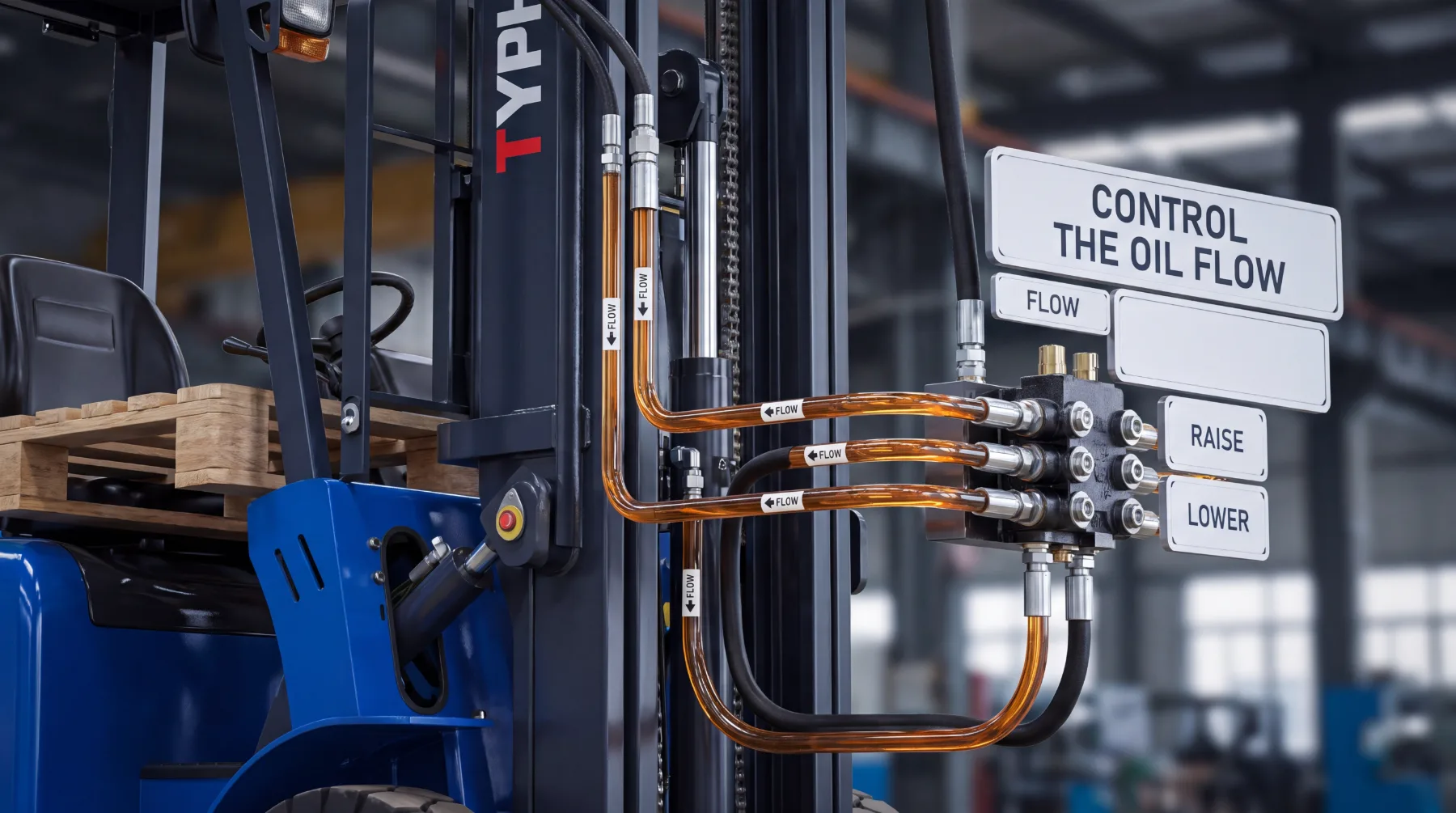
Hydraulic control valves sit at the heart of a forklift's lifting system, managing both the direction and the amount of hydraulic oil flowing through it. When the operator moves a control lever, the valve responds by opening a specific path for the oil, sending it where it needs to go. This control over flow is what allows the operator to decide when the lifting function operates and how quickly it responds. Without the valve directing traffic, the pump would simply push oil through the system with no useful control over the mast.
Two jobs define what these valves do. The first is directing oil, meaning the valve routes pressurized fluid toward the correct cylinder to raise the mast, return it to the reservoir when lowering, or hold it in place to keep a load steady. The second is metering oil, meaning the valve controls how much fluid passes through at any moment, which sets the pace of movement.
The valve responds directly to operator input in several ways:
- Direction control sends oil to raise, hold, or lower the forks based on lever position.
- Volume control regulates how much oil flows, setting how fast the mast moves.
- Flow interruption stops oil movement to hold the mast steady when no input is given.
Because the valve translates the operator's commands into precise oil movement, it acts as the link between intention and action. A slight touch on the lever produces a gentle movement, while a firmer input drives a faster response. This responsiveness is exactly what lets an operator handle loads with confidence, placing them where they belong without guesswork. The control valve, then, is not a passive component but the part that gives the operator genuine command over the forklift's lifting behavior throughout the working day.
How the Lift Valve Sends Oil to the Lift Cylinder
Raising a load begins the moment the operator activates the lift control, and the lift valve is what turns that input into upward movement. When the operator pulls or pushes the lift lever, the valve shifts to open a path that directs pressurized oil from the pump toward the lift cylinder. The pump supplies the pressure, but it is the valve that decides that this pressurized oil should travel to the cylinder rather than anywhere else in the system. That directing role is what makes the lift happen on command.
Once the oil reaches the lift cylinder, the physical work of lifting takes place. The pressurized fluid fills the cylinder and pushes against the piston inside, which extends the cylinder. As the cylinder extends, it drives the mast upward, and the forks rise with it. The load resting on the forks is carried up smoothly as long as the oil keeps flowing into the cylinder at a steady rate.
The sequence follows a clear, dependable order:
- Operator input activates the lift control by moving the lever.
- Valve response opens the path and directs pressurized oil to the lift cylinder.
- Cylinder extension pushes the piston out, raising the mast and forks with the load.
This chain of events repeats every time the operator lifts a load, and its reliability is central to how a forklift earns its keep. The valve must respond promptly and route the oil accurately, or the lift will lag and feel uncertain. When the lift valve does its job well, the response to the operator's input is immediate, and the mast rises confidently. That direct, dependable connection between lever and lift is what allows an operator to work efficiently and place every load exactly where it needs to go.
How Valve Position Affects Lifting Speed
Lifting speed is not fixed. It depends on how far the operator moves the control lever, because the valve regulates how much hydraulic oil reaches the lift cylinder in response. The position of the valve, set by that lever input, determines the volume of oil flowing to the cylinder at any moment. Since the cylinder extends at a rate set by the oil filling it, controlling that flow directly controls how fast the mast rises. This gives the operator fine command over lifting speed rather than a single fixed rate.
The relationship is straightforward. When the valve opens wider, a greater volume of oil flows to the cylinder, and the mast rises more quickly. When the valve opens only partway, it restricts the flow, and the cylinder fills more slowly, producing slower and more controlled movement. This lets the operator choose brisk lifting when speed matters and gentle, precise lifting when placing a load calls for care.
Consider how valve position serves different tasks:
- Wider valve opening increases oil flow for faster lifting when moving loads quickly.
- Partial valve opening restricts flow for slow, deliberate movement during precise placement.
- Fine lever control lets the operator adjust speed smoothly between these extremes.
This variable control matters a great deal in real work. Stacking a pallet onto a high rack demands a slow, steady approach so the load settles exactly where it should, while lifting a load clear of the floor can happen faster to save time. Because the valve meters oil flow according to lever position, the operator gets both options from the same machine. A forklift that responds proportionally to input this way is easier to control and safer to operate, letting the operator match lifting speed to the demands of each task with confidence and precision.
How Hydraulic Valves Control Lowering Movement
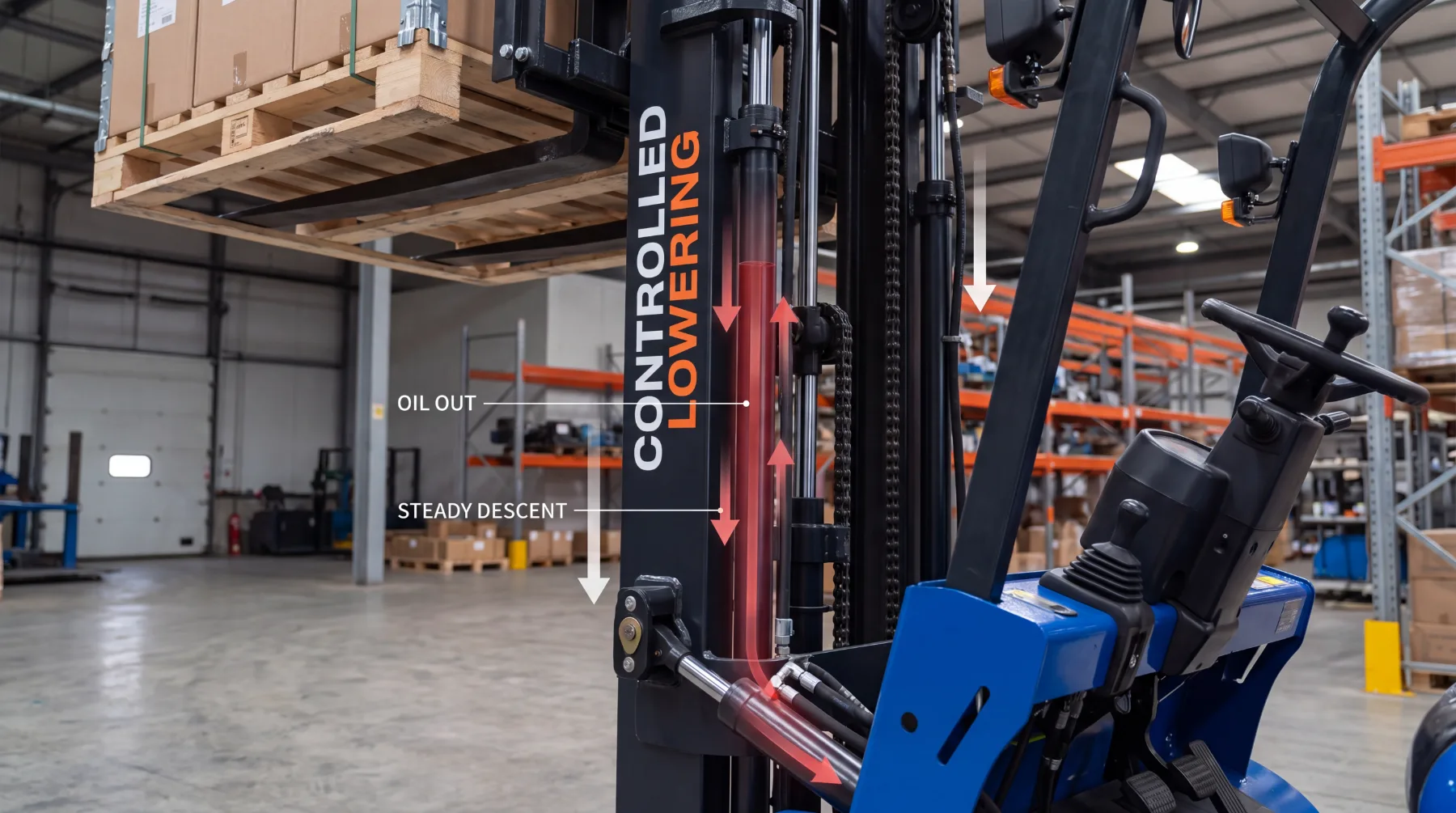
Lowering a load safely is just as important as lifting it, and the hydraulic valve plays a central role in controlling the descent. When the operator activates the lower control, the valve changes the flow path so that hydraulic oil is redirected or metered away from the lift cylinder. Rather than pushing more oil in to raise the mast, the system now allows oil to leave the cylinder in a controlled manner, letting the mast and forks descend under the weight of the load. The valve governs exactly how that oil is released.
Control is the key idea during lowering, because gravity is doing the work of pulling the load down. If the oil were allowed to rush out of the cylinder freely, the load would drop too quickly, which is unsafe and hard to manage. The valve prevents this by metering the oil as it exits, restricting the flow so the descent stays smooth and steady. This controlled release is what keeps the load under command all the way down rather than falling under its own weight.
The lowering process relies on the valve in several ways:
- Redirecting oil away from the lift cylinder so the mast can descend.
- Metering the outflow to regulate how fast oil leaves the cylinder.
- Controlling descent rate so the load lowers smoothly and predictably.
This careful control over lowering protects both the load and the people working nearby. An operator lowering a pallet onto a rack or the floor needs the movement to be gentle and precise, and the valve makes that possible by holding the descent to a safe, steady pace. Because the valve meters the oil leaving the cylinder rather than letting it escape all at once, the load never drops faster than the operator intends. That dependable control during lowering is a quiet but essential part of safe, confident forklift operation.
Why Proper Valve Operation Matters for Smooth Lifting
Everything a forklift does with its mast depends on the control valve working correctly, which is why proper valve operation is so important. A valve in good condition maintains consistent oil flow and delivers predictable mast movement, so the machine responds the same way every time the operator uses the controls. That consistency is the foundation of smooth lifting. When the operator knows exactly how the mast will behave, handling loads becomes precise, efficient, and safe throughout the shift.
Problems with the valve show up quickly in how the forklift performs. A valve that sticks, wears, or leaks internally can no longer regulate oil flow cleanly, and the result is lifting that feels wrong. The symptoms are usually easy to notice:
- Slow lifting when the valve cannot direct enough oil to the cylinder.
- Jerky or erratic movement when flow is uneven or the valve sticks.
- Inconsistent response when the mast behaves differently from one lift to the next.
These issues are more than an annoyance. Unpredictable mast movement makes it harder to place loads accurately and raises safety concerns, especially when handling heavy or elevated loads. An operator cannot work confidently with a machine that responds differently each time, and productivity suffers as a result. A forklift that lifts smoothly and dependably, by contrast, lets the operator focus on the work rather than fighting the controls.
This is why the hydraulic control valve deserves attention as part of regular maintenance. Keeping the valve clean, using the correct hydraulic oil, and addressing signs of trouble early all help preserve the consistent flow that smooth lifting depends on. When the valve functions as it should, the forklift delivers the reliable, predictable performance that dependable material handling requires, keeping loads controlled and operators confident on every lift.
Conclusion
Hydraulic control valves are the components that turn an operator's input into precise, dependable lifting. They regulate the direction and volume of oil flowing through the system, direct pressurized fluid to the lift cylinder to raise the mast, and meter that flow to control both lifting speed and a safe, steady descent. When the valve works as designed, the forklift responds smoothly and predictably, letting operators handle loads with confidence. When it fails, lifting turns slow, jerky, or inconsistent, and both productivity and safety suffer. Understanding this role makes clear why the valve deserves attention in regular maintenance. Keep it clean, use the right hydraulic oil, and address trouble early, and your forklift will reward you with the reliable lifting performance that steady, safe material handling depends on every day.
Frequently Asked Questions
- What does a hydraulic control valve do on a forklift?
A hydraulic control valve manages both the direction and the amount of hydraulic oil flowing through the forklift's lifting system. When the operator moves a control lever, the valve opens a specific path for the oil, sending it to raise the mast, return it to the reservoir for lowering, or hold it in place to keep a load steady. It also meters how much oil passes through, which sets how fast the mast moves. In effect, the valve is the link between the operator's input and the machine's action, translating a touch on the lever into precise lifting, holding, or lowering movement throughout the working day. - How does the lift valve raise the forks?
When the operator activates the lift control, the lift valve shifts to open a path that directs pressurized oil from the pump toward the lift cylinder. The pump supplies the pressure, but the valve decides that the oil should travel to the cylinder rather than elsewhere. Once the oil reaches the cylinder, it pushes against the piston inside, which extends the cylinder. As the cylinder extends, it drives the mast upward, and the forks rise with the load. This sequence, from operator input to valve response to cylinder extension, repeats every time a load is lifted, and its reliability is central to confident, efficient forklift operation. - Why does my forklift lift faster or slower depending on the lever?
Lifting speed depends on how far you move the control lever, because the valve regulates how much oil reaches the lift cylinder based on its position. When the valve opens wider, a greater volume of oil flows to the cylinder and the mast rises more quickly. When the valve opens only partway, it restricts the flow, so the cylinder fills more slowly and the mast rises gently. This proportional control lets you choose brisk lifting when speed matters and slow, deliberate movement when placing a load precisely. It is a normal and useful feature, giving you fine command over lifting speed to match each task safely. - How does the valve control lowering so the load does not drop too fast?
When you activate the lower control, the valve redirects or meters hydraulic oil away from the lift cylinder, allowing the mast and forks to descend under the load's weight. During lowering, gravity does the work, so control comes from restricting how fast the oil leaves the cylinder. If the oil escaped freely, the load would drop dangerously fast. Instead, the valve meters the outflow, releasing the oil in a controlled manner so the descent stays smooth and steady. This keeps the load under command all the way down, protecting both the load and the people working nearby, and lets you place loads gently and precisely. - What are the signs of a faulty hydraulic control valve?
A faulty valve usually shows itself through poor lifting performance. Common signs include slow lifting when the valve cannot direct enough oil to the cylinder, jerky or erratic movement when the flow is uneven or the valve sticks, and inconsistent response when the mast behaves differently from one lift to the next. These symptoms make it harder to place loads accurately and raise real safety concerns, especially with heavy or elevated loads. If you notice any of these, have the valve inspected promptly. Keeping the valve clean, using the correct hydraulic oil, and addressing problems early help preserve the consistent oil flow that smooth, dependable lifting requires.