
Aug 29, 2026
How Ground Clearance Affects Wheel Loader Mobility on Uneven Terrain
Ground clearance rarely tops the spec sheet when buyers compare wheel loaders, yet it quietly determines whether a machine glides across a rough site or grinds to a halt on the first big rock. On uneven terrain, the space beneath the machine can be the difference between steady progress and a damaged undercarriage.
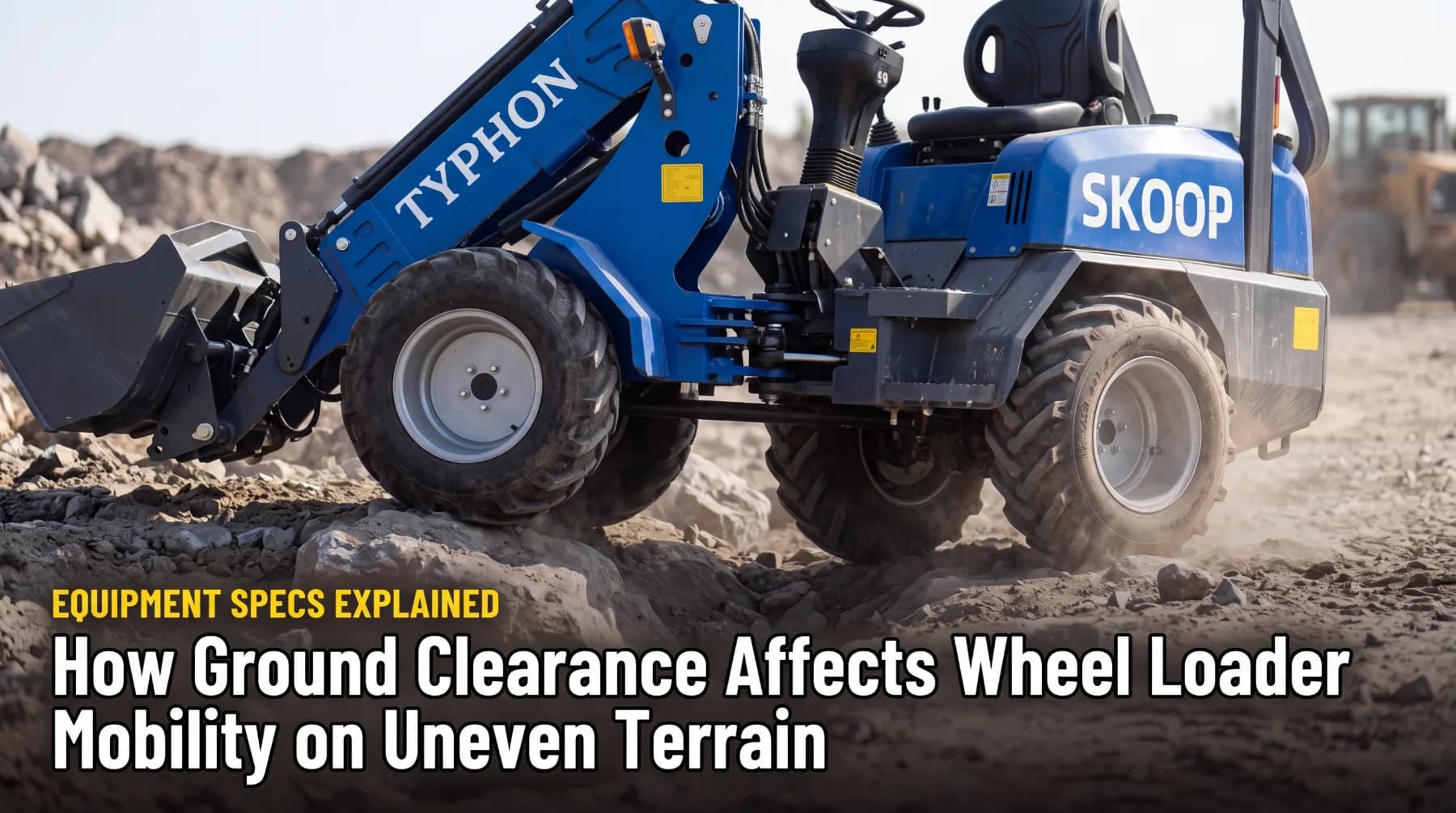
Ground clearance rarely tops the spec sheet when buyers compare wheel loaders, yet it quietly determines whether a machine glides across a rough site or grinds to a halt on the first big rock. On uneven terrain, the space beneath the machine can be the difference between steady progress and a damaged undercarriage. Operators who understand this measurement make smarter choices about where and how they run their equipment. This post explains what ground clearance actually means on a wheel loader, how it helps the machine handle uneven terrain, the role it plays in overall mobility, its effect on stability, and how to choose the right clearance for your worksite. By the end, you'll see ground clearance as a practical tool for getting more done on demanding ground.
What Is Ground Clearance on a Wheel Loader?
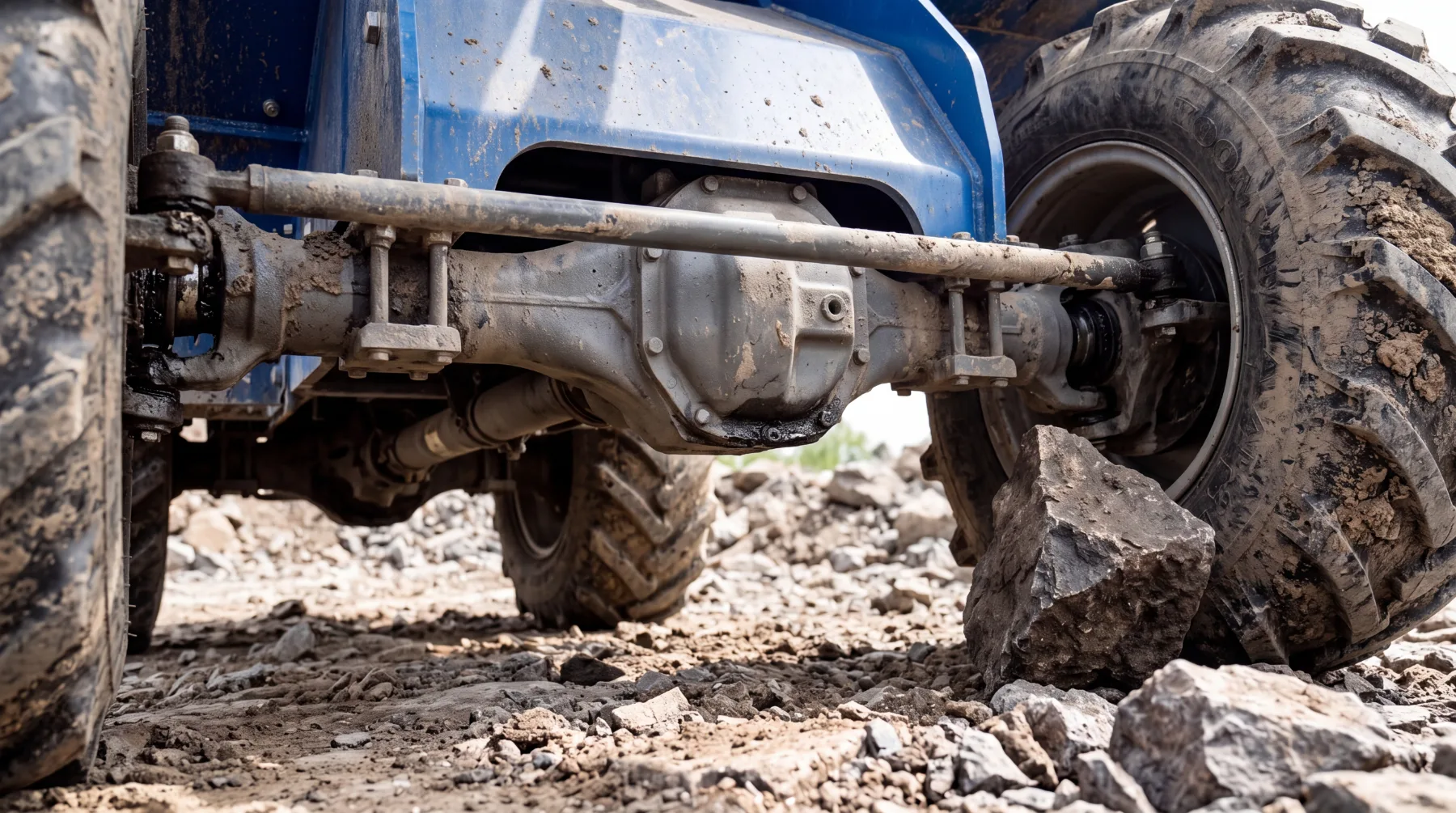
Ground clearance is the distance between the lowest point of a wheel loader and the ground beneath it. That lowest point is usually part of the undercarriage, a differential housing, axle, frame member, or drivetrain component that sits closest to the surface. This single measurement tells you how much room the machine has to pass over obstacles without its underside making contact. It's a straightforward figure, but it carries real weight in how the loader performs away from smooth, level pavement.
The practical value of ground clearance shows up the moment the terrain turns rough. Rocks, ruts, curbs, debris piles, and hardened mounds of material all threaten the underside of a loader. When clearance is generous, the machine passes over these obstacles cleanly. When clearance is tight, the same obstacles can scrape, snag, or strike vulnerable components, leading to damage and downtime that a few extra inches might have prevented.
Consider what ground clearance directly protects during travel:
- Drivetrain components: axles, driveshafts, and housings that sit low on the frame
- Frame and belly: the underside structure that can catch on high obstacles
- Attachments and linkage: low-hanging parts that hazards can snag or bend
Drivetrain components: axles, driveshafts, and housings that sit low on the frame
Frame and belly: the underside structure that can catch on high obstacles
Attachments and linkage: low-hanging parts that hazards can snag or bend
Ground Clearance and Uneven Terrain
Uneven terrain is where ground clearance earns its keep. Higher clearance lets a wheel loader travel across rough ground with far less risk of the underside striking an obstacle. The taller gap gives the machine room to ride over rocks, crest ruts, and pass debris that would otherwise catch a lower-slung frame. On the unpredictable surfaces common to real jobsites, that extra space translates directly into fewer interruptions and less damage.
The benefit is most obvious in the environments where wheel loaders spend much of their working lives. Active construction sites are rarely graded smooth; they feature trenches, spoil piles, embedded rock, and scattered material. Gravel surfaces shift and form loose mounds underfoot. Undeveloped work areas may hide stumps, boulders, and deep ruts left by other equipment. In each of these settings, adequate clearance keeps the loader moving where a lower machine might bottom out.
A few common conditions highlight why clearance matters on uneven ground:
- Construction sites: debris, rebar, and material piles that threaten the belly
- Gravel surfaces: loose mounds and washboard ruts that build up quickly
- Undeveloped areas: rocks, stumps, and uneven ground with no established path
Beyond simply avoiding contact, generous clearance changes how an operator approaches the terrain. When a machine has room to spare, the operator can maintain a steadier pace instead of creeping cautiously around every obstacle. That confidence keeps the workflow smooth and productive. Of course, clearance alone doesn't make a loader unstoppable — deep mud or extreme obstacles still demand care. But on the rough, obstacle-filled ground that defines so many jobsites, sufficient ground clearance is a dependable ally that keeps the machine working rather than stopping to nurse a scraped undercarriage.
How Ground Clearance Affects Mobility
Mobility is about how confidently and effectively a wheel loader moves through its work area, and ground clearance is a core part of that equation. Adequate clearance allows the loader to travel over bumps, depressions, and uneven surfaces without hesitation. When the machine has room beneath it, the operator can drive across challenging ground rather than picking a tentative path around every rise and dip. That freedom of movement keeps material flowing and cycles short.
Clearance never works alone, though. It functions as part of a larger mobility package, teaming up with tire size, articulation, and suspension to determine how the machine handles rough terrain overall. Larger tires raise the machine and improve its ability to roll over obstacles, complementing the clearance the frame provides. Articulated steering lets the loader bend at its center, navigating tight or irregular spaces while keeping all four wheels planted. Suspension or ride-control features smooth the impacts that uneven ground delivers, helping the machine stay composed at speed.
Here's how these elements reinforce one another:
- Tire size: taller tires lift the machine and ease travel over large obstacles
- Articulation: center-pivot steering improves maneuvering on uneven, confined ground
- Suspension: ride control absorbs shocks and keeps the loader stable in motion
The interplay matters because clearance without the right supporting features only goes so far. A loader with generous clearance but undersized tires or stiff handling may still struggle on difficult ground. When clearance, tires, articulation, and suspension are matched thoughtfully, the machine moves as a coordinated whole. It climbs, crawls, and turns with assurance, giving operators the responsiveness they need to stay productive. Viewing ground clearance as one contributor to a broader mobility system helps buyers evaluate a loader on how well its features work together, not on any single number in isolation.
Ground Clearance and Machine Stability
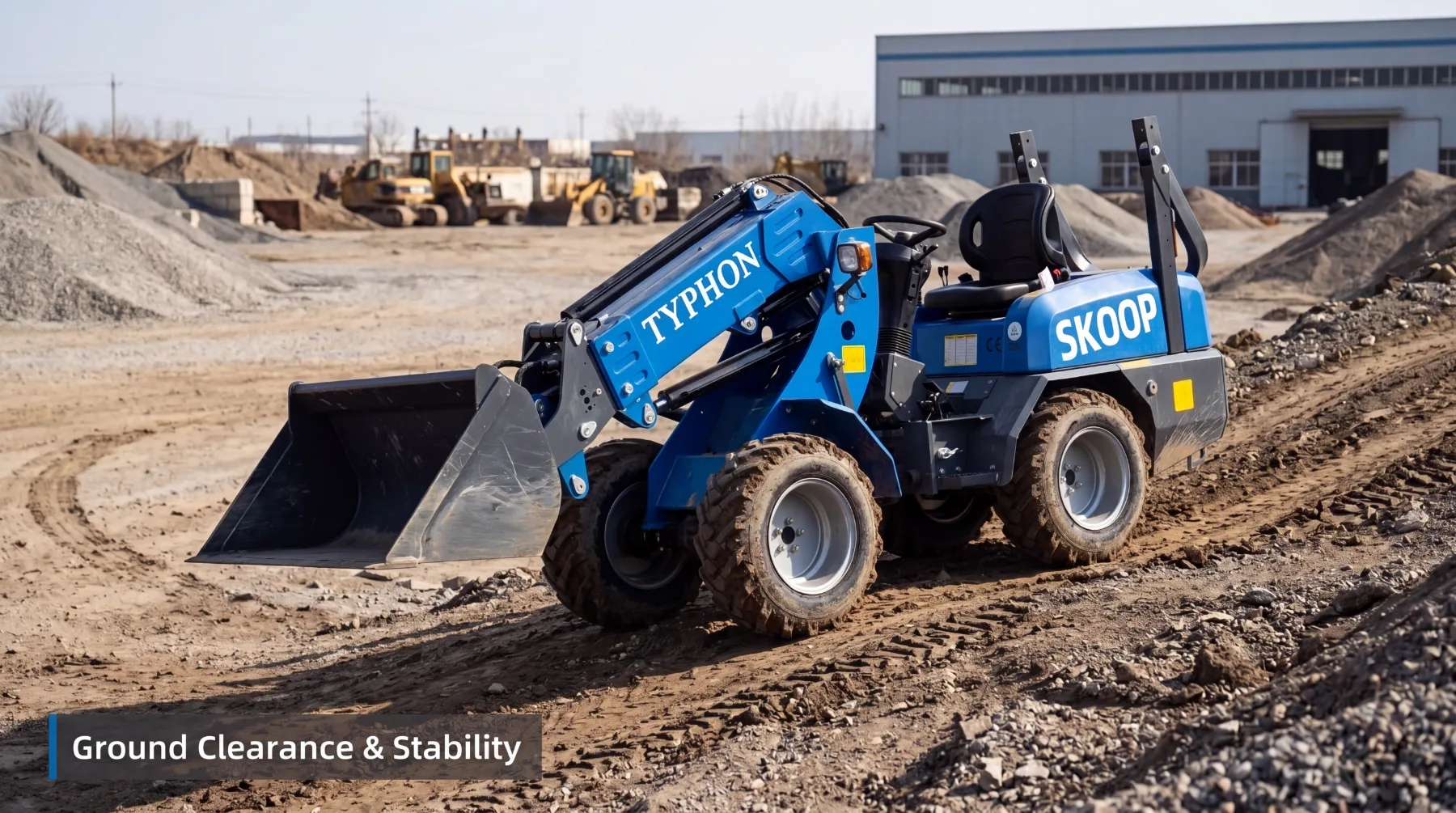
Higher ground clearance improves a loader's ability to clear obstacles, but it introduces a consideration that deserves careful attention: stability. Depending on the machine's design, raising the frame and components to gain clearance can also raise the overall center of gravity. A higher center of gravity can make a machine more sensitive to tipping forces, particularly on slopes, during sharp turns, or when carrying an elevated load. This is the trade-off that makes clearance a balancing act rather than a simple case of "more is better."
The good news is that manufacturers engineer around this challenge. A well-designed loader balances clearance against a low, stable chassis, distributing weight and positioning the counterweight so the machine stays planted even with ample ground clearance. This is why two loaders with similar clearance figures can feel very different on a slope — chassis design, weight distribution, and axle placement all shape how stable the machine actually is. Clearance is only one piece of the stability picture.
Operating technique carries just as much weight as design. Even a well-balanced loader depends on the operator to handle it safely on demanding ground. Sound practices help keep the machine steady:
- Carry loads low: keep the bucket close to the ground while traveling
- Slow on slopes: reduce speed and avoid sharp turns on inclines
- Read the terrain: anticipate uneven ground and adjust the approach
Together, a balanced chassis and disciplined operation let a loader enjoy the benefits of clearance without sacrificing stability. The aim is a machine that clears obstacles confidently while remaining firmly grounded through every maneuver. Understanding that clearance and stability pull in slightly different directions helps operators respect the machine's limits and helps buyers choose a design that manages both effectively for the work ahead.
Choosing the Right Ground Clearance
Selecting the right ground clearance comes down to matching the machine to the terrain and the work it will perform. There's no universal figure that suits every operation, because the demands of a paved recycling yard differ sharply from those of a rocky, undeveloped construction site. The smart approach weighs the actual conditions the loader will face and chooses clearance that solves real problems rather than chasing the highest number available.
Terrain is the leading factor. Rough or uneven jobsites reward sufficient clearance, which improves mobility, reduces undercarriage impacts, and helps the machine operate more effectively across obstacles. Sites with rock, deep ruts, and scattered debris demand more clearance than smooth, established surfaces. The type of work matters too: a loader that spends its days on firm, level ground has little need for extra clearance, while one working undeveloped terrain benefits from every inch of protection beneath the frame.
Before settling on a machine, weigh these considerations together:
- Terrain type: rough, rocky, or rutted ground calls for greater clearance
- Worksite conditions: debris, gravel, and undeveloped areas increase the need
- Job requirements: frequent travel over obstacles favors ample clearance
- Stability balance: confirm the design pairs clearance with a stable chassis
The goal is a clearance that fits the ground without creating drawbacks elsewhere. Too little clearance invites undercarriage strikes and downtime on rough sites, while excessive clearance chosen without regard for design can compromise stability. When clearance matches the terrain and pairs with a well-balanced machine, the loader moves confidently, protects its components, and delivers reliable performance shift after shift. Taking the time to align ground clearance with your real working conditions ensures you get a machine that earns its keep on the ground you actually work.
Conclusion
Ground clearance shapes far more than a line on a spec sheet, it determines how well a wheel loader handles the rough, obstacle-filled terrain that defines so many jobsites. The gap between the machine's lowest point and the ground clearance protects vital undercarriage components while giving the loader room to travel confidently over rocks, ruts, and debris. It works hand in hand with tire size, articulation, and suspension to deliver dependable mobility, though it must be balanced against a stable chassis and sound operating technique. The right clearance always depends on your terrain, worksite conditions, and the demands of the job. Match clearance to those realities, and you gain a loader that moves reliably, resists damage, and performs effectively on even the most challenging ground.
Frequently Asked Questions
- What exactly is ground clearance on a wheel loader?
Ground clearance is the distance between the lowest point of a wheel loader and the ground beneath it. That lowest point is typically an undercarriage component such as an axle, differential housing, or frame member. This measurement tells you how much room the machine has to pass over obstacles without its underside making contact. In practice, it acts as a built-in safety margin that protects the drivetrain, frame, and low-hanging parts from rocks, ruts, curbs, and debris. On uneven ground, that gap often decides whether the loader travels cleanly or scrapes and snags on hazards. - Why does higher ground clearance help on uneven terrain?
Higher clearance gives the loader more room to ride over obstacles like rocks, ruts, and debris piles without striking the underside. On construction sites, gravel surfaces, and undeveloped work areas, the ground is rarely smooth, and lower machines risk bottoming out on trenches, embedded rock, or loose mounds. Extra clearance reduces the chance of underside strikes, which cuts down on damage and downtime. It also lets operators maintain a steadier pace instead of creeping cautiously around every obstacle, keeping the workflow smooth. While clearance alone won't conquer extreme conditions, it's a dependable advantage on rough, obstacle-filled ground. - How does ground clearance work with other mobility features?
Ground clearance is one part of a larger mobility package that also includes tire size, articulation, and suspension. Taller tires lift the machine and help it roll over large obstacles, complementing the clearance the frame provides. Articulated steering lets the loader bend at its center, improving maneuvering in tight or irregular spaces while keeping the wheels planted. Suspension or ride-control features absorb the impacts of uneven ground and keep the machine composed in motion. When clearance, tires, articulation, and suspension are matched well, the loader moves as a coordinated whole, climbing, crawling, and turning with confidence across difficult terrain. - Can higher ground clearance affect stability?
Yes. Depending on the machine's design, raising the frame and components to gain clearance can also raise the overall center of gravity. A higher center of gravity can make a loader more sensitive to tipping forces on slopes, during sharp turns, or when carrying an elevated load. Manufacturers manage this by pairing clearance with a low, stable chassis and careful weight distribution, which is why two machines with similar clearance can feel very different on a slope. Operating technique matters too. Carrying loads low, slowing on inclines, and reading the terrain all help keep even a well-balanced loader steady. - How do I choose the right ground clearance for my work?
Start by assessing the terrain and the type of work the loader will perform. Rough, rocky, or rutted jobsites reward greater clearance, which improves mobility and reduces undercarriage impacts, while smooth, level surfaces demand far less. Consider your worksite conditions, since debris, gravel, and undeveloped areas increase the need for clearance. Factor in how often the machine will travel over obstacles, and confirm the design pairs clearance with a stable chassis. The goal is clearance that fits your ground without compromising stability. Matching it to your real conditions gives you a loader that moves reliably and protects its components shift after shift.