
Sep 17, 2026
How Material Thickness Affects Road Roller Compaction
Compaction is one of those tasks that looks simple from the roadside but rewards careful attention beneath the surface. A road roller passes over a layer of material, and the ground looks flat, firm, and finished. Yet whether that layer is truly compacted all the way through depends heavily on one factor that is easy to overlook: material thickness.
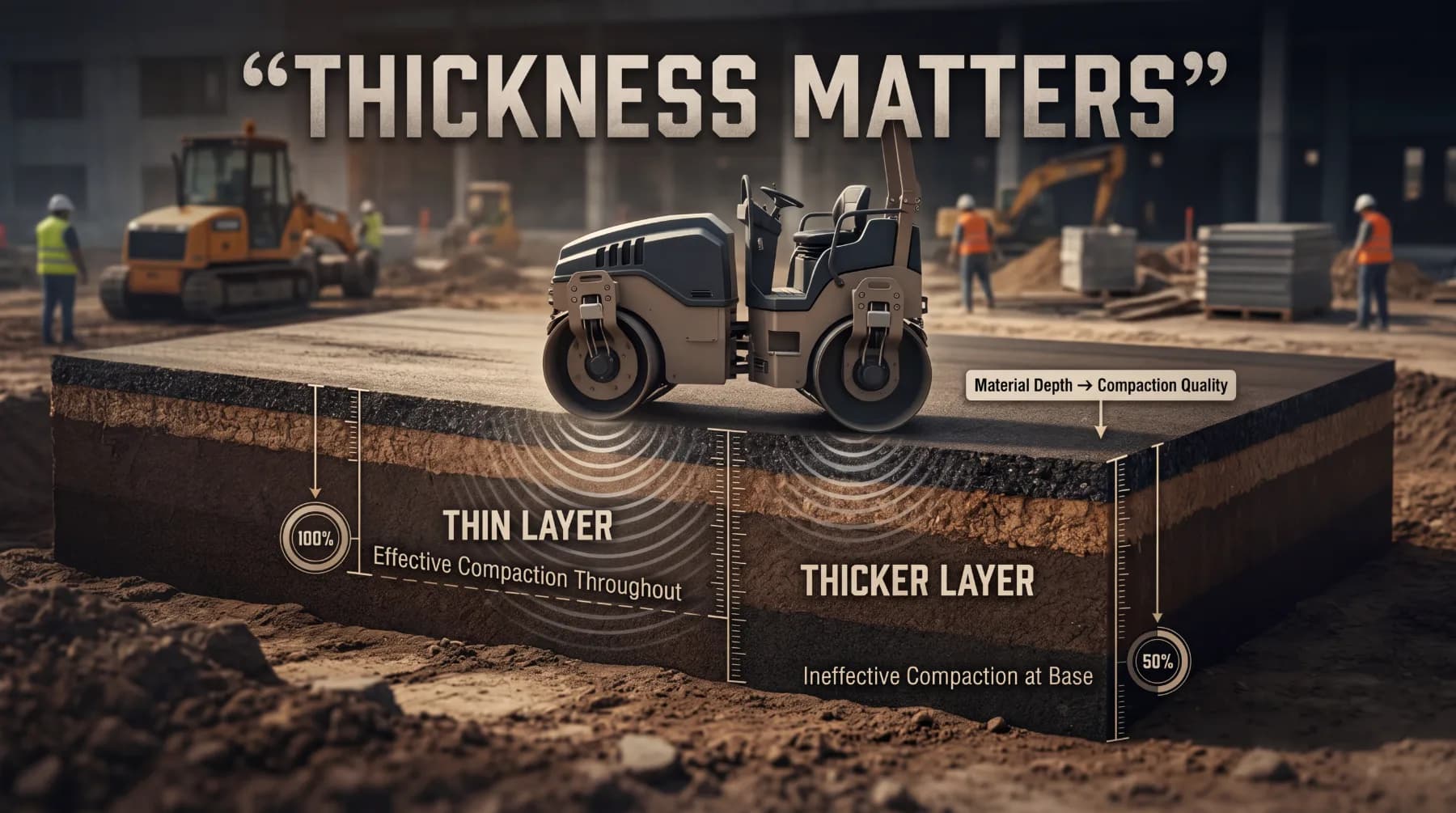
Compaction is one of those tasks that looks simple from the roadside but rewards careful attention beneath the surface. A road roller passes over a layer of material, and the ground looks flat, firm, and finished. Yet whether that layer is truly compacted all the way through depends heavily on one factor that is easy to overlook: material thickness. How thick each layer is placed before compaction directly shapes how well the roller's force reaches the bottom of the material, and getting it wrong can leave hidden weaknesses that surface as problems later. This guide explains why material thickness matters so much in compaction, how thin and thick layers behave differently, how to match your roller to the depth you are compacting, and how to achieve consistent, dependable density across your work. By the end, you will know how to compact with confidence.
Why Material Thickness Matters in Compaction
The thickness of a material layer determines how effectively a road roller can transfer its compaction force through the material, and that transfer is the whole point of compaction. When a roller passes over a layer, it applies force from the top down, pressing the particles closer together to increase density and remove air voids. That force is strongest at the surface and gradually weakens as it travels deeper into the material. The thickness of the layer therefore decides how much of the material actually receives enough force to reach the required density.
This matters because the force does not penetrate indefinitely. If the layer is placed too thick, the lower portion may remain insufficiently compacted, because the roller's energy simply cannot reach the bottom with enough strength to press those deeper particles together. The result is a layer that is well compacted near the top but weak underneath, which undermines the stability the whole layer is meant to provide.
Understanding this relationship is the foundation of good compaction practice. Consider what the depth of the layer influences:
- Force penetration, since thinner layers let the roller's energy reach the full depth while thicker layers may leave the base under-compacted.
- Achieved density, because uniform density depends on every part of the layer receiving adequate force.
- Long-term stability, as a fully compacted layer supports the loads placed on it while a partially compacted one can fail over time.
Because the roller works from the surface down, matching layer thickness to the force the machine can deliver is essential. Place material at a depth the roller can compact fully, and you build a strong, uniform layer. Ignore thickness, and you risk hidden weakness that no amount of surface passes will fix.
Thin Layers and Compaction Efficiency
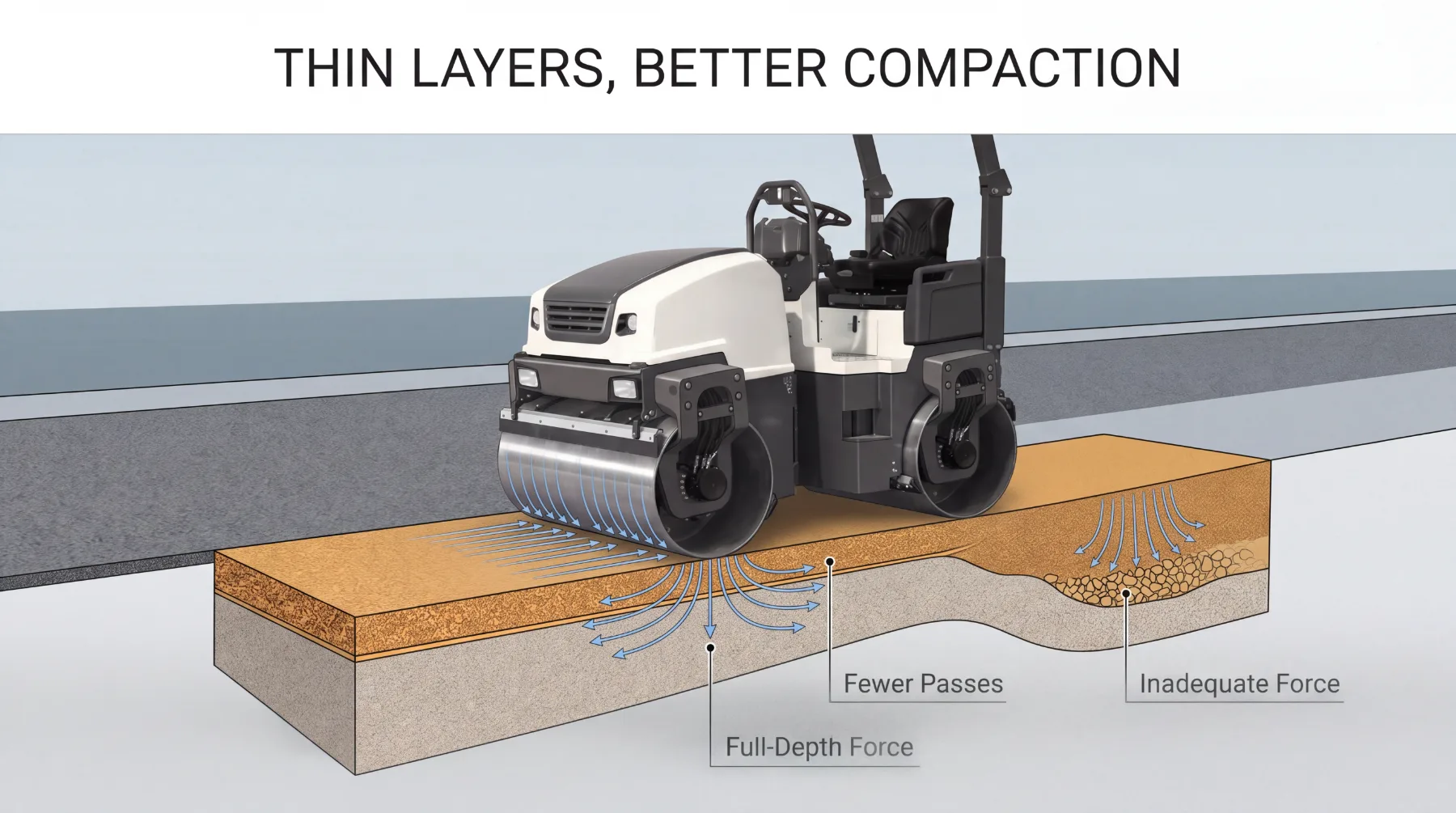
Thinner layers make compaction more efficient because they let the roller's energy reach more of the material. When a layer is placed at a modest depth, the compaction force applied at the surface travels through a shorter distance to reach the bottom, meaning more of the material receives adequate force. This allows the layer to reach the required density more readily, often with fewer passes than a thicker layer would demand. For operators focused on both quality and productivity, that combination of full-depth compaction and reduced effort is a genuine advantage.
The efficiency gain is real and measurable. Because the force does not have to fight its way through excessive depth, each pass of the roller does more useful work, compacting the entire layer rather than just the upper portion. Fewer passes to reach target density means less time on each layer, lower fuel use, and reduced wear on the machine, all while producing a better result. Thin layers turn compaction from a struggle against depth into a controlled, predictable process.
Thinner layers also tend to compact more evenly and consistently. When the whole layer is within comfortable reach of the roller's force, density becomes uniform across the depth rather than varying from firm at the top to loose at the bottom. This consistency is exactly what quality compaction requires, because a uniform layer behaves predictably under load and provides dependable support. Achieving even density is far easier when the material is placed at a thickness the roller can fully penetrate, so the practice of building up a project in thinner, well-compacted layers, rather than fewer thick ones, is a reliable way to secure both strong results and efficient work. This is why proper lift thickness is such a valued principle in compaction.
Thick Layers and Compaction Challenges
As material thickness increases, the roller faces growing difficulty compacting the full depth of the layer. The reason ties directly back to how force travels through material: the deeper the layer, the further the roller's energy must reach to compact the bottom, and the weaker that energy becomes by the time it gets there. Beyond a certain thickness, the lower portion of the layer simply does not receive enough force to reach the required density, no matter how many passes the roller makes across the top. The machine works, the surface responds, but the depth remains beyond its effective reach.
This creates a particularly deceptive problem. The surface of a thick layer can appear firm and well compacted while the deeper material remains loose and under-compacted. To the eye, the work looks finished, and even a quick check of the surface may suggest solid results. Yet the weakness hidden below is real, and it can create serious problems later. When loads are placed on the layer, the loose material underneath can settle, shift, or fail, leading to uneven surfaces, cracking, or structural problems that are costly to repair once the work is complete.
The danger lies precisely in this gap between appearance and reality. Consider the risks a thick, poorly compacted layer carries:
- Hidden under-compaction, where the base stays loose despite a firm-looking surface.
- Later settlement, as the deeper material consolidates under load after the project is finished.
- Reduced durability, since a layer weak at its base cannot provide the lasting support it was meant to.
Because these problems often appear only after the work is done, resisting the temptation to place material too thick is essential. A thick layer may seem to save time by requiring fewer lifts, but the risk of under-compaction at depth makes that a false economy. Building in properly sized layers protects the integrity of the finished result.
Matching Roller Performance to Layer Thickness
A roller's ability to compact a given layer thickness is not fixed; it depends on the machine's capabilities, and several factors work together to determine how deeply it can compact effectively. Operating weight, vibration, drum configuration, amplitude, and frequency all influence how much force a roller delivers and how far that force penetrates. Because of this, the roller must be matched to both the material being compacted and the depth of the layer, rather than assuming any machine can handle any thickness.
Operating weight is a starting point, because a heavier machine applies more static force, pressing material together through sheer mass. Vibration adds another dimension entirely, using dynamic force to shake particles into a tighter arrangement, which allows a roller to compact more effectively and to greater depth than weight alone would achieve. These two elements combine to define much of a roller's compaction power.
The finer settings shape how that power is applied. Consider how these factors influence performance:
- Amplitude, the height of the drum's vibration, which affects how deeply the compaction energy penetrates, with higher amplitude generally reaching greater depth.
- Frequency, how rapidly the drum vibrates, which influences how the force is delivered and suits different materials and layer depths.
- Drum configuration, the design and setup of the drum, which shapes how the roller engages the material and transfers force into it.
Matching these to the layer is what makes compaction effective. A thicker layer of suitable material may call for a heavier roller with higher amplitude to reach the full depth, while a thinner layer or a different material may be better served by other settings. The key principle is that the roller's capabilities and settings should suit the specific material and thickness at hand. When the machine is properly matched to the work, its force reaches the full depth of the layer, producing the uniform density that quality compaction requires and avoiding the under-compaction that a mismatched setup would leave behind.
Achieving Consistent Compaction
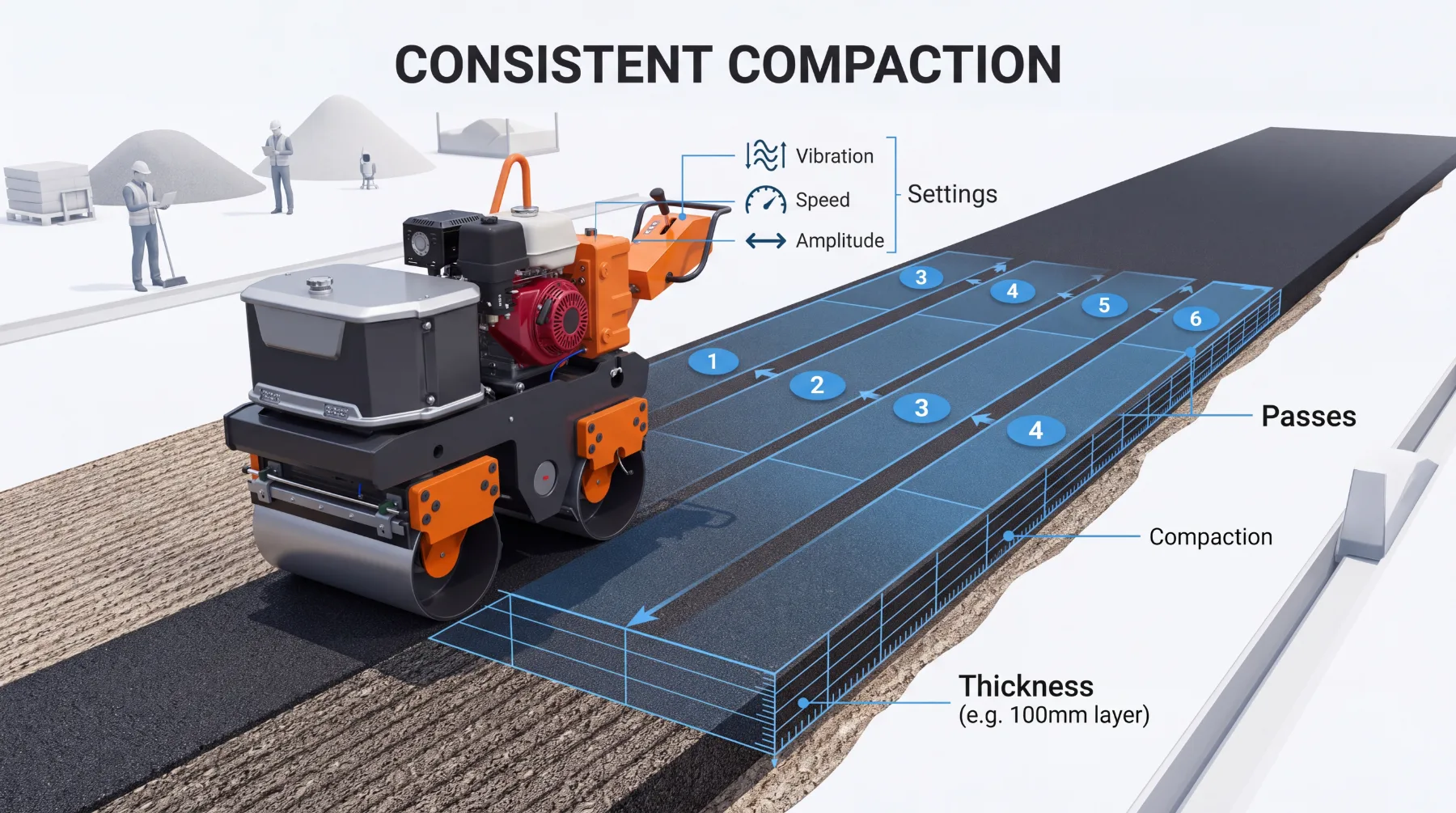
Consistent compaction is the goal of all this careful attention, and it comes from bringing three things together: proper layer thickness, the correct roller settings, and the right number of passes. When these align, they produce uniform density across the entire work area, which is the true measure of quality compaction. None of the three works well in isolation. Even the best roller cannot fully compact an excessively thick layer, and even a properly sized layer will not reach target density without adequate passes at suitable settings. Consistency depends on managing all three together.
Proper layer thickness is the foundation, because it ensures the roller's force can reach the full depth of the material. Building up the work in appropriately sized lifts, each one thin enough to compact fully, is what allows uniform density to be achieved layer by layer. On top of that foundation, the correct roller settings, matched to the material and depth as discussed, ensure the force is delivered effectively, and the right number of passes ensures the material reaches its required density without stopping short.
Following the appropriate lift thickness for the material brings a double benefit worth emphasizing. Consider what it delivers:
- Improved compaction quality, since each properly sized layer can be compacted fully and uniformly through its depth.
- Fewer unnecessary passes, because a well-matched layer thickness reaches density efficiently rather than demanding endless repetition to fix an over-thick lift.
- This is where good practice pays off in both quality and productivity.
When the lift thickness suits the material, the roller settings suit the layer, and the number of passes is judged to reach target density, compaction becomes a controlled, repeatable process rather than a matter of guesswork. The result is a work area with consistent density throughout, free of the hidden weak spots that undermine durability, and achieved without wasting time on excessive passes. Managing thickness, settings, and passes together is the dependable path to compaction you can trust.
Conclusion
Material thickness sits at the heart of effective road roller compaction. The depth of each layer determines how well the roller's force travels through the material, and placing material too thick leaves the lower portion insufficiently compacted, however firm the surface may look. Thinner layers let compaction energy reach more of the material, achieving the required density with fewer passes and producing more even, consistent results. Thick layers, by contrast, create the deceptive risk of a solid-looking surface hiding loose material below, which can settle and fail under load later. Matching the roller to the work is essential, since operating weight, vibration, drum configuration, amplitude, and frequency all shape how deeply a machine can compact a given thickness. Consistent compaction comes from combining proper lift thickness, the correct roller settings, and the right number of passes to produce uniform density across the work area. Follow the appropriate lift thickness for your material, match your roller to the depth, and judge your passes carefully, and you will build strong, durable layers efficiently, avoiding the hidden weaknesses that poor thickness management leaves behind.
Frequently Asked Questions
- Why does material thickness matter so much in compaction?
Material thickness matters because it determines how effectively a road roller can transfer its compaction force through the material. When a roller passes over a layer, it applies force from the top down, and that force is strongest at the surface and gradually weakens as it travels deeper. The thickness of the layer therefore decides how much of the material actually receives enough force to reach the required density. If the layer is placed too thick, the lower portion may remain insufficiently compacted, because the roller's energy cannot reach the bottom with enough strength to press those deeper particles together. This leaves a layer that is firm near the top but weak underneath, undermining the stability it is meant to provide. Because the roller works from the surface down, matching layer thickness to the force the machine can deliver is essential for achieving uniform density and long-term stability. Ignoring thickness risks hidden weakness that surface passes cannot fix. - How do thinner layers improve compaction efficiency?
Thinner layers improve efficiency because they let the roller's energy reach more of the material. When a layer is placed at a modest depth, the compaction force applied at the surface travels a shorter distance to reach the bottom, so more of the material receives adequate force. This allows the layer to reach the required density more readily, often with fewer passes than a thicker layer would demand. Because the force does not have to fight through excessive depth, each pass does more useful work, compacting the entire layer rather than just the upper portion. Fewer passes means less time per layer, lower fuel use, and reduced wear on the machine, all while producing a better result. Thinner layers also compact more evenly and consistently, since the whole layer is within comfortable reach of the roller's force, giving uniform density from top to bottom. Building a project in thinner, well-compacted layers is a reliable way to secure both strong results and efficient work. - What problems can thick layers cause during compaction?
As material thickness increases, the roller has more difficulty compacting the full depth of the layer, because its energy must travel further and weakens before reaching the bottom. Beyond a certain thickness, the lower portion simply does not receive enough force to reach the required density, no matter how many passes the roller makes. This creates a deceptive problem: the surface can appear firm and well compacted while the deeper material remains loose and under-compacted. The work looks finished, but the hidden weakness is real. When loads are later placed on the layer, the loose material underneath can settle, shift, or fail, leading to uneven surfaces, cracking, or structural problems that are costly to repair. The danger lies in the gap between appearance and reality, since these issues often appear only after the work is done. A thick layer may seem to save time with fewer lifts, but the risk of under-compaction at depth makes that a false economy. - How do I match a roller to the layer thickness I am compacting?
Matching a roller to layer thickness means considering the machine's capabilities together, since operating weight, vibration, drum configuration, amplitude, and frequency all influence how effectively it compacts a given depth. Operating weight provides static force through the machine's mass, pressing material together. Vibration adds dynamic force that shakes particles into a tighter arrangement, letting a roller compact more effectively and to greater depth than weight alone. Amplitude, the height of the drum's vibration, affects how deeply the energy penetrates, with higher amplitude generally reaching greater depth. Frequency, how rapidly the drum vibrates, influences how the force is delivered and suits different materials and depths. Drum configuration shapes how the roller engages the material and transfers force into it. The roller should be matched to both the material and the depth being compacted, so a thicker layer of suitable material may call for a heavier roller with higher amplitude, while a thinner layer may suit different settings. Proper matching ensures the force reaches the full depth. - How can I achieve consistent compaction across a work area?
Consistent compaction comes from combining three things: proper layer thickness, the correct roller settings, and the right number of passes. Together, these produce uniform density across the entire work area, which is the true measure of quality compaction. Proper layer thickness is the foundation, because it ensures the roller's force can reach the full depth of the material, so building the work up in appropriately sized lifts allows uniform density to be achieved layer by layer. The correct roller settings, matched to the material and depth, ensure the force is delivered effectively, and the right number of passes ensures the material reaches its required density without stopping short. Following the appropriate lift thickness for the material improves compaction quality and reduces unnecessary passes, since a well-matched layer reaches density efficiently rather than demanding endless repetition. Managing thickness, settings, and passes together turns compaction into a controlled, repeatable process, producing consistent density free of hidden weak spots.