
Sep 10, 2026
Mini Excavator Engine Selection: Why TYPHON Uses B&S, Kubota, and Honda
The engine sits at the center of everything a mini excavator does, yet it often gets less attention than bucket size or dig depth when buyers compare machines.
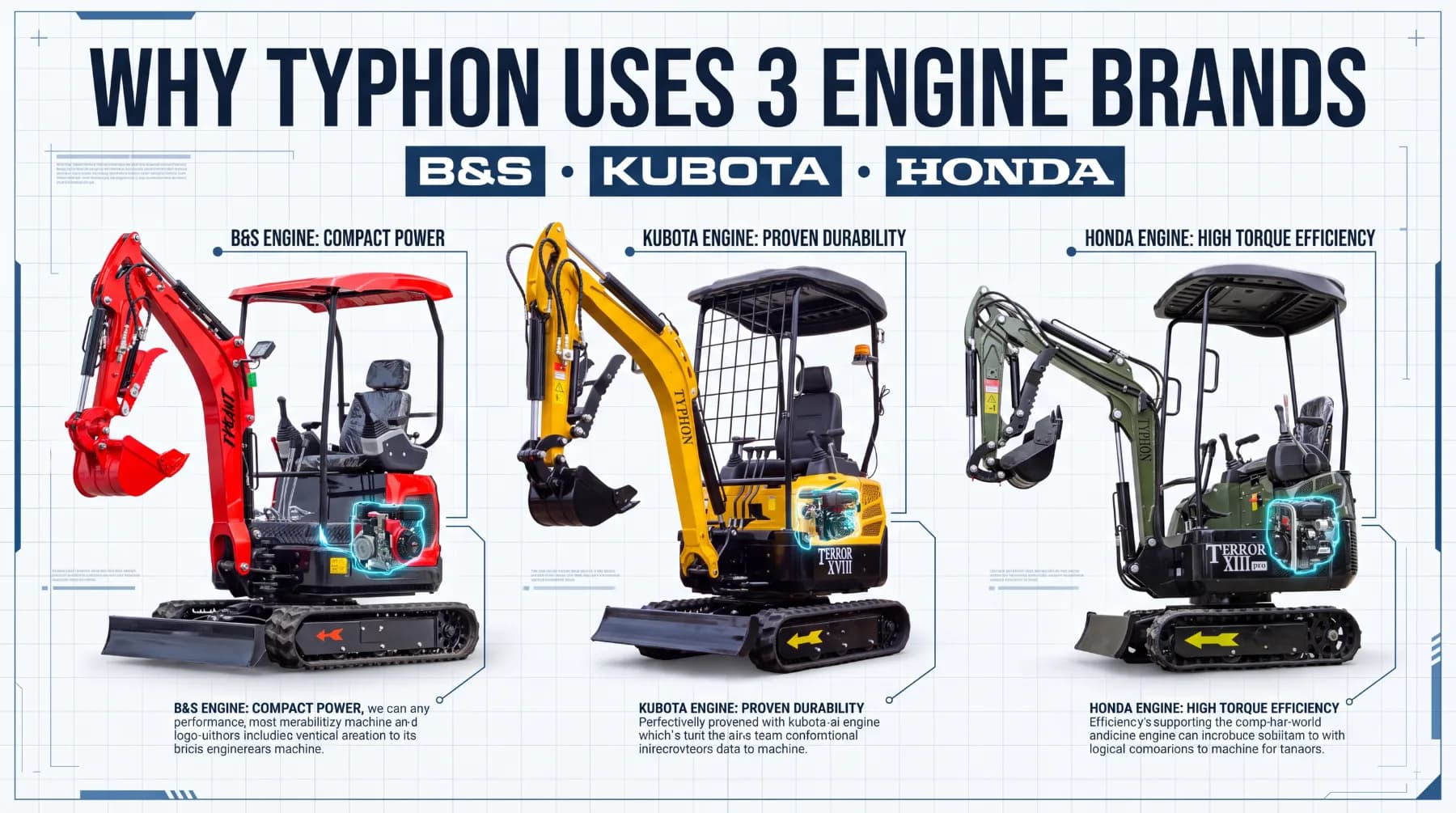
The engine sits at the center of everything a mini excavator does, yet it often gets less attention than bucket size or dig depth when buyers compare machines. That is a mistake. The engine shapes how much fuel a machine burns, how strongly its hydraulics perform, how much it weighs, and how easy it is to keep running. TYPHON does not fit one engine to every model and calls it done. Instead, TYPHON selects from Briggs & Stratton, Kubota, and Honda to match each machine's size and intended work. This guide explains why engine selection matters, what each brand brings to the table, and how TYPHON balances the engine against the rest of the machine so you get a compact excavator that performs dependably on the job.
Why Engine Selection Matters for Mini Excavators
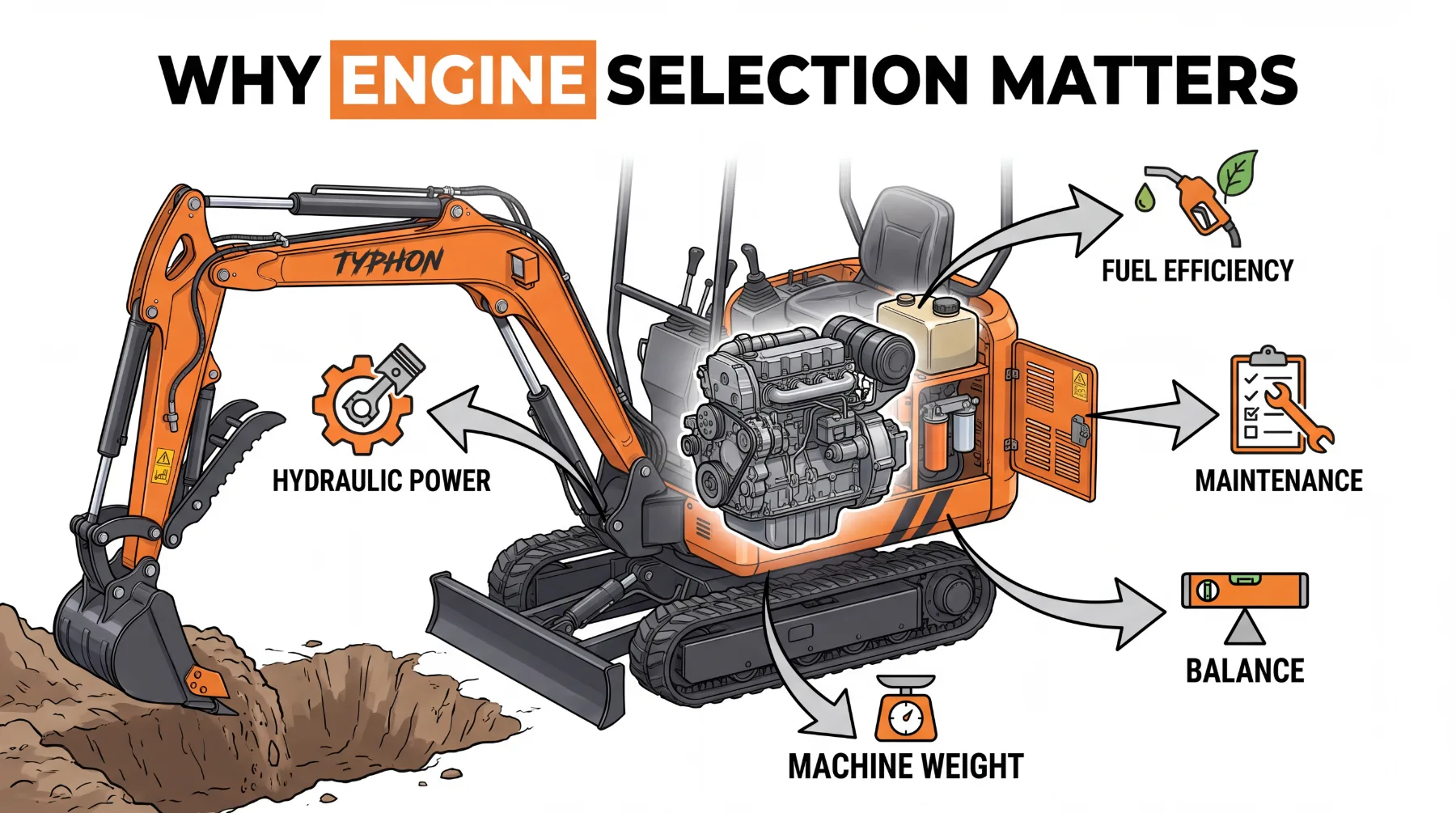
The engine influences far more than a horsepower figure on a spec sheet. It touches nearly every aspect of how a mini excavator performs, which is why choosing the right one is such an important decision. Fuel use, hydraulic performance, operating weight, maintenance demands, and overall machine balance all trace back to the engine at the machine's core. When the engine suits the machine, these elements fall into place. When it does not, the compromises show up quickly in daily work.
Consider how these factors connect to the engine:
- Fuel use depends on how efficiently the engine delivers power for the work at hand.
- Hydraulic performance relies on the engine to drive the pump that powers digging and lifting.
- Operating weight is affected by the engine's size and construction, which in turn influences stability and transport.
- Maintenance varies with the engine type, since some are simpler to service than others.
- Machine balance depends on how the engine's weight sits within the overall design.
Because these factors are linked, the engine cannot be judged in isolation. A machine needs an engine that supplies enough power for its hydraulics while keeping fuel use sensible and weight in check. This is why TYPHON selects different engine options rather than forcing a single choice across the entire lineup. A compact machine built for light, general-purpose work has very different needs than a larger unit meant for consistent, demanding digging. By matching the engine to the requirements of each mini excavator size and application, TYPHON builds machines that perform the way their operators expect, delivering the reliability that dependable work depends on from the first job to the thousandth.
Why TYPHON Uses Briggs & Stratton Engines
Briggs & Stratton engines give TYPHON a practical gasoline-powered option for compact excavators where simplicity and accessible maintenance carry real weight. For smaller machines built to handle light-duty and general-purpose work, a gasoline engine of this kind offers a straightforward, dependable way to deliver the power the machine needs without unnecessary complexity. Operators who value easy starting and uncomplicated operation often find this engine platform a natural fit for their day-to-day tasks.
The appeal of Briggs & Stratton comes down to a few clear strengths. These engines are known for simple operation, which suits users who want a machine they can start and run without fuss. Maintenance is accessible, meaning routine service is manageable and parts are widely available, which keeps a compact machine working with minimal downtime. And for the light-duty applications these smaller excavators are designed for, the power output is well suited to the job.
Where do these engines make the most sense? Consider the situations they serve well:
- Smaller machines where a compact, gasoline-powered engine matches the scale of the work.
- Light-duty and general-purpose tasks that do not demand the heaviest continuous output.
- Operators who prioritize simple starting, easy servicing, and dependable everyday performance.
By fitting Briggs & Stratton engines to the right machines, TYPHON offers a compact excavator that keeps things simple without sacrificing the reliability that matters on the job. This choice reflects a deliberate approach: rather than over-engineering a small machine, TYPHON pairs it with an engine suited to its purpose. The result is a practical, dependable tool for lighter work, one that gives operators confidence in easy operation and straightforward upkeep across the tasks these compact excavators are built to handle.
Why Kubota Engines Fit Demanding Excavator Applications
When the work turns demanding, TYPHON turns to Kubota diesel engines, and for good reason. Kubota diesels are widely recognized for their compact design and strong torque characteristics, a combination that suits excavators needing consistent power during digging and hydraulic work. Torque is what allows an excavator to drive its bucket into tough ground and sustain force through the dig, so an engine that delivers strong torque in a compact package is exactly what a hardworking machine requires.
The compact design matters as much as the power. A mini excavator has limited space, and an engine that packs strong output into a small footprint helps the machine stay balanced and maneuverable without giving up capability. Kubota diesels bring this balance, supplying the sustained power that digging and hydraulic functions depend on while fitting neatly within the machine's design. For applications that ask the excavator to work hard and keep working, this dependable delivery of power is essential.
TYPHON does not treat Kubota as a single option, either. Different machines have different needs, and TYPHON can use different Kubota models depending on the excavator's size and power requirements. A larger, more demanding machine can be paired with a Kubota engine sized to match its workload, while a somewhat smaller unit can receive a model suited to its scale. This flexibility lets TYPHON tune the engine choice to the specific demands of each excavator rather than settling for a one-size-fits-all approach.
The payoff is a machine that performs with confidence under load. By matching the right Kubota diesel to the right excavator, TYPHON builds machines that dig strongly, run their hydraulics dependably, and hold up to the consistent demands of serious work, giving operators the steady power that demanding applications require.
Where Honda Engines Make Sense
Honda engines give TYPHON another gasoline-powered solution for compact equipment, and they earn their place through a familiar, dependable platform. For operators who already know and trust Honda engines, this familiarity is a genuine advantage, since it means comfortable operation and confidence in a proven design. Combined with practical power delivery, a Honda engine offers a sensible option for smaller excavators where the goal is a well-judged match between machine size and the work at hand.
The strength of a Honda engine in this setting lies in balance. Rather than chasing maximum output, the right Honda engine provides an effective balance between the excavator's size and its operating requirements. For a compact machine, that balance is exactly what matters. The engine supplies the power the machine needs to do its work while fitting comfortably within the scale of a smaller unit, keeping the excavator practical and manageable for the tasks it is built to handle.
A few qualities make Honda engines a fitting choice for compact excavators:
- A familiar platform that many operators already recognize and trust.
- Practical power delivery suited to the demands of smaller machines.
- A sensible size match that keeps the machine balanced and easy to work with.
For smaller excavators, this kind of measured fit is precisely what produces a reliable, easy-to-operate machine. TYPHON selects a Honda engine when its characteristics align with what a compact unit needs, giving operators a machine that performs dependably without unnecessary complexity. It is another example of TYPHON choosing the engine to suit the machine, ensuring that each compact excavator carries a power source well matched to its purpose and the everyday work it will take on.
Matching the Engine to the Entire Excavator
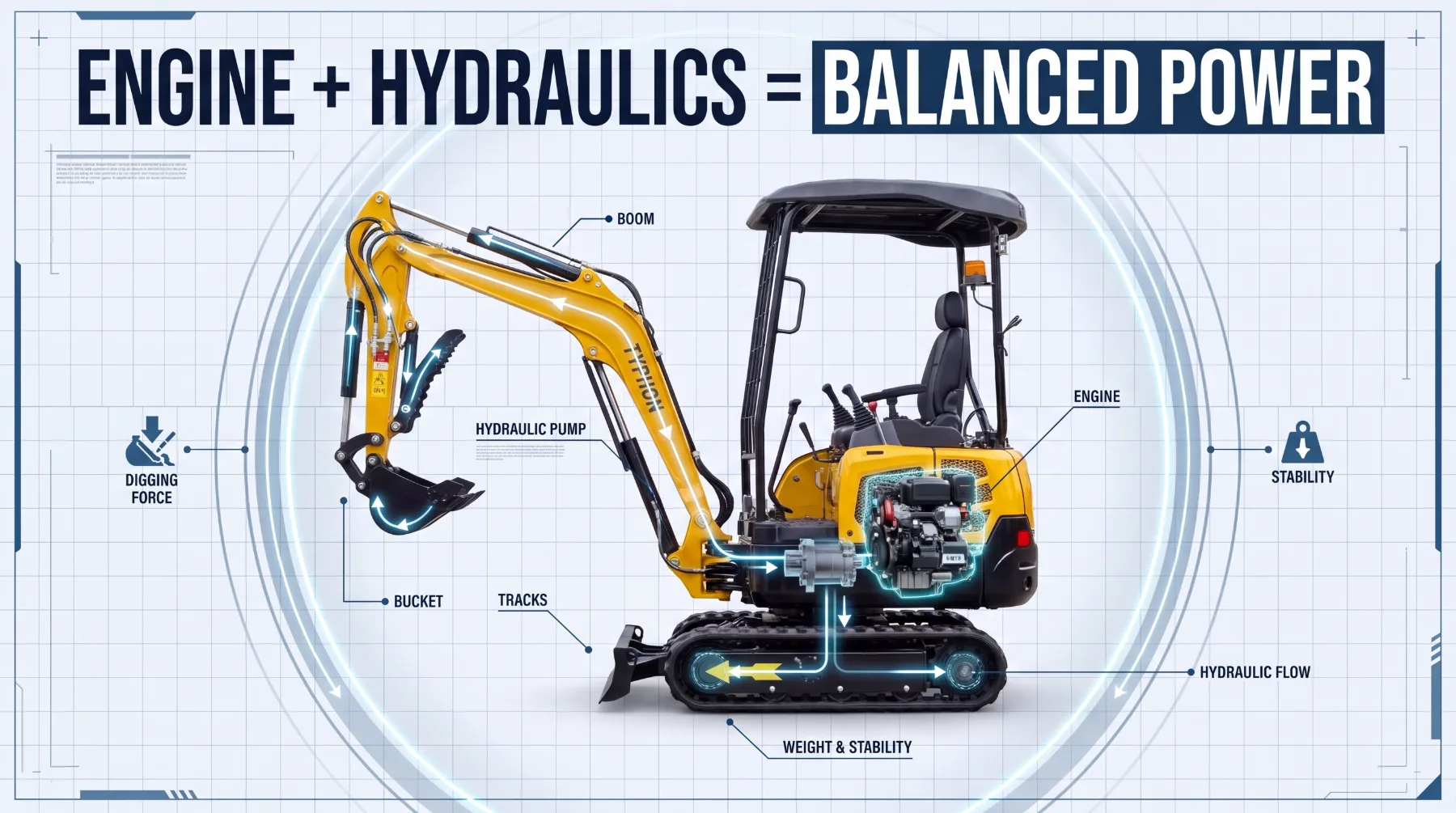
Here is where TYPHON's approach comes together: the engine is never selected on horsepower alone. A high horsepower figure means little if the rest of the machine cannot use that power effectively, so TYPHON treats engine selection as a matter of balance across the whole excavator. Engine output must work in concert with several other systems and specifications to create a machine that performs as a unified, well-tuned tool rather than a collection of mismatched parts.
Several factors have to align for that balance to hold. Each one shapes how the engine's power translates into real digging and lifting capability:
- Hydraulic pump capacity, since the engine drives the pump that powers every hydraulic function.
- Working pressure, which determines how much force the hydraulic system can apply.
- Machine weight, which affects stability, balance, and how the machine carries itself.
- Digging force, the real-world output the operator relies on to move material.
- Fuel requirements, which influence running costs and how long the machine works between refills.
- Intended application, the type and intensity of work the excavator is built to handle.
When these elements are matched, the engine's output flows through the machine efficiently. The pump receives the power it needs, the hydraulics deliver their rated pressure, the weight stays balanced, and the digging force meets the demands of the job. A properly balanced mini excavator is the result: a machine where every system supports the others.
This is why TYPHON considers the complete picture when choosing between Briggs & Stratton, Kubota, and Honda. The right engine is the one that fits the whole machine and its purpose, not simply the one with the biggest number. By engineering each excavator as a balanced system, TYPHON delivers machines that perform reliably and predictably, giving operators the confidence that their equipment is built to work as intended.
Conclusion
Engine selection is one of the most consequential decisions in how a mini excavator performs, shaping fuel use, hydraulic strength, weight, maintenance, and balance. That is why TYPHON draws on three trusted engine makers rather than settling for one. Briggs & Stratton suits compact, light-duty machines where simple operation and easy service matter most. Kubota diesels bring the compact design and strong torque that demanding digging requires. Honda offers a familiar, well-balanced gasoline option for smaller units. Above all, TYPHON matches each engine to the entire machine, aligning output with hydraulics, weight, digging force, and application. When you choose a TYPHON mini excavator, you get an engine selected to fit the whole machine and the work you need it to do.
Frequently Asked Questions
- Why does TYPHON use three different engine brands instead of one?
TYPHON uses Briggs & Stratton, Kubota, and Honda because different mini excavator sizes and applications have different needs, and no single engine suits every machine. A compact unit built for light, general-purpose work calls for a simple, accessible gasoline engine, while a larger machine meant for consistent, demanding digging needs the strong torque of a diesel. By selecting from three trusted engine makers, TYPHON can match each excavator with a power source suited to its scale and purpose. This deliberate approach means the engine works in harmony with the rest of the machine, delivering the fuel efficiency, hydraulic performance, and balance that each application requires rather than forcing a one-size-fits-all compromise. - What makes Briggs & Stratton engines a good fit for compact excavators?
Briggs & Stratton engines offer a practical gasoline-powered option for smaller machines where simple operation and accessible maintenance are priorities. These engines are known for easy starting and uncomplicated running, which suits operators who want a machine they can rely on without fuss. Routine service is manageable, and parts are widely available, so a compact machine stays working with minimal downtime. For the light-duty and general-purpose tasks these smaller excavators are designed to handle, the power output is well matched to the job. Rather than over-engineering a small machine, TYPHON pairs it with an engine suited to its purpose, giving operators a dependable, straightforward tool for lighter work. - Why are Kubota diesel engines chosen for more demanding work?
Kubota diesel engines are recognized for their compact design and strong torque, a combination that suits excavators needing consistent power during digging and hydraulic work. Torque is what lets an excavator drive its bucket into tough ground and sustain force through the dig, so strong torque in a compact package is exactly what a hardworking machine needs. The compact design also helps the machine stay balanced and maneuverable despite limited space. TYPHON can use different Kubota models depending on the excavator's size and power requirements, pairing a larger, more demanding machine with an engine sized to match its workload. This flexibility ensures each excavator digs strongly and runs its hydraulics dependably under the demands of serious work. - When does a Honda engine make the most sense for a mini excavator?
A Honda engine makes sense for smaller excavators where the goal is a well-judged balance between machine size and operating requirements. Honda offers a gasoline-powered solution built on a familiar, proven platform that many operators already recognize and trust, which means comfortable operation and confidence in the design. Rather than chasing maximum output, the right Honda engine provides practical power delivery matched to the scale of a compact machine. That measured fit keeps the excavator balanced, manageable, and easy to work with for the tasks it is built to handle. TYPHON selects a Honda engine when its characteristics align with what a compact unit needs, ensuring the machine performs dependably without unnecessary complexity. - Why doesn't TYPHON choose engines based on horsepower alone?
Horsepower is only one part of the picture, and a high figure means little if the rest of the machine cannot use that power effectively. TYPHON treats engine selection as a matter of balance across the entire excavator. Engine output must work together with hydraulic pump capacity, working pressure, machine weight, digging force, fuel requirements, and the intended application. When these elements align, the engine's power flows through the machine efficiently: the pump gets the power it needs, the hydraulics deliver their rated pressure, the weight stays balanced, and the digging force meets the job's demands. The result is a properly balanced mini excavator where every system supports the others, which is why TYPHON considers the complete machine rather than a single number.