
Nov 16, 2026
Road Roller Drum Water Spray, Asphalt Pickup, and Surface Quality
A paving crew lays a fresh mat across a commercial parking lot on a cool morning. The breakdown roller moves in close behind the paver, and for the first few passes everything looks right.
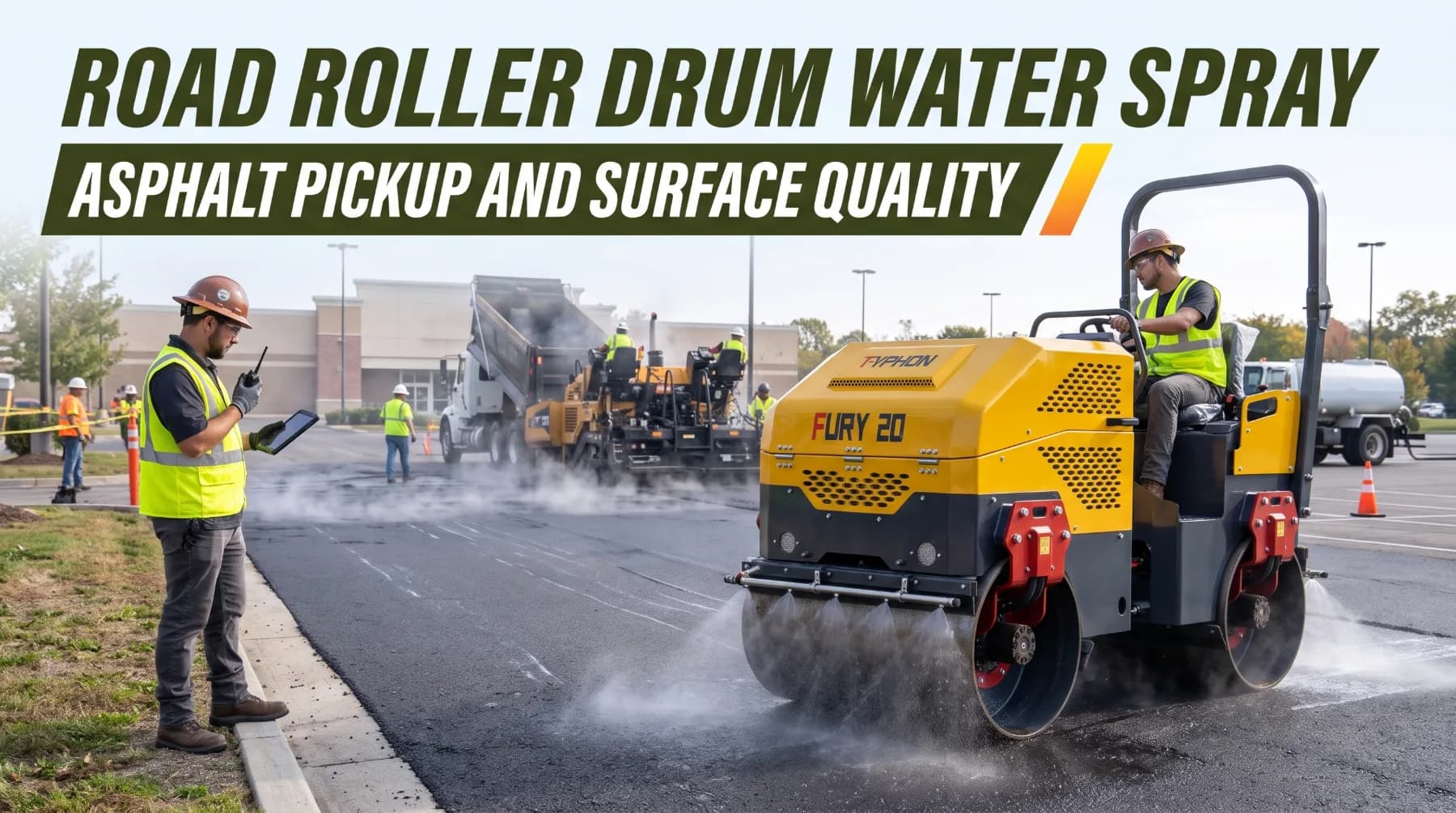
A paving crew lays a fresh mat across a commercial parking lot on a cool morning. The breakdown roller moves in close behind the paver, and for the first few passes everything looks right. Then small chunks of hot mix start clinging to the front drum. On the next pass, the drum presses that material back into the mat and leaves a rough, torn patch. A quick look shows two clogged nozzles on the spray bar, leaving a dry strip across the drum face. The operator stops, the foreman calls for hand work, and the finished surface now carries a blemish that will be visible for years.
The drum water spray system is one of the simplest systems on a road roller, and one of the easiest to overlook. It wets the steel drums so hot asphalt doesn't stick to them. When it works properly, drums stay clean, rolling stays continuous, and the mat finishes smooth and uniform. When it doesn't, asphalt pickup tears the surface, leaves marks, interrupts the rolling pattern, and can reduce density in the affected areas.
Purpose of the Drum Water Spray System
Most tandem asphalt rollers use a similar arrangement. A water tank, often made of polyethylene, sits on the machine's frame or beneath the operator platform. An electric pump draws water through a strainer and an inline filter, then pushes it through hoses to spray bars mounted above the front and rear drums. Nozzles along each spray bar direct water onto the drum face. Many machines also use cocoa mats, absorbent pads, or flexible scrapers that rest against the drum and spread the water into an even film while wiping away loose material.
Control systems vary by machine. Some rollers offer simple on-off spraying. Many offer intermittent or interval spraying, where the operator selects how often the pump cycles, which conserves water while keeping drums wet. Newer machines may adjust spray automatically based on travel speed or direction, and some shut off the spray when the roller stops so water doesn't puddle on the mat. Many large rollers include dual pumps or a gravity-feed backup, so a single pump failure doesn't stop the paving operation.
Pneumatic tire rollers face the same challenge on their rubber tires. They typically use a water spray system as well, sometimes with a manufacturer-approved release agent mixed into the water. Steel-drum combination rollers may use both systems, one for the drum and one for the tires.
Key takeaway: The drum water spray system keeps a thin film of water on the steel drums so hot asphalt doesn't stick. It typically includes a tank, pump, filters, spray bars, nozzles, and spreading mats or scrapers, with on-off, interval, or automatic spray control.
How Asphalt Pickup Affects Compaction Quality
Asphalt pickup occurs when hot mix sticks to the drum instead of staying in the mat. The effect starts small, often as a few specks of binder or fine aggregate on the drum surface. Left unchecked, that material builds up quickly. Each rotation of the drum carries the buildup back to the mat, where it presses a rough imprint into the surface or tears out more material.
Pickup damages the pavement in several ways. It leaves surface pockmarks, tears, and uneven texture that affect appearance and ride quality. Torn areas often contain more air voids than the surrounding mat, which lets water and air into the pavement and accelerates aging of the binder. Buildup on the drum also changes the drum's contact with the surface, so compaction energy may not reach the mat evenly. When the crew stops to clean the drum, the mat continues to cool, which shortens the compaction window and can leave the affected section below target density.
Pneumatic tire rollers are especially prone to pickup until their tires reach operating temperature. Many crews warm pneumatic tires on a previously compacted section before moving onto the fresh mat, and some fit skirts around the tires to hold heat.
Consider a crew placing a polymer-modified surface course on a cool, breezy morning. The first passes show light pickup despite a working spray system. The foreman increases the spray interval briefly, allows the breakdown roller to warm its drums on the edge of the mat, and confirms that rolling begins within the specified temperature range. Within a few passes, the drums run clean, and the crew returns to normal spray settings to avoid overwatering.
Key takeaway: Asphalt pickup tears the surface, leaves marks, creates areas with higher air voids, and forces stops that let the mat cool. Manage it with consistent water coverage, warm drums and tires, correct rolling temperatures, and smooth rolling technique.
Spray Nozzles and Water Distribution
The spray system works only as well as its water distribution across the drum. Every inch of drum width that contacts the mat must stay wet. A single blocked nozzle can leave a dry band where pickup begins, even when the rest of the drum is covered.
Spray bars are typically mounted above each drum, with nozzles spaced so their spray patterns overlap. That overlap ensures the edges of each pattern meet, leaving no dry gaps between nozzles. Nozzles may be brass, stainless steel, or engineered plastic, and many produce a flat fan pattern aimed across the drum face. Some designs mount spray bars on both the front and back of each drum. Others rely on mats or pads that rest against the drum to spread water evenly from a smaller number of nozzles.
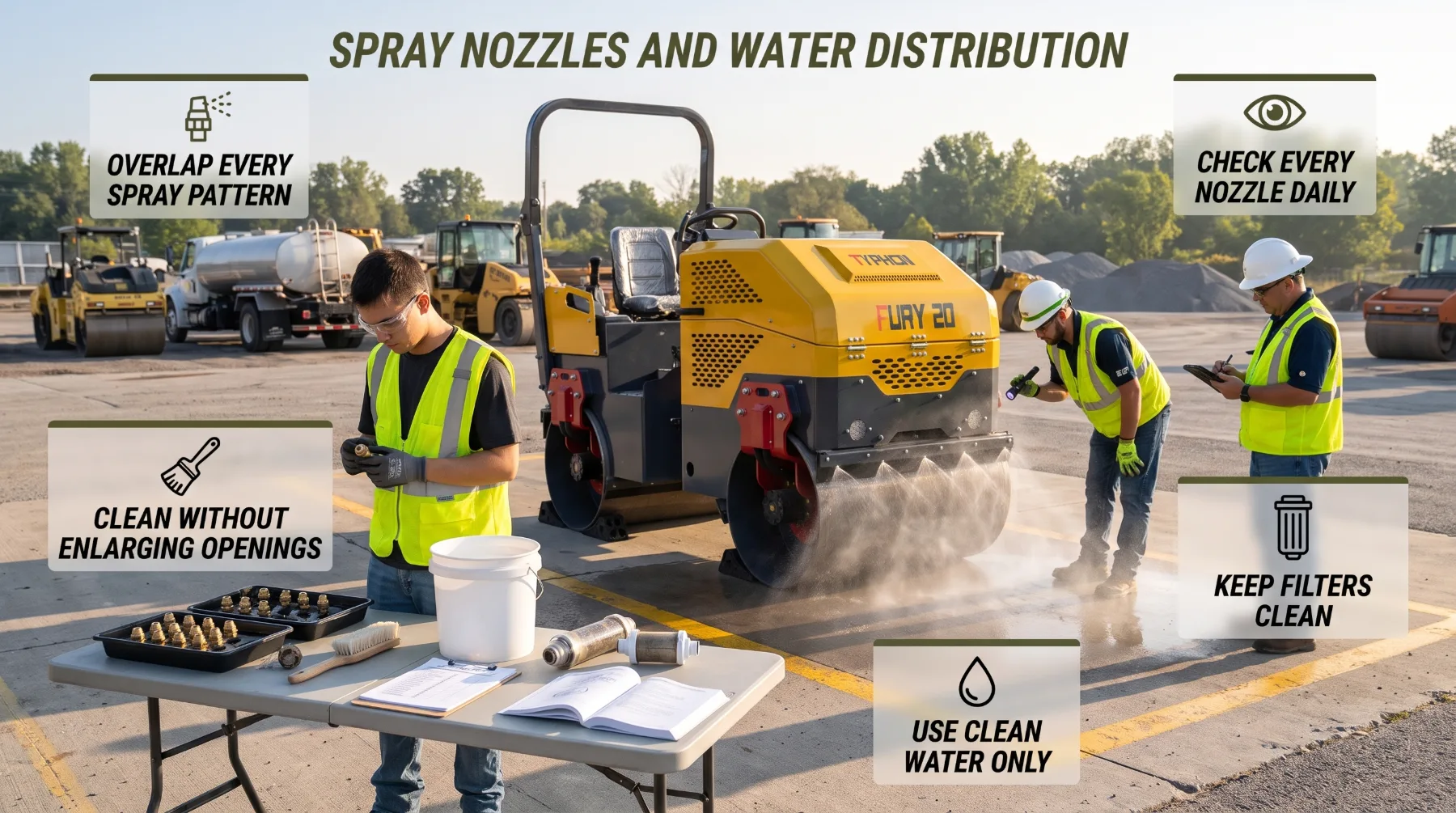
Blockage is the most common distribution problem. Sediment, algae, rust, mineral scale, and debris from the tank can lodge in nozzle openings and restrict or stop flow. Hard water leaves mineral deposits over time, especially when machines sit with water in the lines. Damaged or misaligned nozzles can spray onto the frame instead of the drum, and worn or dirty cocoa mats can stop spreading water evenly.
Check nozzle coverage before every shift and throughout the day. With the roller parked safely and the spray running, look at each spray bar to confirm every nozzle produces a full, even pattern. During paving, watch the drum surfaces for dry streaks, shiny wet bands that suggest too much water, or early specks of material. When a nozzle needs cleaning, remove it and clean it with water and a soft brush, or replace it with the correct part. Avoid inserting wire, nails, or drill bits into nozzle openings, which can enlarge or distort them and ruin the spray pattern. Avoid excessive air or water pressure that could damage plastic nozzles.
Key takeaway: Overlapping spray patterns keep every inch of the drum wet. Check every nozzle before each shift, watch for dry streaks during work, clean nozzles without enlarging their openings, and replace damaged nozzles with the correct parts.
Water Tank Capacity and Operating Time
Tank capacity determines how long a roller can work before it needs to refill. On a busy paving job, an empty tank means the roller leaves the mat, and that interruption can cost density in sections that cool before the roller returns. Planning water supply is as important as planning fuel.
More water isn't better. Excess water cools the mat surface, which can shorten the compaction window and contribute to surface cracking on some mixes. Water can puddle at low spots, run into longitudinal joints, and leave the mat surface slick. It also drains the tank faster and adds refill stops. The right setting keeps the drums wet with a thin film and no visible runoff onto the mat. Adjust the spray interval as conditions change, increasing it during hot afternoons or with sticky mixes, and decreasing it once drums are warm and running clean.
Plan refills before the job starts. Identify the water source, whether a water truck, hydrant with an approved meter and backflow device, or nursery tank, and schedule refills during natural breaks such as truck changes or paver pauses. Use clean water only. Water drawn from ponds, ditches, or contaminated containers carries sediment and organic material that clogs filters and nozzles and can grow algae in the tank.
Key takeaway: Match tank capacity and spray settings to the paving schedule. Measure real water consumption, avoid overwatering that cools the mat and drains the tank, use clean water, and plan refills during natural breaks so the roller never leaves the mat unexpectedly.
Drum Cleanliness and Surface Finish
A clean drum delivers a clean surface. Even with a working spray system, drums can collect small amounts of material over a shift, and the condition of the drum surface itself affects how easily asphalt sticks. Drum care works hand in hand with water spray to produce a smooth, uniform finish.
Scrapers form the first line of defense. Most tandem rollers carry scrapers on the front and rear of each drum, made of steel, polyurethane, or another durable material. They remove material that builds up on the drum before it can return to the mat. Scrapers must sit at the correct angle and contact pressure. A scraper that's worn, bent, or out of adjustment leaves material behind, while one set too hard against the drum can wear both the scraper and the drum surface. Check scraper condition and adjustment daily, and adjust or replace them following the manufacturer's procedure.
Drum surface condition matters as well. Smooth, polished drums release asphalt more easily than scored, pitted, or rusty ones. Drums that sit outdoors for long periods can develop surface rust, which roughens the steel and increases pickup during the first hours of use. Store rollers under cover where practical, and run a few passes on a previously compacted surface at the start of the shift to warm and polish the drums before moving onto the fresh mat.
Release agents can help with difficult mixes, but only when the manufacturer and the project specification allow them. Use only approved water-soluble release agents mixed at the recommended ratio. Never use diesel fuel or other petroleum solvents as a release agent. Petroleum products dissolve asphalt binder, soften the mat surface, contaminate soil and storm drains, and are prohibited on many projects.
Surface finish also depends on rolling technique. Keep travel speed slow and steady, change direction smoothly, and turn off vibration before stopping or reversing. Never park or stop on a hot mat, since the drum's weight leaves a depression and increases the chance of pickup. When finished rolling in static mode, keep the drums wet and clean, since this final pass sets the surface appearance.
Key takeaway: Keep scrapers adjusted and in good condition, protect drum surfaces from rust, and warm drums before rolling fresh mat. Use only approved water-soluble release agents, never diesel, and support a smooth finish with steady speed and smooth direction changes.
Safe Inspection, Leak Checks, and Lockout
Spray system work brings technicians close to the drums, scrapers, articulation joint, and hydraulic components that drive and vibrate the roller. Safe habits protect them during every inspection and repair.
Hydraulic hoses feed the drive motors and vibration motors near each drum, often routed close to the spray bars and water lines. A wet hose can look like a water leak when it's actually hydraulic fluid. Never use your hand to search for a hydraulic leak. Fluid escaping through a pinhole under pressure can penetrate skin and cause an injection injury. The wound may look minor at first, but it's a medical emergency that requires immediate surgical treatment. Use a piece of cardboard or wood, wear gloves and eye protection, and keep your face out of line with the suspected leak. If anyone is struck by escaping hydraulic fluid, get emergency medical care at once and tell medical staff it's a hydraulic injection injury.
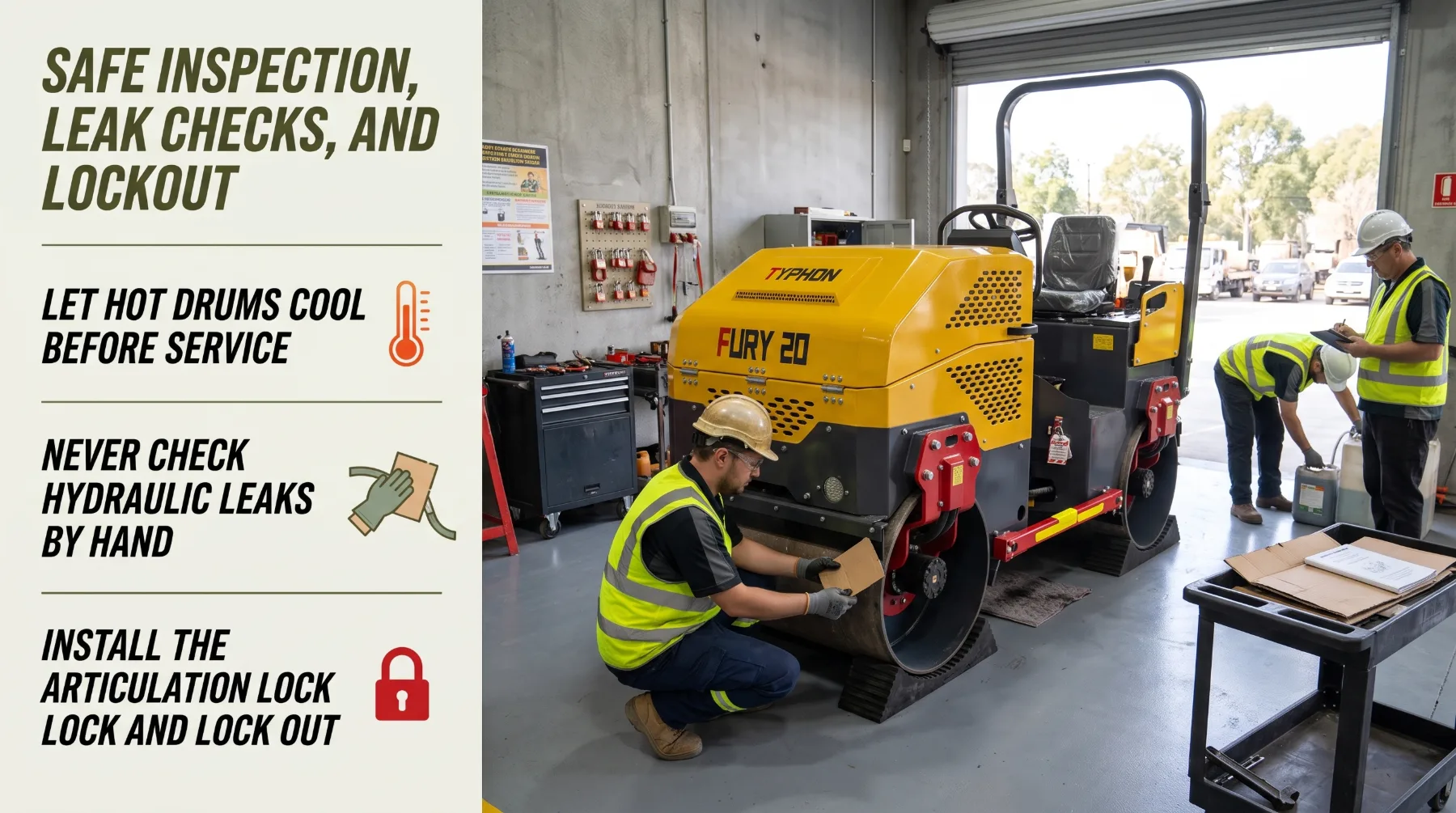
Let drums cool before touching them. Steel drums that have rolled hot asphalt can cause serious burns. Never clean a drum, adjust a scraper, or clear a nozzle while the roller is moving or the engine is running. Use the manufacturer's steps and handholds with three points of contact when climbing to fill the tank, and never stand on the drums or spray bars. Remove the articulation lock before operating again, since steering is disabled while it's installed. Only trained, authorized operators should run the roller, and every operator should wear the seat belt whenever the machine moves.
Key takeaway: Check suspected leaks with cardboard rather than your hands, install the articulation lock and lockout before service, let hot drums cool, and never clean drums or nozzles while the roller is running.
Conclusion
The drum water spray system plays a direct role in pavement quality. It keeps a thin film of water on the steel drums so hot asphalt stays in the mat instead of sticking to the roller. Consistent nozzle coverage prevents the dry bands where pickup begins, while correct spray settings keep drums wet without cooling the mat or draining the tank. Clean, well-adjusted scrapers, smooth drum surfaces, warm drums and tires, and sound rolling technique complete the picture. Pickup that slips through can tear the surface, raise air voids, and force stops that cost density.
Frequently Asked Questions
Why do road rollers spray water on the drum?
Water forms a thin film on the steel drum that prevents hot asphalt binder from sticking to it. Without that film, material clings to the drum and is pressed back into the mat on the next rotation, tearing the surface and leaving marks. The water also cools the drum surface slightly, which further reduces sticking. A working spray system keeps rolling continuously and supports a smooth, uniform finish.
What happens when spray nozzles become blocked?
A blocked nozzle leaves a dry band on the drum where asphalt can begin to stick. That pickup grows with each rotation and leaves rough patches or torn areas in the mat. Check every nozzle before each shift, watch for dry streaks during work, and clean or replace blocked nozzles promptly. Use clean water and maintain filters to reduce clogging.
Can too much water affect paving operations?
Yes. Excess water cools the mat surface, which can shorten the compaction window and contribute to surface defects on some mixes. It can also puddle in low spots, run into joints, make the surface slick, and drain the tank faster. Set the spray interval to keep a thin film on the drum with no visible runoff, and adjust it as temperature and mix conditions change.
How often should the drum spray system be inspected?
Inspect it during every pre-operation check, including tank level, filters, pump operation, hoses, nozzle patterns, mats, and scrapers. Monitor drum coverage throughout the shift, and clean filters and flush the tank at the intervals the manufacturer specifies. Drain the system or use an approved antifreeze whenever freezing temperatures are expected.