
Nov 5, 2026
Trencher Boom Length and Digging Depth: What Contractors Should Know
The boom can only reach its rated depth at full angle. Along the field edge, the operator has to run the boom shallower to keep the machine level on the cross slope.
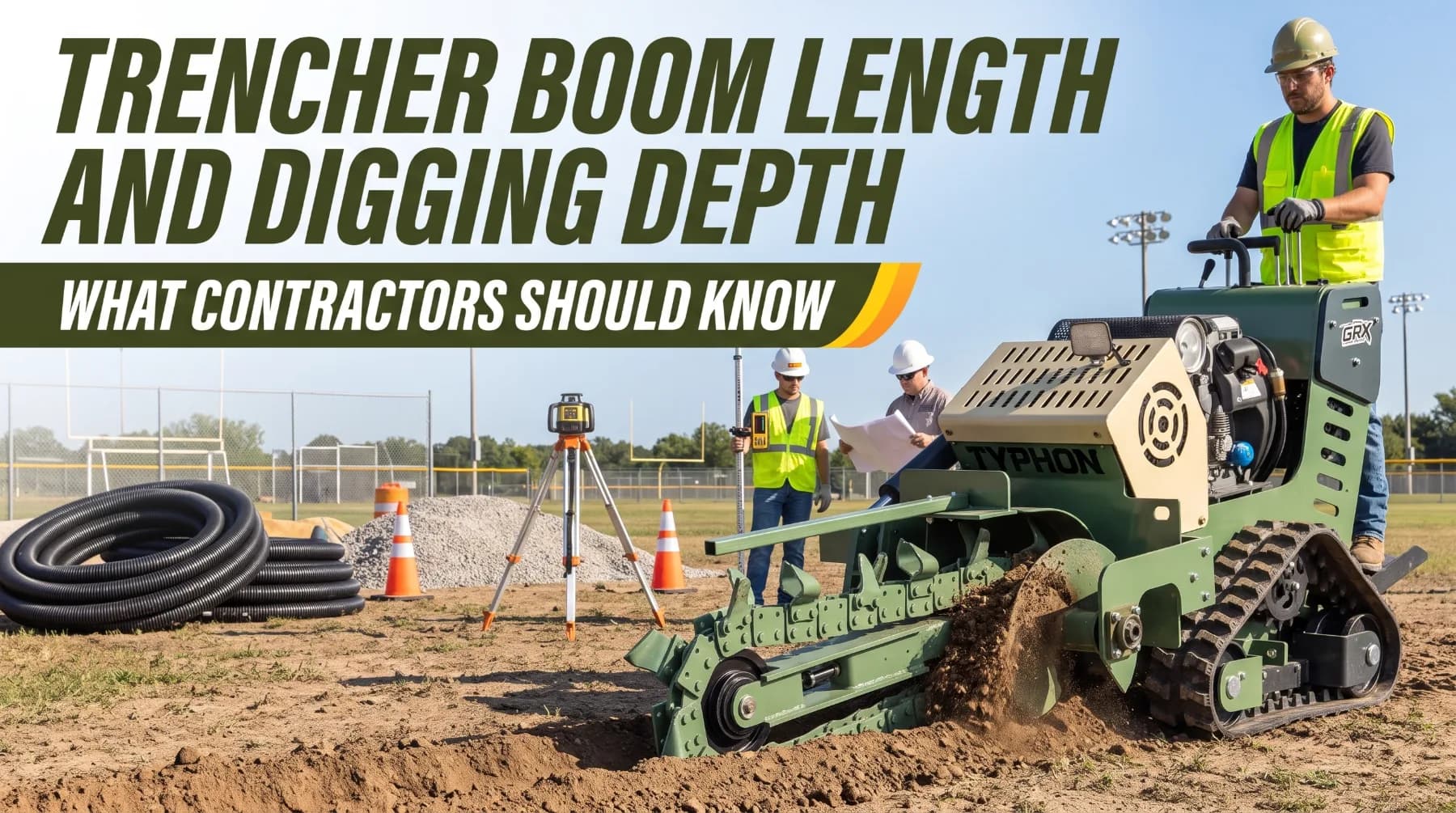
The boom can only reach its rated depth at full angle. Along the field edge, the operator has to run the boom shallower to keep the machine level on the cross slope. Dense clay packed with cobble slows the chain, and the crumber leaves loose spoil in the bottom of the cut. When the grade checker measures from finished grade, the trench sits at 38 to 40 inches, several inches short. The chain is also set up for a narrower trench than the gravel envelope requires. By the end of the week, the crew has recut nearly a third of the run, hand-cleaned the bottom, and ordered a wider chain. The schedule is slipping toward the first home game.
Trencher boom length and digging depth are two of the first figures contractors check on a specification sheet. They are also two of the most misunderstood. Boom length decides the reach of the cutting assembly. Digging depth decides how deep that assembly can actually be cut. Neither figure tells the full story without chain configuration, trench width, ground conditions, and site access. This guide explains how each factor works and how they connect. It also shows how to match trenching equipment to the utility, drainage, and irrigation work your crews perform every day.
Understand Trencher Boom Length
The boom is the backbone of a chain trencher. It's the long, rigid frame that carries the digging chain from the drive sprocket at the machine end to the nose roller or idler at the far end. As the chain travels around the boom, its teeth cut soil from the trench face and carry it up toward the surface. The boom guides that chain, holds it under tension, and transfers the machine's power and weight into the cut. Its design and dimensions decide how far the cutting assembly can reach into the ground and what type of trenching work the machine can handle.
Many manufacturers offer more than one boom length for the same machine. A contractor who runs irrigation one month and electrical service lines the next may benefit from a machine that accepts interchangeable booms. Changing boom length usually means changing chain length as well, and sometimes the drive components. Confirm which boom and chain combinations the manufacturer approves for your machine. Running an unapproved combination can overload the drive, cause poor chain tension, and void warranty coverage.
Ask each manufacturer for three figures when you compare booms. These are the boom's nominal length, the maximum digging depth it produces, and the boom angle at which that depth was measured. Then ask how the stowed boom affects overall length and transport dimensions. Those details give you a far clearer picture than a single depth figure on a brochure.
Key takeaway: The boom carries and guides the digging chain, and its length sets the cutting assembly's reach. Because the boom works at an angle, boom length is always greater than digging depth, so compare boom length, maximum depth, and boom angle together.
Compare Maximum Digging Depth
Maximum digging depth indicates the deepest trench a machine is designed to cut under specified conditions. It's useful for narrowing your choices, but it isn't a promise that the machine will hold that depth along every foot of every trench. Contractors who plan around the published maximum often find the real trench comes up short, just as the drainage crew discovered.
Start with how the figure is measured. Manufacturers generally state maximum depth with the boom at full angle, the machine on firm, level ground, and the chain fitted with standard teeth. Some measure the tips of the teeth at the bottom of the chain's travel. Others measure to a clean trench bottom. Ask which reference applies, and whether the figure assumes the crumber or cleanout shoe is fitted. A crumber rides behind the chain to scrape loose spoil from the trench bottom. Without one, loose material settles back into the cut and reduces the usable depth.
Real conditions reduce usable depth in several ways. Cross slopes, crowned surfaces, and uneven ground change the distance between the machine and the trench bottom. They also may force the operator to run the boom at a shallower angle to keep the machine stable. Overhead obstructions, such as branches, eaves, and power lines, can limit how high the boom can rise before lowering into the cut. Worn teeth cut less efficiently at depth, and chain stretch changes how the chain runs around the nose roller. Hard ground can force the operator to cut in multiple passes rather than reaching full depth in one.
Leave practical margin. As a general rule, choose a trencher whose maximum depth comfortably exceeds your deepest requirement rather than one that must run at its limit all day. A machine working at the edge of its capability cuts slower, wears faster, and has nothing left when the ground dips or a crossing forces the trench deeper. Plan around the deepest section of the project. That includes any location where extra cover, a utility crossing, or a grade change adds depth.
Verify depth throughout the job, not just at the end. Measure from the finished surface or grade reference at regular intervals with a grade rod, tape, or laser receiver, and record the readings. Check more often near crossings, transitions, and changes in ground conditions. Correct shallow sections before the pipe or conduit goes in. Never enter the trench to measure unless it meets applicable protective system requirements, as Section 4 explains.
Key takeaway: Maximum digging depth reflects favorable test conditions. Confirm how it was measured, choose a machine with practical margin beyond your deepest requirement, use reliable depth control, and measure trench depth at regular intervals throughout the run.
Consider Chain and Boom Configuration
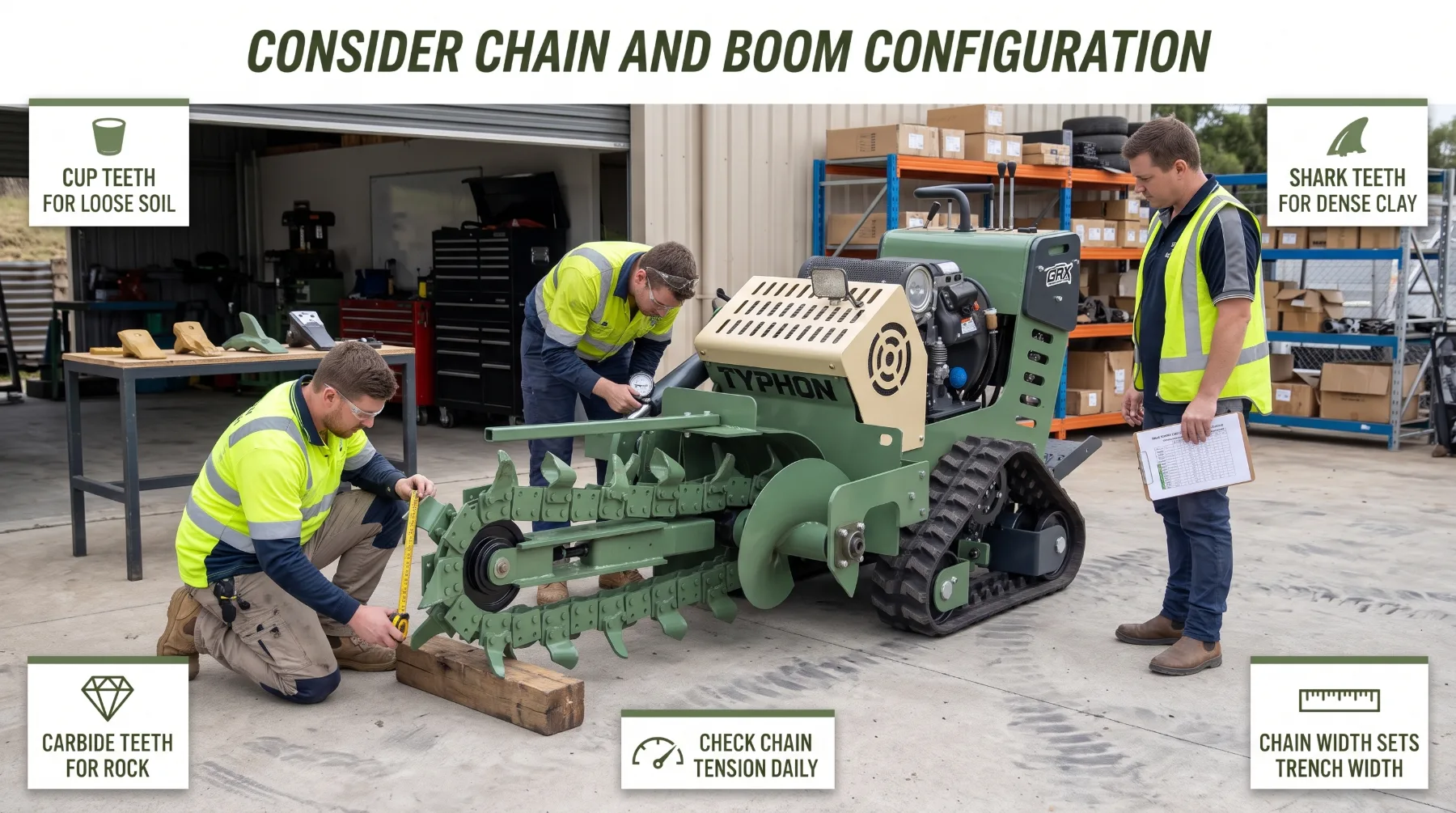
The boom sets the reach, but the chain does the cutting. The digging chain, tooth type and arrangement, boom design, and drive system work together to remove soil and set the trench's final shape. A trencher with the right boom length can still perform poorly when the chain configuration doesn't suit the material or the required trench width.
Tooth arrangement and chain width set trench width. Teeth are mounted in a pattern across the chain, with some angled outward to cut the trench walls and others positioned to clear the center. The outermost teeth determine the finished width. Manufacturers offer chains in a range of widths for each boom. A narrow chain might cut a trench just wide enough for irrigation pipe or cable, while a wider chain cuts room for larger pipe, bedding, or conduit banks. Changing width usually means fitting a different chain or repositioning teeth on approved mounting points. Worn outer teeth narrow the trench gradually, so measure width regularly and replace worn teeth before the trench falls below specification.
Chain tension is a daily concern. A loose chain can jump off the drive sprocket or nose roller, whip, and damage the boom. A chain that's too tight wears sprockets, rollers, and bearings quickly. Check tension according to the operator's manual, usually with the boom in a specified position, and adjust it using the manufacturer's procedure. Inspect the drive sprocket, nose roller, chain pins, and tooth bolts for wear and damage before each shift.
Key takeaway: Match tooth type to the material, chain width and tooth arrangement to the required trench width, and chain pitch and drive torque to the depth and ground. Confirm every configuration is manufacturer-approved, and service the chain only with the boom lowered and the machine shut down.
Match Trench Dimensions to Utility Requirements
Every trenching decision should start with the trench the project actually needs. Water lines, electrical conduits, drainage pipes, gas services, telecommunications cables, and irrigation systems each have their own depth and width requirements. Those requirements, not the machine's brochure, should decide which boom, chain, and trencher you bring to the site.
Review project drawings and applicable installation specifications before choosing a machine. Drawings typically define depth of cover, the distance from finished grade to the top of the pipe or conduit. Some instead list invert elevation, which is the bottom of the pipe, or the trench bottom elevation. Know which reference your project uses, since confusing cover depth with trench depth can leave an installation several inches too shallow. Add the outside diameter of the pipe or conduit and any bedding beneath it to find the true trench depth required. Account for future surface layers, such as topsoil, sod, or pavement, that will change the finished grade.
Width matters as much as depth. The trench must fit the pipe or conduit, any couplings or bells, and the bedding and backfill material specified around it. Many pipe installation standards call for clearance on each side so bedding can be placed and compacted under the pipe's haunches. Drainage pipe wrapped in a gravel envelope needs room for that envelope on every side. Conduit banks may need spacers or concrete encasement. Where several utilities share a trench, width must allow the separation each utility owner requires. A trench that's too narrow prevents proper bedding. One that's too wide adds excavation, backfill, compaction, and restoration costs, and it can undermine nearby pavement or footings.
Key takeaway: Confirm required cover depth, trench depth, width, bedding, and separation from project drawings, utility standards, and local permits before selecting a machine. Plan protective systems and utility locating from the start, and keep workers out of trenches that don't meet OSHA requirements.
Evaluate Ground Conditions and Machine Performance
Published depth and width figures describe what a trencher can do in cooperative soil. Real job sites rarely offer that. Dense clay, gravel, rocky soil, and compacted fill all affect how fast the chain cuts, how much power the machine needs, and how consistently it holds the target depth. Understanding the ground before mobilizing helps you choose the right machine and set realistic production expectations.
Clay behaves differently depending on moisture. Wet, sticky clay packs into the chain and between the teeth, which reduces cutting efficiency and makes spoils hard to clear from the trench. Dry, hard clay can behave almost like soft rock and slow the chain considerably. Shark teeth generally cut dense clay well, and a slightly slower chain speed with more torque often helps. Watch for clay buildup on the crumber, spoil auger, and boom, and clear it with the machine shut down.
Gravel and sand cut easily but bring their own challenges. Loose granular soils can slough from the trench walls, widening the trench and dropping material back onto the bottom. That reduces final depth and leaves loose material beneath the pipe. Abrasive gravel wears teeth quickly, so inspect them more often and keep spare teeth on hand. Cup teeth or combination chains often move granular spoils efficiently. Sloughing walls also signal instability, so a competent person must evaluate the trench before anyone works near or in it.
Rocky soil and compacted ground demand the most from a trencher. Cobble, caliche, shale, and shallow bedrock require carbide rock teeth, heavier chains, slower ground speed, and enough engine or hydraulic power to keep the chain moving at depth. Some rock is beyond what a standard trencher can cut at all and may require a rock wheel, a larger machine, or another excavation method. Compacted fill and old base course resist penetration, and urban or redeveloped sites often hide brick, concrete, and metal debris in the fill. Stop and assess when the chain meets an unexpected obstruction. It may be an old foundation, an abandoned utility, or a buried structure rather than ordinary debris.
Consider the trencher's power and cutting components alongside the ground. Engine horsepower, hydraulic flow and pressure on hydraulically driven chains, and the drive's torque all decide whether the machine can maintain chain speed in hard material. A skid steer trencher attachment, for example, depends entirely on the carrier's auxiliary hydraulics. Insufficient flow reduces cutting performance at depth. Review the manufacturer's recommended operating conditions for each boom and chain, including any limits on material hardness and maximum depth in rock.
Adjust technique to the ground. Match ground speed to cutting conditions. If the chain slows noticeably, the machine is advancing faster than the teeth can cut, so ease back and let the chain recover. Forcing the machine forward overloads the chain and drive, increases wear, and makes depth harder to hold. In very hard ground, plan for multiple passes or a slower production rate rather than pushing the machine beyond its limits.
Key takeaway: Clay, gravel, rock, and compacted fill each change cutting speed, tooth wear, and depth control. Match teeth, chain speed, and machine power to the expected ground, slow down when the chain bogs, and investigate soil and groundwater before mobilizing.
Plan Access, Spoil Removal, and Transport
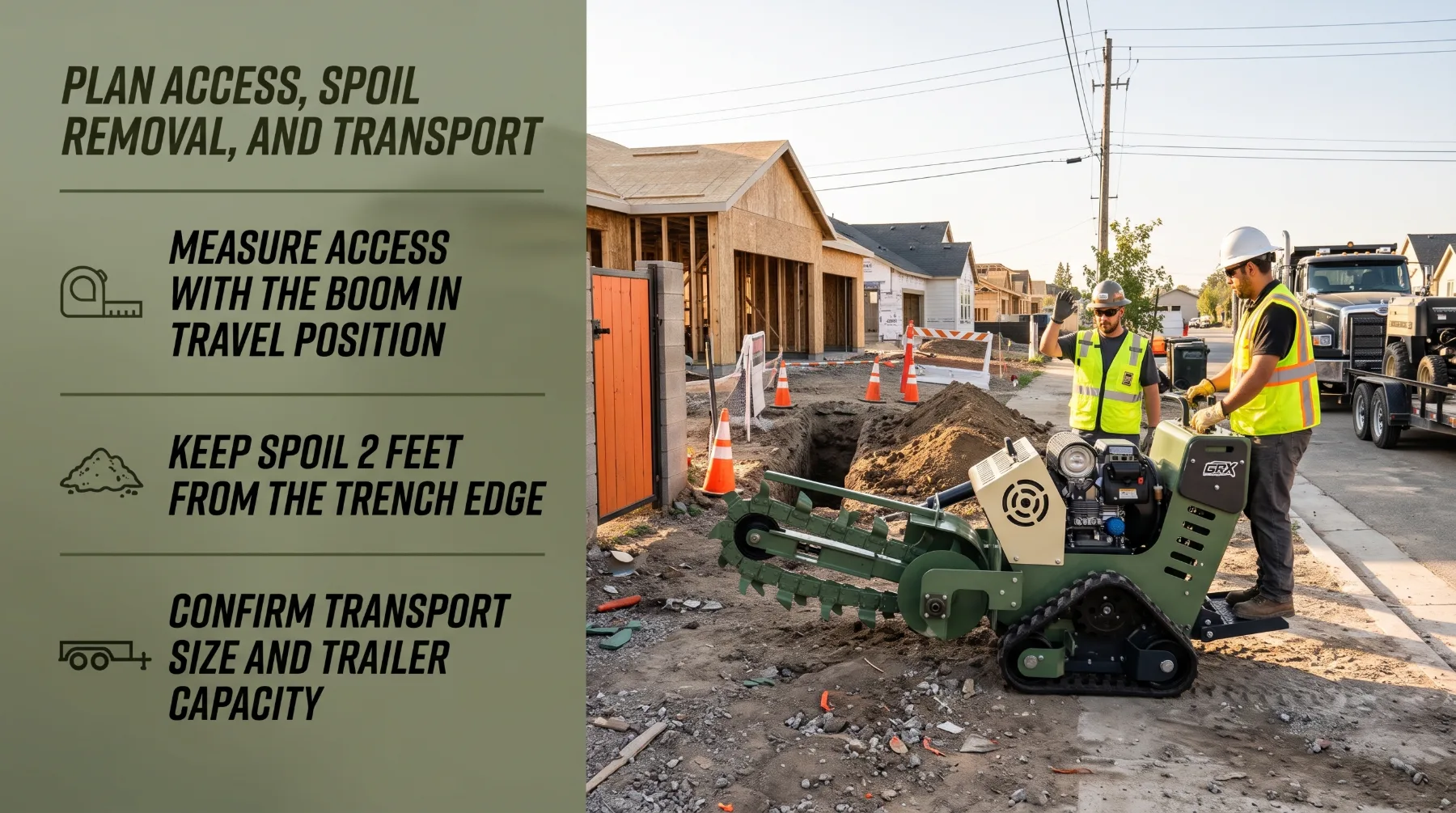
A trencher with the right boom and chain still has to reach the work, dig without damaging its surroundings, and travel between jobs legally and safely. Boom length and machine size influence every one of these steps. Planning them before the job begins keeps productivity high and prevents costly surprises.
Start with access and maneuverability. A longer boom adds overall length, which increases the space the machine needs to turn, line up on the marked route, and reposition between cuts. Measure gate openings, paths between structures, and the tightest corners on the route, then compare them with the machine's overall width and length with the boom in travel position. Check overhead clearance as well. A raised boom can strike eaves, branches, signs, and overhead power lines. Maintain the clearance distances from overhead lines required by applicable regulations and the utility owner, and plan the boom's path at both ends of every run.
Transport dimensions deserve the same attention. Check the trencher's overall length, width, height, and weight in transport configuration. Some booms can be raised, folded, or removed for travel, while others add considerable length behind the machine. Compare those figures with your trailer's deck length, width, and rated capacity, and with your tow vehicle's towing and tongue weight ratings. Secure the machine and boom using the manufacturer's tie-down points and approved straps or chains, and confirm that the boom can't swing or drop during travel. Follow applicable state and federal transport regulations for weight, dimensions, and load securement.
Key takeaway: Compare overall dimensions with boom in travel position against every opening, corner, and overhead hazard on site, plan spoil placement at least 2 feet from the trench edge, confirm transport dimensions and trailer capacity, and keep clear exclusion zones around the boom and chain.
Conclusion
Trencher boom length and digging depth are closely related, but they measure different capabilities. Boom length determines the reach of the cutting assembly, while the boom angle means the actual digging depth is always less than its full length. Maximum digging depth is typically measured under favorable conditions, so actual trenching work requires practical operating clearance and regular depth checks. Chain and tooth configurations affect cutting performance, material suitability, and trench width. Equipment selection should also account for project drawings, utility requirements, soil conditions, available power, site access, spoil handling, and transport needs. Evaluate the required trench depth, width, bedding, and tolerances for each section of the project, then assess ground conditions and site access. Compare boom length, maximum digging depth, measurement angle, approved chain widths, tooth options, and transport dimensions for each machine. Contact 811 for utility locating, plan protective systems and spoil placement, and test the trencher in representative ground conditions. Careful planning and equipment selection help produce accurate trenches, prevent utility damage, and maintain safer working conditions throughout the project.
Frequently Asked Questions
What does trencher boom length affect?
Boom length influences the cutting assembly's reach, the machine's maximum digging range, and the type of trenching work it can perform. Because the boom works at an angle, it must be longer than the depth it produces. A longer boom also adds weight and overall length, which affects balance, maneuverability, and transport.
Is maximum digging depth the same as normal working depth?
Not necessarily. Maximum depth is typically measured with the boom at full angle on firm, level ground with standard teeth. Cross slopes, overhead clearance, hard ground, worn teeth, and loose spoil in the trench bottom can all reduce usable depth. Choose a machine with practical margin beyond your deepest requirement, and measure depth regularly during the work.
Should boom length determine trench width?
No. Trench width depends on the chain configuration, especially the chain width and the position of the outermost teeth, within the machine's approved setup. Boom length mainly affects depth and reach. Match chain width to the pipe or conduit, bedding, and separation requirements in the project drawings.
What should contractors check before trenching?
Confirm utility depth and width requirements from drawings and permits, locate existing underground services through 811 and private locators, and review soil and groundwater conditions. Verify the machine's boom, chain, and depth specifications as well. Also plan trench protection, spoil placement, site access, and exclusion zones before the first cut.