
Oct 4, 2026
Why System Pressure and Hydraulic Flow Should Be Evaluated Together in Excavator
It is easy to judge a machine's hydraulic system by a single headline number, and pressure often gets that spotlight. Yet pressure tells only half the story. A hydraulic system delivers its real performance through the partnership of pressure and flow working together, and looking at one while ignoring the other leads to poor judgments and disappointing results.
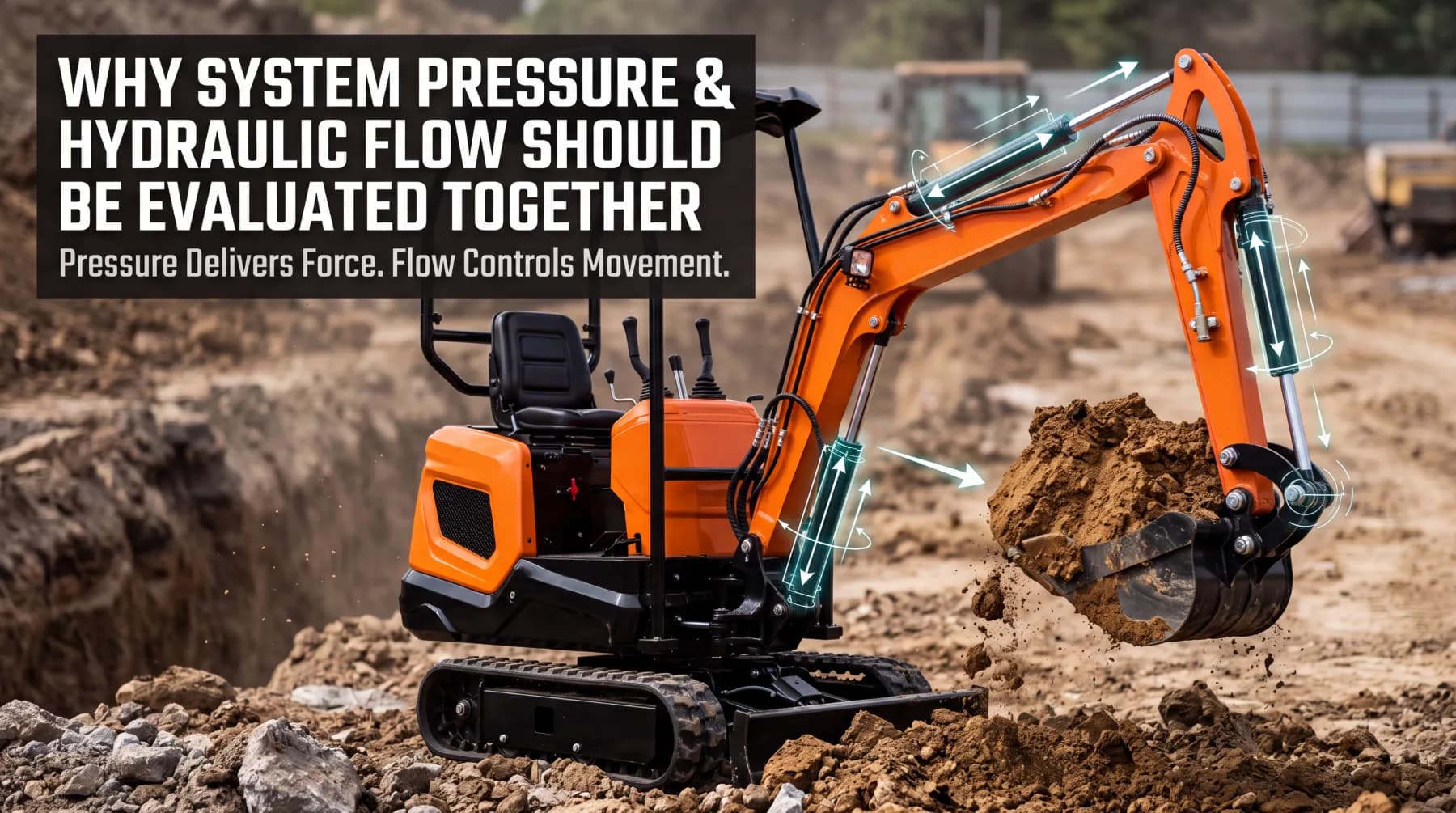
It is easy to judge a machine's hydraulic system by a single headline number, and pressure often gets that spotlight. Yet pressure tells only half the story. A hydraulic system delivers its real performance through the partnership of pressure and flow working together, and looking at one while ignoring the other leads to poor judgments and disappointing results. When you evaluate both, you understand what a <u>machine</u> can actually do: how hard it can work and how quickly it can move. That complete picture is what separates a smart equipment decision from a costly mistake.
This guide explains why system pressure and hydraulic flow should be evaluated together across five practical areas. You will learn how pressure and flow relate to each other, how both affect working performance, why high pressure alone does not guarantee better results, how they influence heat and energy efficiency, and how to match hydraulic specifications to machine requirements. By the end, you will have a dependable framework for reading hydraulic specifications the way they are meant to be understood.
Understanding the Relationship Between Hydraulic Pressure and Flow
<u>Hydraulic pressure and hydraulic flow</u> are two distinct properties, and grasping the difference between them is the foundation for evaluating any hydraulic system correctly. Hydraulic pressure determines the force a system can generate. It is the intensity of the fluid pushing against the components it drives, and it governs how much load the system can move, how much resistance it can overcome, and how firmly it can lift, push, or dig. Hydraulic flow, on the other hand, affects how quickly hydraulic components operate. Flow is the volume of fluid moving through the system over time, and it governs the speed at which cylinders extend, motors turn, and attachments respond. Pressure supplies the muscle, and flow supplies the pace.
Because these two properties do different jobs, neither one describes the system's performance on its own. A machine might generate impressive force yet move sluggishly, or it might move quickly yet stall the moment it meets real resistance. Only by evaluating both together do you understand what the system can genuinely accomplish under working conditions. This is why experienced buyers and operators look at pressure and flow as a pair, reading them in combination to explain the overall performance of a machine's hydraulic system.
Think of the two working in concert during a single task. When an excavator curls its bucket through soil, pressure provides the force to break the ground while flow determines how fast the bucket completes the motion. Reduce the pressure and the machine cannot dig against the resistance. Reduce the flow and the dig becomes slow and laborious even if the force is there. The quality of the work depends on both being adequate at the same time. Understanding this relationship gives you a clear lens for judging hydraulic performance honestly, rather than being swayed by a single figure that tells only part of the story.
How Pressure and Flow Affect Working Performance
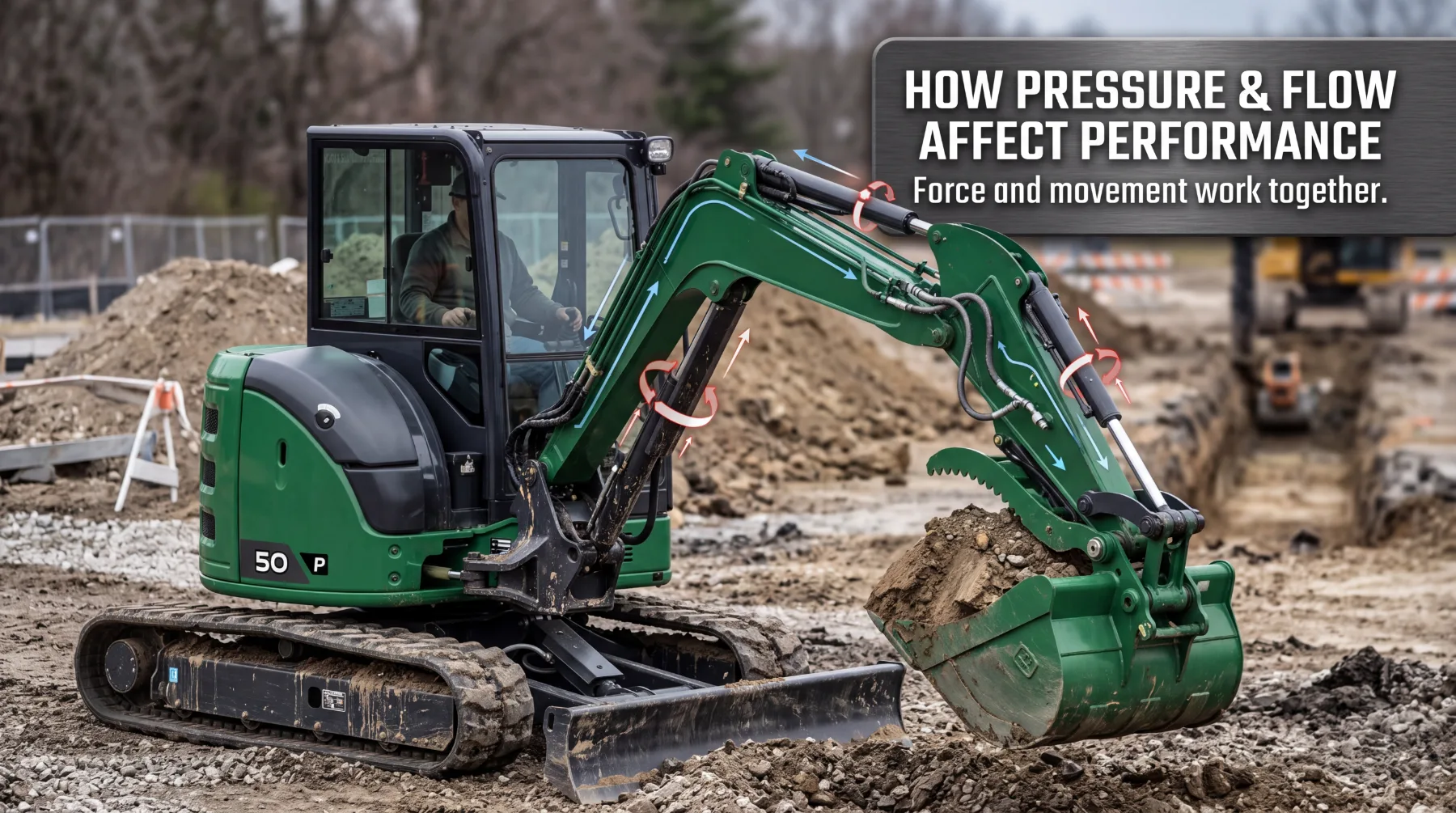
Working performance is the real test of a hydraulic system, and both pressure and flow contribute directly to it. Adequate pressure helps a machine lift, push, or dig against resistance, which is the force side of every task the equipment performs. When a loader raises a heavy bucket, a dozer pushes a pile of material, or a breaker drives into rock, the system needs enough pressure to overcome the load in front of it. If the pressure falls short of what the task demands, the machine struggles or stalls, unable to generate the force the work requires no matter how well the rest of the system is configured.
Sufficient flow supports smooth and timely movements, which is the speed side of performance. Flow determines how quickly the cylinders and motors respond, so it governs how fast the machine completes each motion and how productive it feels in operation. A system with generous flow moves its attachments briskly and smoothly, allowing the operator to work at a steady, efficient pace. A system starved of flow moves slowly and hesitantly, dragging out every cycle and reducing how much the machine accomplishes in a working day. Smooth, responsive movement depends on the flow reaching the components at the rate they are designed to receive.
The key principle is that both factors must meet the requirements of the intended application at the same time. A task defines its own demands for force and speed, and the hydraulic system has to satisfy both to perform well. Consider the range of what working performance requires:
-
Force to overcome resistance, supplied by adequate pressure for lifting, pushing, and digging
-
Speed of movement, supplied by sufficient flow to keep cylinders and motors operating briskly
-
Smoothness and control, which come from pressure and flow working in balance across each motion
When both pressure and flow suit the application, the machine performs the way the work demands, combining the strength to handle the load with the speed to stay productive. Evaluating both is how you confirm a machine can deliver on both fronts.
Why High Pressure Alone Does Not Guarantee Better Performance
A common misunderstanding in judging hydraulic systems is treating pressure as the single measure of capability, as though a higher pressure rating automatically means a better machine. This assumption leads to poor decisions, because pressure describes only the force the system can generate, not the speed at which it works. A hydraulic system with high pressure may still operate slowly if its flow rate is insufficient. The force may be there in abundance, but without enough flow to move the fluid quickly, the cylinders and motors respond sluggishly, and the machine feels underpowered in practice despite its impressive pressure figure.
Picture two machines with identical pressure ratings but very different flow rates. Both can generate the same force and handle the same loads, yet the one with higher flow completes each motion noticeably faster, finishing far more work in the same amount of time. The machine with lower flow may match it on raw strength while falling well behind on productivity. This is why pressure alone cannot tell you which machine performs better. The full picture only emerges when you know how much flow accompanies that pressure, because the two together determine the real output.
Understanding this relationship helps you avoid judging hydraulic performance based on pressure ratings alone, which protects you from a costly error in equipment selection. When comparing machines or attachments, resist the temptation to crown the one with the highest pressure figure as the strongest performer. Instead, look at pressure and flow as a matched pair, asking whether both suit the work you intend to do. A machine that balances adequate pressure with generous flow will usually outperform one that boasts high pressure but skimps on flow, because it delivers both the force and the speed that productive operation requires. Reading the specifications this way keeps your judgment grounded in how the machine will actually behave on the job rather than in a single number that flatters without telling the whole truth.
The Impact on Hydraulic Heat and Energy Efficiency
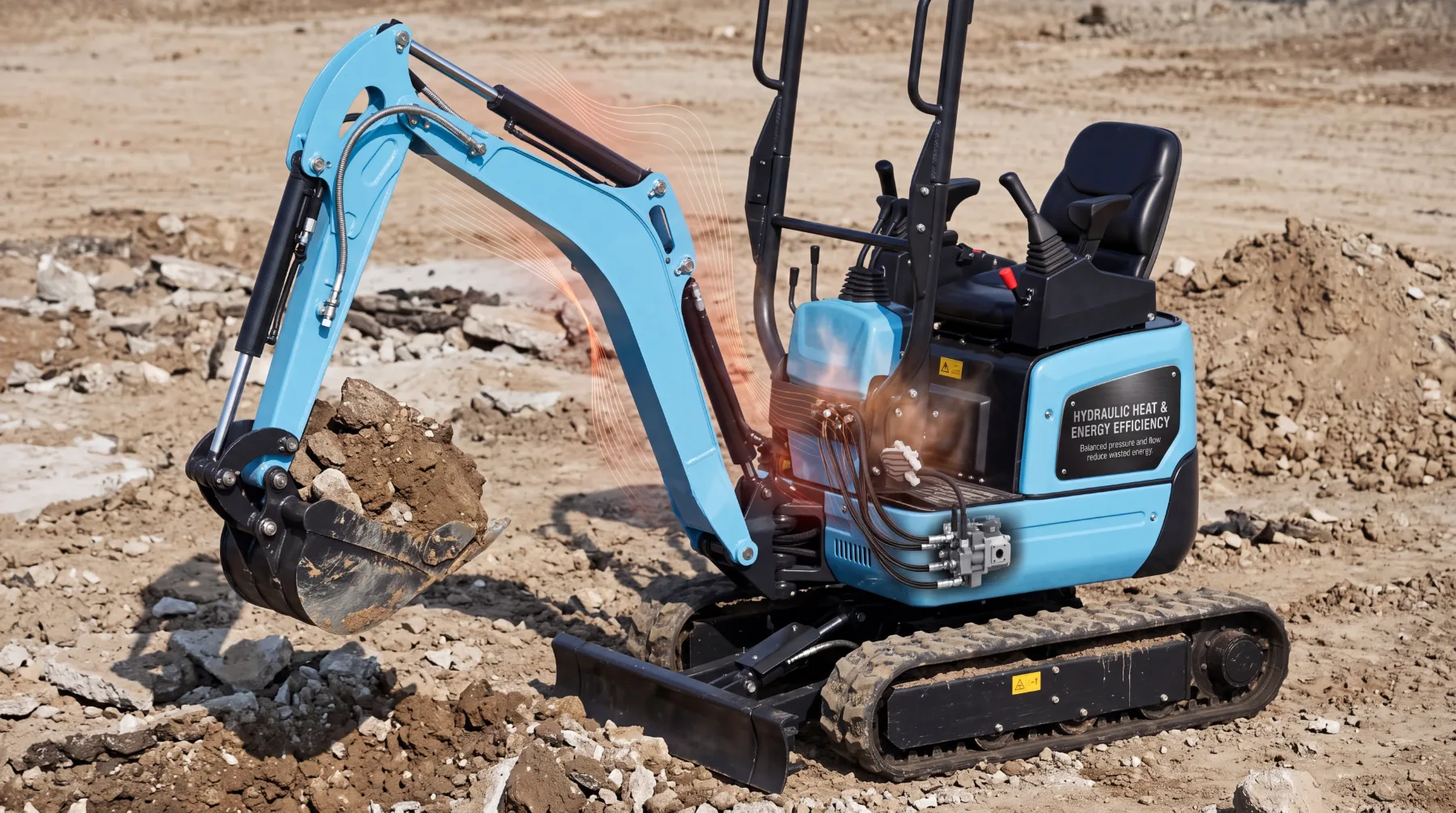
Pressure and flow do more than determine force and speed. Together they shape how much power the hydraulic system demands and how much heat it generates during operation. Operating pressure and flow influence the power drawn from the engine or motor driving the system, because moving fluid at a given pressure and volume takes energy, and the more the system asks for, the more power it consumes. When pressure and flow are well matched to the work, the system uses its power efficiently, delivering the force and speed needed without waste. When they are poorly matched, energy is spent producing performance the task does not require, and that wasted energy has to go somewhere.
Much of that wasted energy turns into heat, which is why evaluating pressure and flow together helps identify potential inefficiencies and excessive heat during operation. A hydraulic system that runs at pressures or flows out of step with its components tends to generate more heat than one that operates in balance. Excess heat is a genuine concern, since high operating temperatures can degrade hydraulic fluid, strain seals and components, and reduce the reliability of the system over time. A system that runs hot is often a system working harder than it needs to, and that inefficiency shows up as both higher energy use and added wear.
Looking at both specifications together gives you a way to spot these problems before they take hold. When you understand how the operating pressure and flow relate to the demands of the machine, you can recognize whether the system is likely to run efficiently or whether it may waste power and build heat. A well-matched system converts its energy into useful work with minimal loss, staying cooler and more reliable as a result. Evaluating pressure and flow as a pair therefore supports not only performance but also the efficiency and longevity of the machine, helping you choose equipment that works hard without working against itself.
Matching Hydraulic Specifications to Machine Requirements
The practical purpose of understanding pressure and flow together is to match them properly to what the machine needs to do. Hydraulic pressure and flow should be matched to the cylinders, motors, and attachments the machine uses, because these components are designed to operate within specific ranges. A cylinder needs a certain pressure to generate its rated force and a certain flow to extend at its intended speed. A hydraulic motor needs pressure to produce torque and flow to turn at the right rate. An attachment carries its own requirements for both, and supplying it correctly is what allows it to perform as designed. When the system's pressure and flow align with the requirements of these components, everything works together as intended.
Checking both specifications helps ensure the system can deliver the required force and operating speed across the full range of the machine's work. Overlooking either one invites problems. A system that meets the pressure requirement but falls short on flow drives its components with adequate force yet moves them too slowly, while one that supplies ample flow but insufficient pressure moves quickly yet cannot handle the loads it faces. Both shortfalls compromise performance, and both are avoidable when you evaluate the two specifications together against what the components actually need.
Several considerations guide a sound match:
-
Cylinder requirements, where pressure sets the force available and flow sets the speed of extension and retraction
-
Motor requirements, where pressure governs torque and flow governs rotational speed
-
Attachment requirements, where both specifications must suit the tool for it to perform to its rating
-
The intended application, which defines the force and speed the whole system must deliver
The practical approach is to look honestly at the components and attachments the machine relies on, then confirm that both the pressure and the flow the system provides suit their needs. When you check both specifications against the real requirements of the equipment, you gain a hydraulic system that delivers dependable force and speed together, performing the way the work demands. That careful match between hydraulic specifications and machine requirements is the foundation of consistent, reliable performance across every task.
Conclusion
System pressure and hydraulic flow are partners, and evaluating them together is the only way to understand what a machine's hydraulic system can truly deliver. Pressure supplies the force to lift, push, and dig against resistance, while flow supplies the speed that keeps movements smooth and productive. High pressure on its own guarantees nothing if flow falls short, and the balance between the two also shapes how much power the system draws and how much heat it generates. Matched properly to the cylinders, motors, and attachments a machine uses, both specifications work in concert to deliver reliable force and speed. Before choosing your next machine or attachment, look past any single figure and weigh pressure and flow together against the demands of your work. Confirm that both suit the components you rely on and the tasks you perform, and you will gain equipment that works hard, moves efficiently, and performs dependably. Reach out to discuss which hydraulic specifications best suit your machine and application.
Frequently Asked Questions
1. What is the difference between hydraulic pressure and hydraulic flow?
Hydraulic pressure and hydraulic flow are two distinct properties that do different jobs within a hydraulic system. Pressure determines the force the system can generate, acting as the intensity of the fluid pushing against the components it drives. It governs how much load the system can move, how much resistance it can overcome, and how firmly the machine can lift, push, or dig. Flow, by contrast, affects how quickly the hydraulic components operate. It is the volume of fluid moving through the system over time, and it governs the speed at which cylinders extend, motors turn, and attachments respond. In simple terms, pressure supplies the muscle while flow supplies the pace. Because these two properties do such different things, neither one describes a system's performance on its own. A machine might generate strong force yet move sluggishly if flow is low, or move quickly yet stall against resistance if pressure is inadequate. Only by understanding both together can you judge what the system will actually accomplish under working conditions, which is why they should always be considered as a pair.
2. Why should I evaluate pressure and flow together instead of separately?
You should evaluate pressure and flow together because they combine to determine the real performance of a hydraulic system, and looking at one in isolation gives an incomplete and often misleading picture. Pressure tells you how much force the system can produce, and flow tells you how fast it can move, but working performance depends on both being adequate at the same time. A task defines its own demands for force and speed, and the system has to satisfy both to perform well. If you evaluate pressure alone, you might assume a machine is powerful when in reality it moves too slowly to be productive. If you evaluate flow alone, you might assume a machine is quick when it cannot handle the loads it faces. Considering the two together lets you understand whether a machine can deliver the strength to overcome resistance and the speed to stay efficient across every cycle. This combined view is what allows accurate comparisons between machines and attachments, and it protects you from choosing equipment that looks capable on paper but falls short in the work you actually need it to do.
3. Does a higher pressure rating always mean better hydraulic performance?
No, a higher pressure rating does not always mean better performance, and treating it that way is one of the most common misunderstandings in judging hydraulic systems. Pressure describes only the force the system can generate, not the speed at which it works. A system with high pressure may still operate slowly if its flow rate is insufficient, because without enough flow to move the fluid quickly, the cylinders and motors respond sluggishly and the machine feels underpowered in practice. Imagine two machines with identical pressure ratings but different flow rates. Both can handle the same loads, but the one with higher flow completes each motion faster and finishes far more work in the same time. The machine with lower flow matches it on raw strength while falling behind on productivity. This is why pressure alone cannot tell you which machine performs better. When comparing equipment, resist crowning the highest pressure figure as the strongest performer, and instead look at pressure and flow as a matched pair. A machine that balances adequate pressure with generous flow will usually outperform one that boasts high pressure but skimps on flow.
4. How do pressure and flow affect heat and energy efficiency?
Pressure and flow together shape how much power the hydraulic system demands and how much heat it generates during operation. Moving fluid at a given pressure and volume takes energy, so the more the system asks for, the more power it draws from the engine or motor driving it. When pressure and flow are well matched to the work, the system uses its power efficiently, delivering the force and speed needed without waste. When they are poorly matched, energy is spent producing performance the task does not require, and much of that wasted energy turns into heat. This is why evaluating both together helps identify potential inefficiencies and excessive heat. A system running at pressures or flows out of step with its components tends to generate more heat than one operating in balance, and excess heat is a real concern because high temperatures can degrade hydraulic fluid, strain seals and components, and reduce reliability over time. A system that runs hot is often working harder than it needs to. By understanding how operating pressure and flow relate to the machine's demands, you can recognize whether the system will run efficiently and stay cooler, or whether it may waste power and build damaging heat.
5. How do I match hydraulic specifications to my machine's requirements?
Matching hydraulic specifications to your machine's requirements starts with understanding the components the machine relies on, since cylinders, motors, and attachments are each designed to operate within specific ranges of pressure and flow. A cylinder needs a certain pressure to generate its rated force and a certain flow to extend at its intended speed. A hydraulic motor needs pressure to produce torque and flow to turn at the right rate. Attachments carry their own requirements for both, and supplying them correctly is what lets them perform as designed. Checking both specifications together helps ensure the system can deliver the required force and operating speed across the full range of work. Overlooking either invites problems, since a system that meets the pressure requirement but falls short on flow moves its components too slowly, while one with ample flow but insufficient pressure cannot handle the loads it faces. The practical approach is to look honestly at the components and attachments your machine uses, define the force and speed your application demands, and confirm that both the pressure and flow the system provides suit those needs. When you check both against the real requirements of the equipment, you gain dependable force and speed working together.